


The story of life on Earth has always been told as a struggle against impossible odds. For decades, scientists painted a picture of early microbial communities barely surviving in a hostile, oxygen-free world, scraping by on limited nutrients while waiting for the evolutionary breakthrough that would change everything. That narrative just took a dramatic turn.
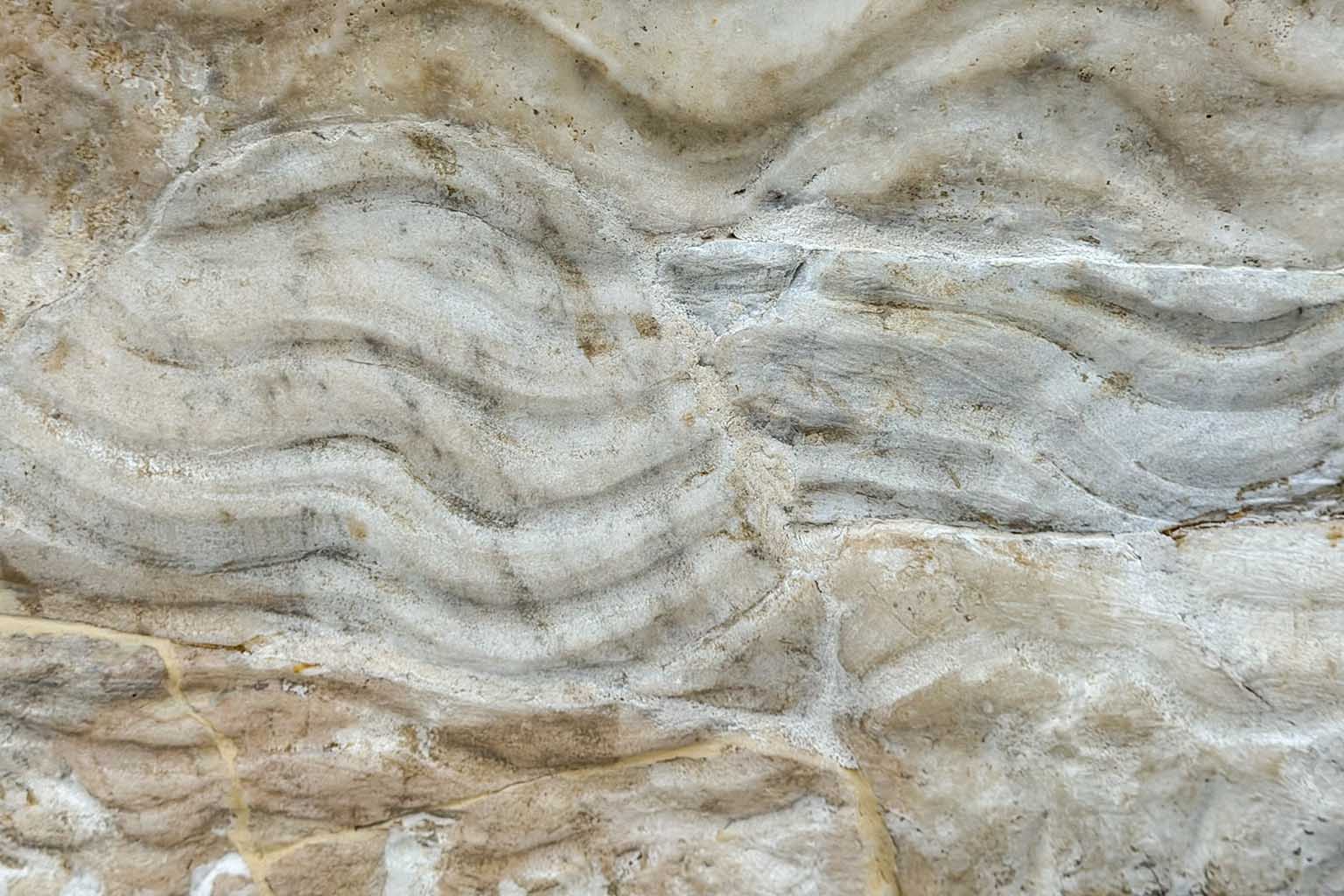
Recent analysis of 2.75-billion-year-old stromatolites from Zimbabwe has revealed something unexpected: Earth’s earliest life wasn’t just surviving in volcanic hellscapes—it was thriving. The research, led by Dr. Ashley Martin of Northumbria University and published in Nature Communications, suggests that volcanic activity created nutrient-rich oases that supported complex microbial ecosystems hundreds of millions of years before the Great Oxidation Event transformed our planet.
This discovery fundamentally challenges our understanding of early Earth’s biological timeline. Rather than a barren world gradually awakening to life, we’re looking at evidence of sophisticated biological processes operating in what were previously considered the most inhospitable environments imaginable. Just as modern archaeological techniques like LiDAR technology continue to reveal hidden complexities in ancient civilizations, these ancient rocks are unveiling the sophisticated nature of Earth’s earliest biological communities.
The Nitrogen Puzzle That Changed Everything
The breakthrough came from examining nitrogen isotope signatures in ancient rock formations. Nitrogen represents one of biology’s most fundamental requirements—every strand of DNA, every protein molecule depends on it. Yet early Earth presented a paradox: while nitrogen was abundant in the atmosphere, it existed primarily as inert N₂ gas, essentially unusable by most life forms.
The Zimbabwe stromatolites told a different story. Their isotopic signatures revealed the presence of bioavailable ammonium (NH₄⁺) in quantities that shouldn’t have existed according to conventional models. According to research on the Archean atmosphere, these geological processes operated across vast timescales, creating conditions that supported early life development. This wasn’t just trace amounts—the data suggests extensive reservoirs of usable nitrogen were being delivered to shallow marine environments through hydrothermal upwelling processes.
“Geological water cycle models indicate that hydrothermal processes operated continuously for billions of years, fundamentally shaping early Earth’s biological potential” – Archean atmosphere research
What makes this particularly striking is the timing. These processes were operating at full scale 2.75 billion years ago, during the height of Earth’s volcanic period. The implication is profound: early life had access to industrial-scale nutrient delivery systems powered by the planet’s own geological engine.
Volcanic Cauldrons as Biological Incubators
The role of volcanism in early life has been consistently underestimated. While volcanic environments are typically viewed as destructive forces, this research reveals them as biological catalysts of unprecedented importance. Hydrothermal systems weren’t just delivering ammonium—they were creating complete nutrient cycling networks that sustained complex microbial communities. Modern discoveries of hydrothermal field microbial communities demonstrate how these extreme environments continue to support unique biological processes.
Dr. Eva Stüeken from the University of St Andrews pointed out that these hydrothermal processes may have been the primary drivers of biological innovation during this period. The constant flow of mineral-rich fluids created chemical gradients that early microbes could exploit for energy, effectively turning volcanic vents into biological power stations.
The scale of this activity was enormous. Volcanic systems 2.75 billion years ago operated with an intensity that dwarfs modern geological processes. This wasn’t occasional hydrothermal activity—it was a planet-wide network of biological support systems operating continuously for millions of years. Archaeological evidence from sites like the 5,000-year-old fire altar in Peru’s Supe Valley shows how ancient civilizations understood the power of controlled fire and heat, though on a vastly different scale than these primordial volcanic processes.
Rewriting the Great Oxidation Timeline
Perhaps the most significant implication concerns the Great Oxidation Event itself. Traditional models describe this as a relatively sudden shift between 2.5 and 2.3 billion years ago, when cyanobacteria finally produced enough oxygen to fundamentally alter Earth’s atmosphere. The new data suggests a more complex story.
Evidence from the stromatolites indicates that localized oxygen production may have been occurring hundreds of millions of years earlier than previously thought. Studies on stromatolites as geochemical archives have provided crucial insights into these ancient microbial processes and their role in early atmospheric evolution. This challenges the binary view of Earth’s atmospheric evolution—rather than a simple switch from anoxic to oxic conditions, we’re looking at a gradual process with pockets of oxygenated water supporting advanced biological processes long before atmospheric oxygen became globally significant.
“Stromatolitic limestone formations provide direct evidence of complex microbial processes operating billions of years ago, revealing sophisticated biological systems in Earth’s early history” – Geochemical archive research
The implications extend to our understanding of biological evolution itself. If partial ammonium oxidation was already occurring 2.75 billion years ago, it means the biochemical machinery for handling oxygen was being developed and refined across vast timescales before the main atmospheric transition.
The Astrobiology Revolution Hidden in Ancient Rocks
This research completely transforms how we should approach the search for extraterrestrial life. The traditional focus on habitable zones and surface water may be missing the point entirely. If volcanic hydrothermal systems could support sophisticated biological communities on early Earth, similar processes could be operating on Mars, Europa, or Enceladus right now.
The presence of ammonium-rich hydrothermal signatures represents a potentially detectable biosignature that space missions could target. Unlike the subtle chemical traces that current life-detection strategies focus on, hydrothermal biological systems would leave distinctive geological fingerprints that persist across billions of years. Just as prehistoric hub discoveries reveal complex ancient European societies through their material remains, these geological signatures could reveal ancient or even contemporary extraterrestrial life.
What’s particularly exciting is that these environments don’t require the precise conditions that Earth’s surface life depends on. Subsurface volcanic systems could operate on worlds we’ve written off as biologically dead, supporting entire ecosystems in deep ocean environments completely isolated from surface conditions.
The 2.75-billion-year-old rocks from Zimbabwe have opened a window into a biological reality we never imagined existed. They suggest that life’s relationship with extreme environments isn’t one of desperate survival, but of sophisticated adaptation and exploitation. As we continue to probe the boundaries of biological possibility, both in Earth’s deep past and in the cosmos beyond, we might discover that volcanic hellscapes aren’t barriers to life—they’re among its most creative workshops.