


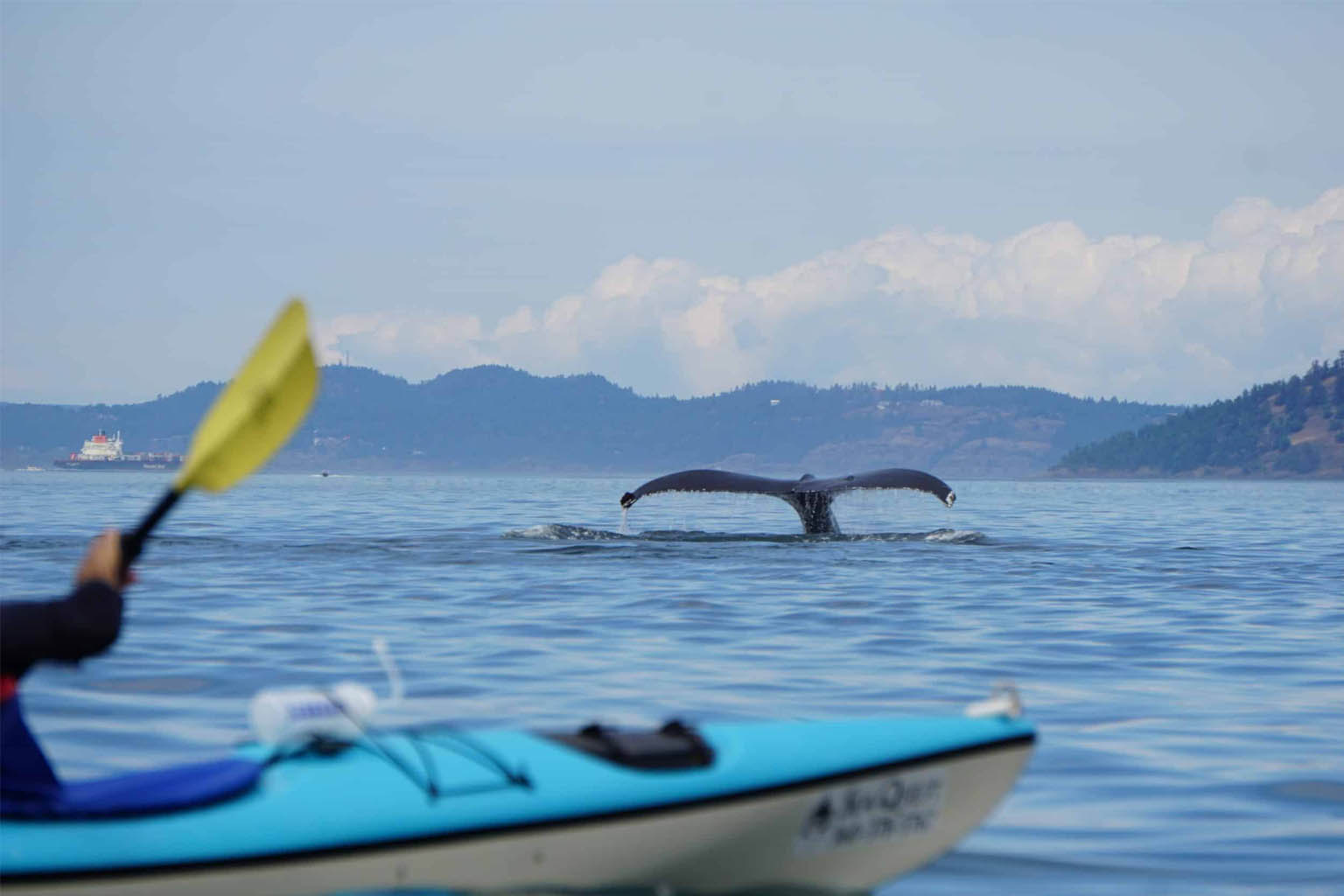
The waters of Chilean Patagonia hold countless stories of adventure, but few as dramatic as what unfolded last Saturday in Bahía El Águila. Adrián Simancas was enjoying what seemed like an ordinary kayaking expedition with his father Dell when nature delivered a reminder of just how unpredictable the ocean can be. In a matter of seconds, the young kayaker found himself inside the mouth of a massive humpback whale, an experience that would transform a peaceful morning into viral footage watched by millions worldwide.
The incident near the San Isidro Lighthouse captures something profound about our relationship with the natural world. While whale watching has become a cornerstone of Patagonian tourism, this encounter crossed the line from observation into direct, terrifying contact. The fact that both father and son emerged unharmed speaks to luck, but also to the fundamental nature of humpback whales as filter feeders rather than predators. Just as researchers have made remarkable discoveries about new crocodile species in remote Caribbean waters, this incident reveals how much we still don’t know about marine wildlife behavior in isolated regions.
The Anatomy of a Split-Second Encounter
What makes this incident particularly striking is how quickly everything unfolded. Humpback whales can reach lengths of up to 60 feet and weigh as much as 40 tons, yet they move with surprising speed when feeding. The whale’s sudden surface breach caught Adrián completely off guard, demonstrating just how vulnerable small watercraft can be in these waters.
Dell Simancas’ reaction reveals the mindset of an experienced outdoorsman. His calm voice telling his son to “stay calm” while filming the entire episode shows remarkable presence of mind. This composure likely helped prevent panic from escalating an already dangerous situation. The icy waters of Patagonia can induce hypothermia within minutes, making quick thinking essential for survival.
Marine biologists explain that humpback whales engage in lunge feeding, a behavior where they surge upward through schools of fish or krill with their mouths wide open. Research published in Animal Behaviour has documented the complex kinematics of humpback whale lunge feeding behavior. The timing suggests this whale was likely pursuing prey near the surface, with the kayakers simply occupying the wrong patch of ocean at the wrong moment.
“Baleen whales demonstrate sophisticated filter feeding mechanisms, with lunge feeding representing one of the most energetically demanding foraging behaviors in the animal kingdom” – Marine mammal research
When Adventure Tourism Meets Wild Reality
The Strait of Magellan has become increasingly popular among adventure seekers, drawn by its pristine wilderness and abundant marine life. Located 1,600 miles south of Santiago, this region offers some of the most spectacular wildlife viewing opportunities in South America. But this incident highlights the inherent risks that come with venturing into truly wild spaces. Similar to how NASA’s super-pressure balloon navigates the unpredictable atmospheric conditions of the Southern Hemisphere, adventure tourists must contend with nature’s volatile forces.
Recent years have seen growing concerns about human-whale interactions in these waters. While direct encounters like Adrián’s remain exceptionally rare, the increasing presence of cargo ships and tourist vessels has led to more frequent whale strandings and collisions. The delicate balance between tourism development and wildlife protection continues to challenge local authorities.
Adventure tourism operators in the region typically maintain strict safety protocols, but nature’s unpredictability means zero risk is impossible. The fact that this encounter was captured on video will likely influence safety briefings and emergency procedures for kayaking operations throughout Patagonia.
The Behavioral Science Behind the Encounter
Understanding why this happened requires looking at humpback whale feeding patterns during the Southern Hemisphere’s summer months. These massive creatures migrate to Patagonian waters specifically to take advantage of rich feeding grounds, where krill and small fish congregate in dense schools.
Research by marine mammal specialists indicates that humpback whales have sophisticated feeding strategies, often working together to create bubble nets that trap prey. When feeding individually, they rely on sudden vertical lunges that can propel them partially out of the water. This behavior explains how Adrián found himself momentarily inside the whale’s mouth before being expelled along with water and debris.
The whale’s immediate release of the kayaker demonstrates an important biological reality. Filter-feeding whales have relatively narrow throat passages compared to their massive mouths, making it physically impossible for them to swallow large objects. The whale’s natural feeding mechanism worked exactly as evolution designed it, separating unwanted material from actual food sources. Much like how ancient civilizations at Tikal archaeological sites developed sophisticated systems for resource management, whales have evolved precise mechanisms for processing their marine environment.
The Psychological Dimension Most Coverage Ignores
While media attention has focused on the dramatic visuals, the psychological impact on both participants deserves deeper consideration. Adrián’s later statement that he “thought I was dead” reflects a genuine near-death experience that will likely require processing time. The trauma of being engulfed by a massive marine predator, even briefly, can create lasting effects that extend far beyond the physical encounter.
Dell Simancas faced his own psychological challenge, watching helplessly as his son disappeared into the whale’s mouth. The burden of witnessing such an event while maintaining enough composure to continue filming demonstrates remarkable mental fortitude. Studies suggest that observers of traumatic events can experience secondary trauma symptoms, particularly when family members are involved.
The viral nature of the footage adds another layer of complexity. While the video has brought global attention to Patagonian wildlife, it also means the family’s traumatic experience becomes public entertainment. This transformation from personal crisis to internet sensation can complicate the natural recovery process and create ongoing stress as the footage continues circulating online. The incident also highlights broader environmental concerns, as marine ecosystems face increasing pressure from human activity, similar to the alarming ocean waste accumulation discovered in deep ocean trenches worldwide.
This extraordinary encounter serves as a powerful reminder that wilderness areas remain genuinely wild, despite our best efforts to predict and control outdoor experiences. As adventure tourism continues expanding into remote regions like Patagonian waters, incidents like this force us to confront the fundamental question of how close we should venture to truly untamed nature. The line between thrilling wildlife encounter and life-threatening situation can disappear as quickly as a kayaker into a whale’s mouth, leaving us to wonder whether some experiences are better observed from a respectful distance.