


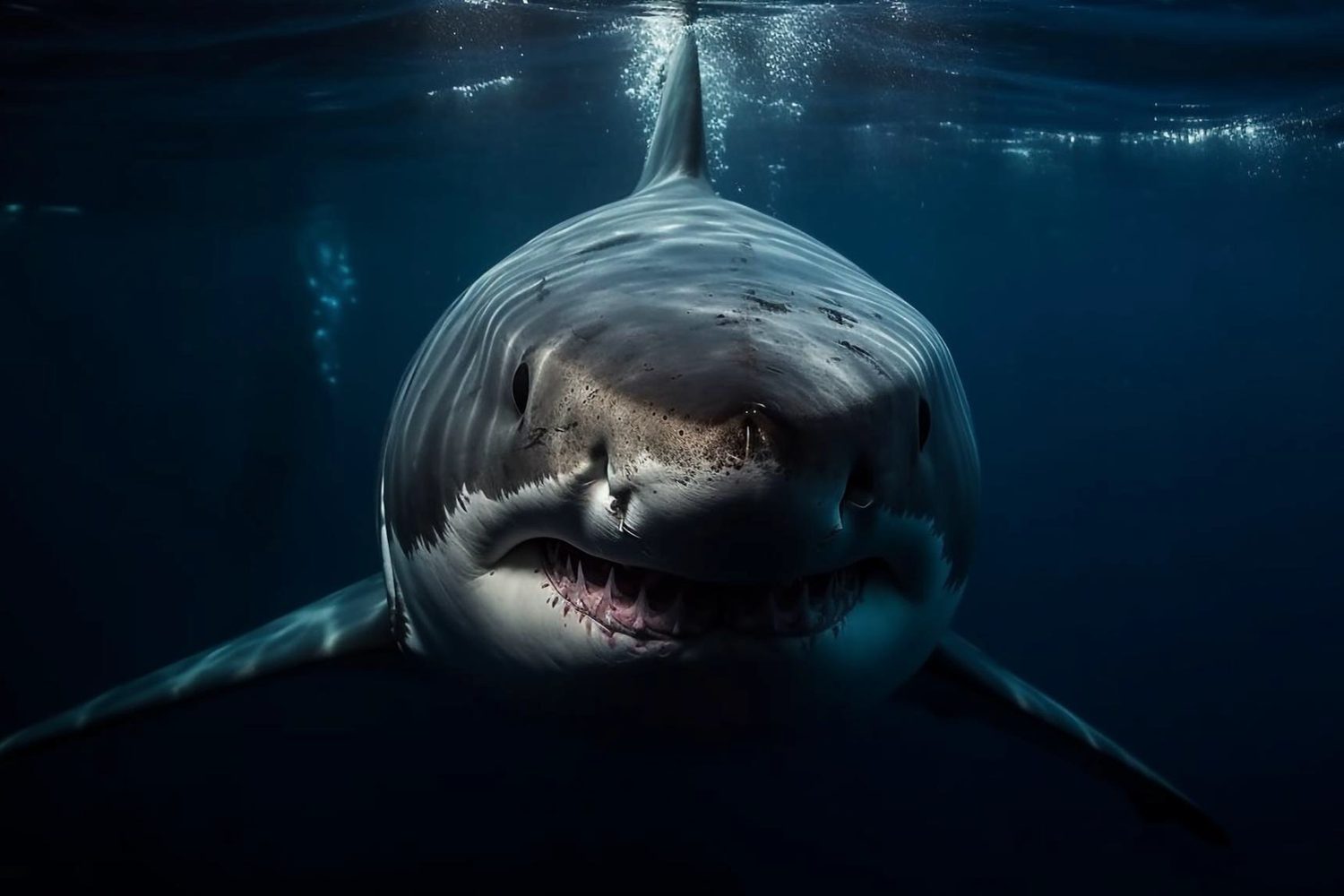
The ocean just became a stage for one of nature’s most awe-inspiring giants. Near the sun-soaked shores of North Carolina’s popular tourist beaches, a colossal great white shark measuring an incredible 14 feet and weighing around 1,653 pounds is silently patrolling the waters. This massive predator, one of the largest ever recorded in the Atlantic, is not just passing by—it’s part of an annual migration that draws it close to human activity, reminding us how intimately connected our lives are with the marine world.
A giant discovery off the North Carolina coast
This extraordinary shark, affectionately named Contender by marine researchers, was first tagged in January near the Florida-Georgia border by the expert team at OCEARCH. For nearly a month, Contender vanished from satellite tracking, a normal occurrence since the tracking devices transmit location signals only when the shark’s dorsal fin breaks the ocean surface. Recently, Contender reemerged near Pamlico Sound, a lively area known for its kayakers, boogie boarders, and beach enthusiasts.
Dr. Harley Newton, OCEARCH’s chief scientist and veterinarian, explained that great white sharks embark on their late spring to early summer migration routes around this time each year. They journey from warm wintering grounds in the southern Atlantic to their summer feeding territories along the northeastern U.S. coast and Atlantic Canada. This epic trek can span up to 1,000 miles, with locations like the Outer Banks acting as vital stopovers where these apex predators replenish their energy reserves. Seeing Contender in such close proximity to bustling beaches is a powerful illustration of how our recreational spaces overlap with the wild ocean realm.
Unveiling the secrets of Contender’s journey
Tracking Contender delivers invaluable insights into the behavior and biology of one of the ocean’s most fearsome predators. Estimated to be around 30 years old, Contender is a mature male in the prime of his life. Since being tagged, scientists have been able to collect detailed biological data and trace his longitudinal “cross-country” migrations through the Atlantic.
The shark’s periodic stops near the Outer Banks are more than casual layovers—they are essential feeding grounds. Research indicates these stops allow great whites to accumulate fat and muscle strength, which are critical for sustaining long-distance travel and successful reproduction. According to a 2023 study published by the Journal of Marine Ecology Progress Series, these feeding habitats are crucial nodes in the sharks’ migratory network that support healthy populations.
Understanding these patterns also shapes how we approach safety at popular swimming sites. While shark attacks remain extremely rare, the knowledge that massive sharks like Contender share our coastal waters serves as a striking reminder to respect their space and appreciate the wild beauty around us. Personally, this knowledge encouraged me to stay closer to shore and avoid swimming during low-visibility times when shark activity is at a peak.
Why great white tracking is vital for ocean conservation
The work of tagging and monitoring giants like Contender goes far beyond thrilling encounters—it is a cornerstone of modern marine conservation. OCEARCH and similar organizations collect data that is indispensable for understanding the sharks’ feeding behaviors, migration shifts, and threats from environmental changes.
The health of great white shark populations is closely linked to shifting ocean temperatures, prey availability, and human activities such as overfishing and coastal development. These apex predators perform a critical ecological role by regulating fish populations and maintaining balance in marine ecosystems. Seeing a giant shark cruising the waters close to shore challenges us to approach these creatures with both curiosity and caution.
Experts emphasize that protecting these predators requires safeguarding the entire marine food web. As Dr. Newton commented, “Every shark we track is a step toward understanding and preserving the ocean’s delicate balance.” Supporting conservation efforts ensures that these majestic animals continue to thrive amid mounting environmental pressures.
Sharing the ocean: the balance between thrill and respect
Living alongside such powerful ocean natives calls for a blend of admiration and responsibility. Although encountering a great white shark near shore remains a rare event, adopting precautionary habits benefits everyone. Avoid swimming during dawn or dusk, steer clear of seal colonies, and always heed local safety warnings.
Learning about Contender’s travels transformed how I perceive beach visits. There’s an undeniable thrill in realizing these ancient hunters are traversing vast, unseen highways just beyond the waves. It’s a humbling reminder that we’re part of an interwoven marine ecosystem that spans millennia.
Beyond the excitement of spotting or even knowing such giants are nearby, these moments highlight the fragility of our planet’s oceans. The waters we swim and play in serve as migratory routes for creatures that have ruled the seas for millions of years. Each dorsal fin breaking the surface is more than a spectacle—it’s a call to sustain a global commitment to marine protection.
What are your thoughts on having massive sharks like Contender so close to popular beaches? Have you ever had an encounter with wildlife that made you rethink your actions? Share your experiences or feelings below, and don’t forget to pass this story along to friends and fellow ocean enthusiasts. Together, we can deepen our respect and understanding of these magnificent underwater giants.