


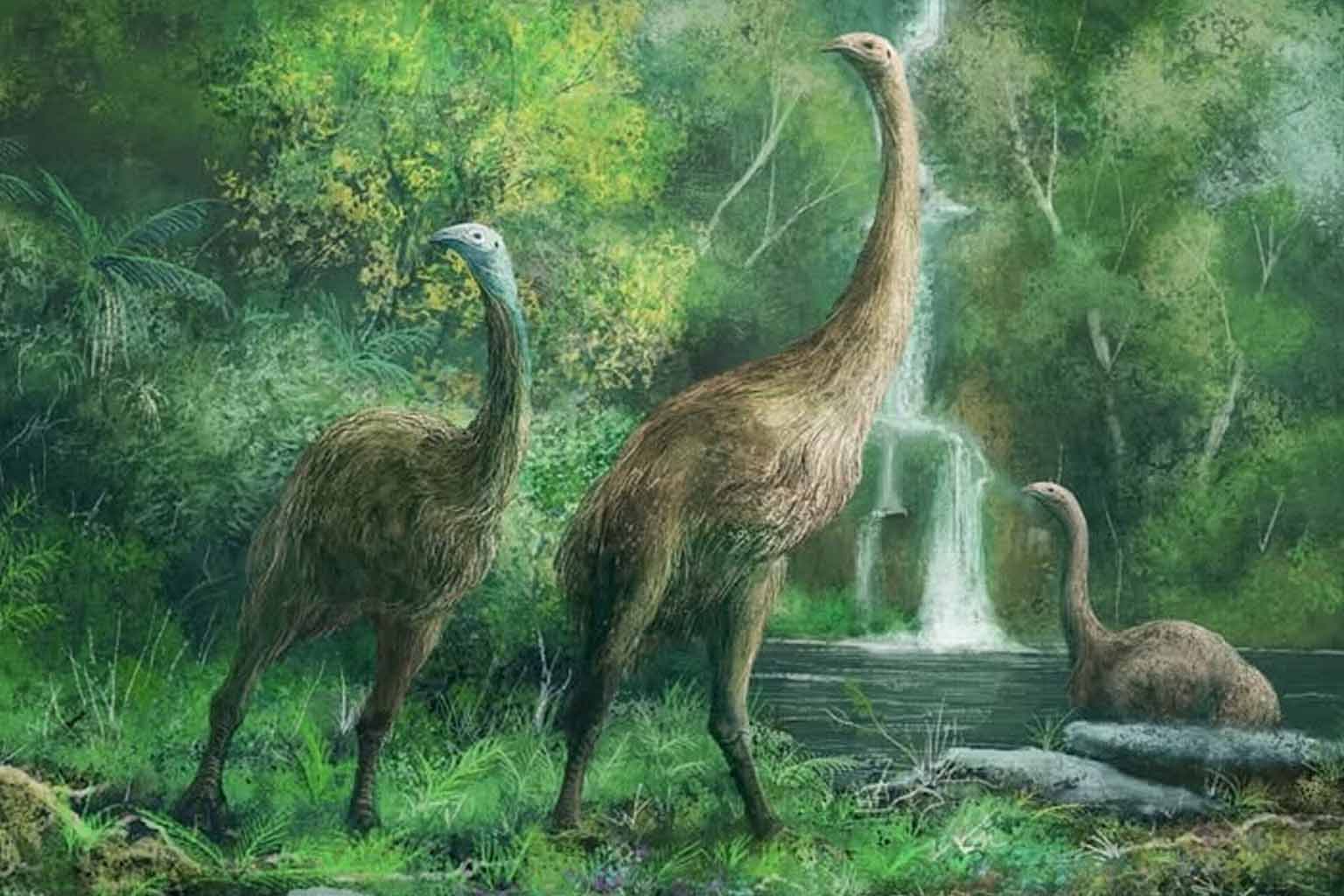
Scientists have uncovered the story of the giant moa, a prehistoric bird that once stood taller than a modern giraffe. Towering up to 13 feet tall, this extraordinary wingless bird roamed the forests and grasslands of New Zealand before vanishing shortly after human arrival. Its remarkable size and unique evolutionary path make the moa a fascinating subject in the study of extinct creatures and the impact of humans on biodiversity.
The towering giant moa: biology and evolution
The giant moa, scientifically known as Dinornis robustus, was a marvel of evolution uniquely adapted to New Zealand’s isolated environment. Unlike familiar flightless birds such as ostriches or emus, the moa was completely wingless, lacking even vestigial wings. This is a rare evolutionary outcome since most flightless birds retain some wing structures.
Standing at an impressive 12 to 13 feet when fully extended, with neck upright, and weighing approximately 600 pounds, the moa was a dominant herbivore. Its long legs and flexible neck allowed it to browse vegetation from ground level to higher branches, occupying a niche similar to giraffes or deer in other ecosystems. This adaptation was made possible due to New Zealand’s lack of mammalian predators, which let the moa grow to enormous proportions while focusing on ground-based survival rather than flight.
Experts believe this evolutionary development is an example of how isolated ecosystems foster unique physical traits. The moa thrived for millions of years, facing few threats except from the powerful Haast’s eagle, its only natural predator capable of attacking adult birds.
Human arrival and the moa’s swift extinction
The arrival of the Māori people around the late 13th century introduced dramatic changes to New Zealand’s ecology. The moa, having evolved without predators like humans, lacked innate defenses or avoidance behaviors. Māori hunters relied heavily on the moa for food, and this, combined with habitat destruction, led to a rapid population collapse.
Scientific research indicates the extinction unfolded within just two centuries of human settlement. According to a study published by the Royal Society, human activity was the key driver behind the moa’s extinction, underscoring one of the earliest recorded large-scale species extinctions caused by humans. This event serves as an important lesson on the delicate balance of ecosystems and the profound impact of human behavior.
The ecological footprint of the giant moa
The giant moa was more than just a massive bird—it played a vital role in shaping New Zealand’s native ecosystems. As a primary herbivore, its browsing influenced plant community structures and distribution, similar to how large mammals affect their environments elsewhere.
Scientists studying fossil records and Māori oral traditions have pieced together insights on how the moa interacted with its surroundings and other species, including its top predator, the Haast’s eagle. The disappearance of these massive birds created a significant ecological void, and researchers continue to explore how New Zealand’s landscapes evolved without this key species.
Legacy and lessons from the moa’s story
The giant moa remains a powerful symbol of New Zealand’s unique evolutionary heritage. Its extinction highlights the vulnerability of isolated ecosystems to rapid change and human influence. Conservation biologists view the moa’s disappearance as an early cautionary tale emphasizing the importance of sustainable interactions with nature.
Fossils and historical accounts help scientists reconstruct the past, providing valuable knowledge about extinct species and guiding modern conservation efforts. Understanding the moa’s rise and fall deepens our appreciation for biodiversity and the urgent need to protect remaining species from similar fates.
If this glimpse into New Zealand’s prehistoric giant intrigues you, share your thoughts or questions below. How do you think we can better protect today’s endangered species from the fate of the moa? Your comments help keep the conversation alive and inspire greater awareness.