


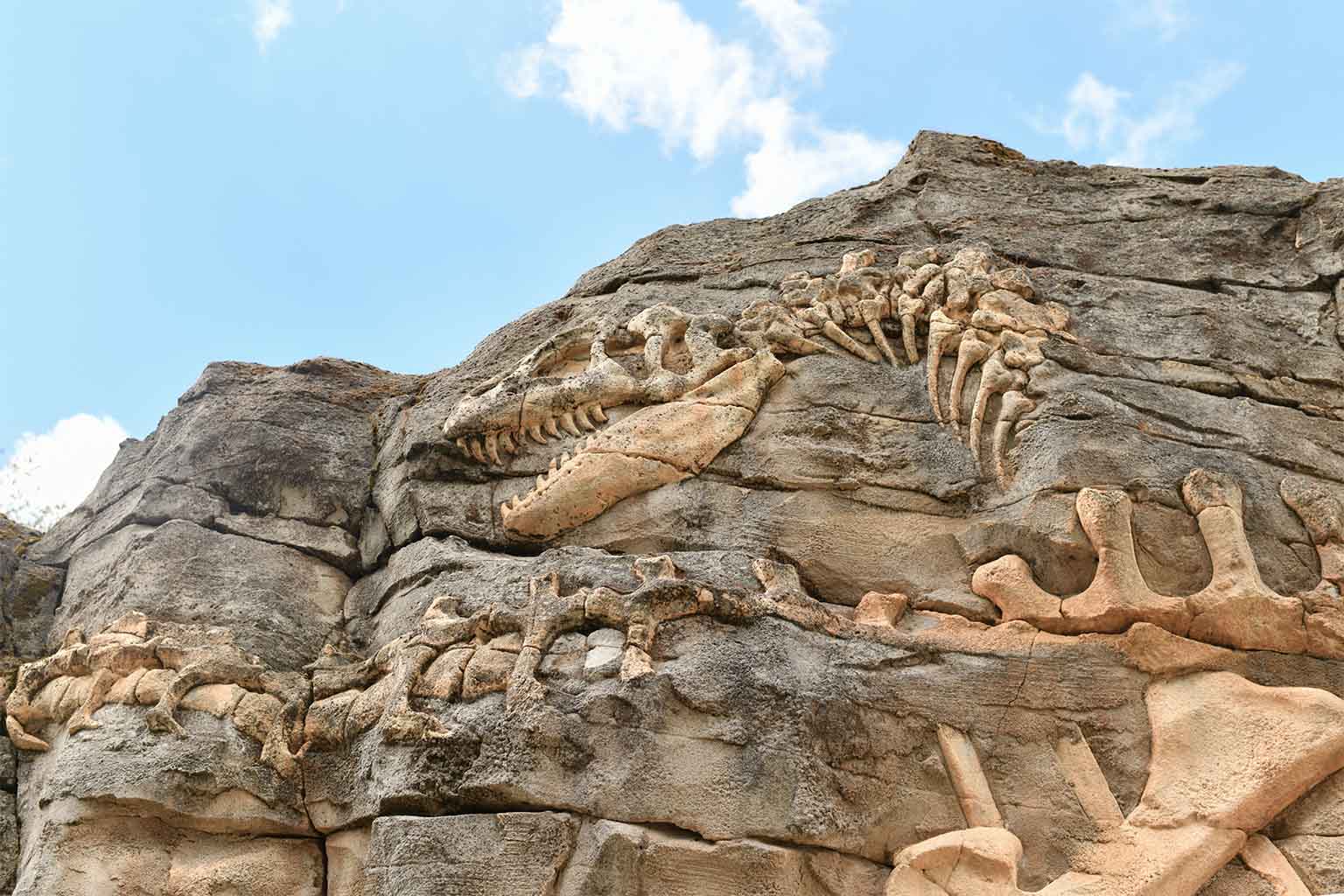
Scientists have stumbled upon a jaw-dropping dinosaur mass grave that could rewrite what we know about prehistoric life. Nestled in Alberta, Canada, this extraordinary site harbors thousands of fossils from a single dinosaur species, preserved in astonishing detail. The discovery offers a rare, vivid snapshot into a moment frozen in time, transforming the way experts study ancient ecosystems.
A Remarkable Dinosaur Bone Bed in Alberta’s “River of Death”
Deep in Alberta’s rugged landscape lies the Pipestone Creek site, ominously called the “River of Death.” Here, paleontologists have uncovered one of North America’s largest dinosaur bone beds, packed tightly with thousands of bones from Pachyrhinosaurus dinosaurs—ancient relatives of the Triceratops known for their distinct nasal bumps and three horns. This floodplain site dates back approximately 73 million years, and the massive bone concentration reveals an unprecedented preservation of a single dinosaur community.
Professor Emily Bamforth, who leads the excavation, describes the scene as “jaw dropping in terms of its density,” with skeletons layered like pages in a sprawling book over more than a kilometer. “That big blob of bone right there is, we think, part of a hip,” she says, pointing to a pile of bones with the help of her dog, Aster, whose keen senses aid the team in staying safe from local wildlife. The team’s meticulous effort has also uncovered slender ribs and enigmatic toe bones—remnants that still puzzle paleontologists and hint at unknown stories waiting to be uncovered.
A Frozen Moment Reveals A Single Dinosaur Species in Unmatched Detail
What truly sets the Pipestone Creek discovery apart is its exceptional focus on a single species, Pachyrhinosaurus, preserved as a community trapped in time. This mass grave represents a catastrophic event, likely a sudden flood during a migratory period, that swept through a herd moving north for summer. Such mass mortalities are rare in the fossil record, as they capture an entire ecosystem from one moment rather than scattered remains over centuries.
Having thousands of bones from the same species in one place offers researchers a treasure trove for studying dinosaur population dynamics, health, and diversity. “More than half of the known dinosaur species are described from single specimens, so finding thousands of bones from one species at a single site is remarkable,” explains Bamforth. The abundance enables scientists to evaluate subtle variations across individuals and develop a clearer picture of Pachyrhinosaurus behavior and biology.
Unraveling Prehistoric Life: The Ongoing Quest
Though the excavation so far covers an area roughly the size of a tennis court, the bonebed extends a full kilometer, promising many more discoveries ahead. The fieldwork is just the beginning—the recovered fossils will soon be transported to the Philip J. Currie Dinosaur Museum for detailed cleaning, cataloging, and analysis.
The museum’s expert team has already amassed around 8,000 bones, not just from Pachyrhinosaurus but also from other late Cretaceous herbivores like Edmontosaurus. This massive dataset is poised to reveal new insights into dinosaur anatomy, life cycles, and the paleoecological conditions of Western Canada millions of years ago. As this rich assemblage is studied, it promises to rewrite parts of dinosaur evolutionary history and deepen our understanding of ancient environments.
Confirming the Importance of Mass Death Sites in Paleontology
Mass fossil beds like the one at Pipestone Creek provide vital data that isolated finds cannot. According to a National Geographic report, such sites unlock rare details about dinosaur behavior, social structure, and environmental stressors. Dr. Lisa Nguyen, a vertebrate paleontologist, explained in a 2024 study how “mass death assemblages offer unparalleled resolution to understand ancient biodiversity and extinction events.”
Paleontologists like Professor Bamforth and her team emphasize that discoveries like Pipestone Creek provide not only fossils but vital keys to unlocking how prehistoric animals lived, migrated, and perished. These bones tell stories far beyond bones—they shape our collective knowledge of Earth’s distant past.
What do you think about this extraordinary find? Have you seen other fossil discoveries that blew your mind? Share your thoughts and stories in the comments below and spread the word about this captivating window into dinosaur life!