


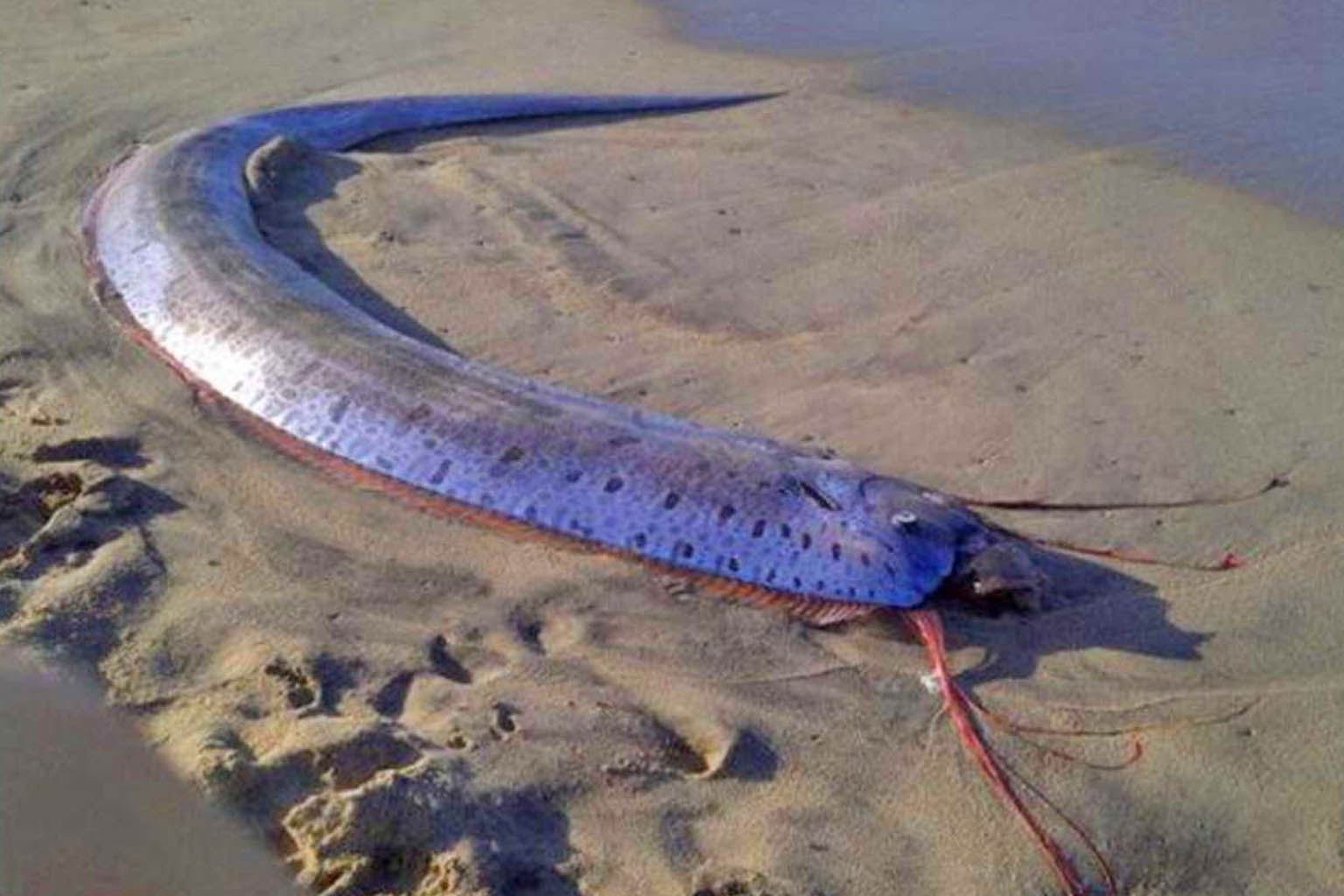
When a massive, serpentine creature emerged from the depths near a Mexican beach in February 2025, onlookers found themselves face-to-face with one of the ocean’s most enigmatic residents. The oarfish, stretching its ribbon-like body through shallow waters off Baja California Sur, presented a sight few humans ever witness. Unlike the lifeless specimens that occasionally wash ashore, this creature moved with the fluid grace of a living legend.
The encounter has reignited conversations about the doomsday fish and its supposed connection to seismic activity. For centuries, Japanese folklore has painted these deep-sea giants as harbingers of earthquakes, messengers from an underwater deity warning of impending disaster. The timing feels particularly unsettling given Mexico’s position along active fault lines and the Pacific Ring of Fire’s recent stirrings elsewhere, a region where ancient Mesoamerica once witnessed its own dramatic geological and cultural upheavals.
What makes this sighting extraordinary isn’t just its rarity, but the creature’s vitality. Most oarfish encounters involve deceased specimens, their bodies telling stories of deep-ocean mysteries we barely comprehend. This living encounter offers something different entirely.
The Science Behind the Superstition
The Regalecus glesne typically inhabits depths between 200 and 1,000 meters, where sunlight never penetrates and pressure would crush surface dwellers. These creatures can reach lengths of up to 36 feet, making them among the longest bony fish in the world. Their natural habitat places them in an environment where seismic activity might indeed influence their behavior patterns.
Marine biologists have proposed several theories for why deep-sea fish might surface before earthquakes. Tectonic movements can alter water temperature, pressure, and chemical composition at various depths. Changes in electromagnetic fields, which some animals are known to detect, might also play a role. The fish could be responding to subtle environmental shifts that precede major geological events by days or weeks.
According to research from NOAA, deep-sea creatures are extraordinarily sensitive to their environment. Even minor changes in ocean currents or chemical gradients can trigger migration patterns. The challenge lies in distinguishing between responses to geological activity and reactions to other environmental factors like El Niño cycles or seasonal temperature variations.
“Ocean eddies can retain zooplankton and plastic debris, and determine biological composition through advection, creating environmental conditions that can trigger unusual fish migration patterns” – NOAA research
Recent Patterns Across the Pacific
The Mexican sighting follows a remarkable series of oarfish discoveries along the California coast throughout 2024. Three specimens appeared over several months, marking the first such cluster in over a century. Each discovery generated headlines and speculation, though all involved dead fish rather than living encounters.
The timing of these appearances has caught scientific attention. The Pacific region has experienced increased seismic activity in recent years, with notable earthquakes affecting Japan, California, and other Ring of Fire locations. While correlation doesn’t establish causation, the pattern has researchers examining historical records more closely.
Japanese researchers have documented oarfish strandings preceding several significant earthquakes, including events before the devastating 2011 Tōhoku earthquake and tsunami. Between 2009 and 2010, unusual numbers of deep-sea fish, including oarfish, appeared in Japanese waters. The subsequent disaster gave these earlier sightings an ominous retrospective significance.
Environmental Factors and Ocean Changes
Beyond seismic theories, oceanographers point to broader environmental changes affecting deep-sea ecosystems. Climate change has altered ocean temperatures and circulation patterns worldwide. The Pacific has experienced particularly dramatic shifts, with marine heat waves and changing current systems potentially disrupting traditional habitat boundaries.
Studies published in the Journal of Fish Biology have shown that deep-sea environments, once considered relatively stable, are experiencing unprecedented changes. Rising temperatures, shifting oxygen levels, and altered food chains might be forcing creatures like oarfish to venture into unfamiliar territory. The Mexican encounter could represent not prophecy, but adaptation to a changing ocean.
The phenomenon extends beyond oarfish. Marine biologists have documented unusual sightings of various deep-sea species in recent years. Giant squids, deep-sea sharks, and other typically elusive creatures have appeared in unexpected locations and depths, suggesting broader marine ecosystem disruptions rather than earthquake-specific responses.
“In situ observations by submersibles and towed cameras can provide novel insights in the biology of fishes and their role in the deep-sea ecosystem, revealing how environmental changes affect migration patterns” – Journal of Fish Biology
The Cultural Psychology of Omens
The persistent belief in oarfish as earthquake predictors reveals something profound about human psychology and our relationship with natural disasters. In cultures frequently affected by seismic activity, finding patterns in seemingly random events provides a sense of control over uncontrollable forces.
Japanese folklore surrounding the ryugu no tsukai reflects centuries of earthquake experience. When devastating events strike without warning, communities naturally seek signs that might have predicted the disaster. The oarfish, with its otherworldly appearance and mysterious deep-sea origins, becomes a perfect canvas for such beliefs.
Modern social media amplifies these connections, spreading images and stories instantly across global networks. A single oarfish sighting can generate thousands of shares and speculation, creating feedback loops that reinforce belief in supernatural connections. The psychological comfort of believing in omens persists even in our scientifically informed age.
The Overlooked Marine Conservation Angle
While earthquake predictions dominate oarfish headlines, these encounters highlight critical gaps in our understanding of deep-sea ecosystems. Every surfacing represents an opportunity to study creatures that remain largely mysterious despite their impressive size and wide distribution.
The deep ocean faces mounting pressures from human activities: deep-sea mining, pollution, noise from shipping and military sonar, and climate change effects. Oarfish and their deep-sea neighbors inhabit environments we’re altering without fully understanding the consequences. Their unusual appearances might signal ecosystem stress rather than geological warnings.
Conservation efforts for deep-sea species lag far behind those for more visible marine life. The charismatic appeal of oarfish sightings could drive greater interest in protecting deep-ocean habitats, but only if we shift focus from apocalyptic interpretations to scientific understanding and environmental stewardship. Much like how LiDAR technology has revolutionized our understanding of ancient civilizations, modern marine research technologies could unlock the secrets of these mysterious deep-sea creatures.
The living oarfish swimming off Mexico’s coast represents more than folklore or fear. It embodies our complex relationship with the unknown depths that cover most of our planet. Whether harbinger or simply wanderer, its presence reminds us how much remains mysterious in the world beneath the waves. Perhaps the real question isn’t what these creatures predict, but what their changing patterns reveal about the ocean’s evolving story.