


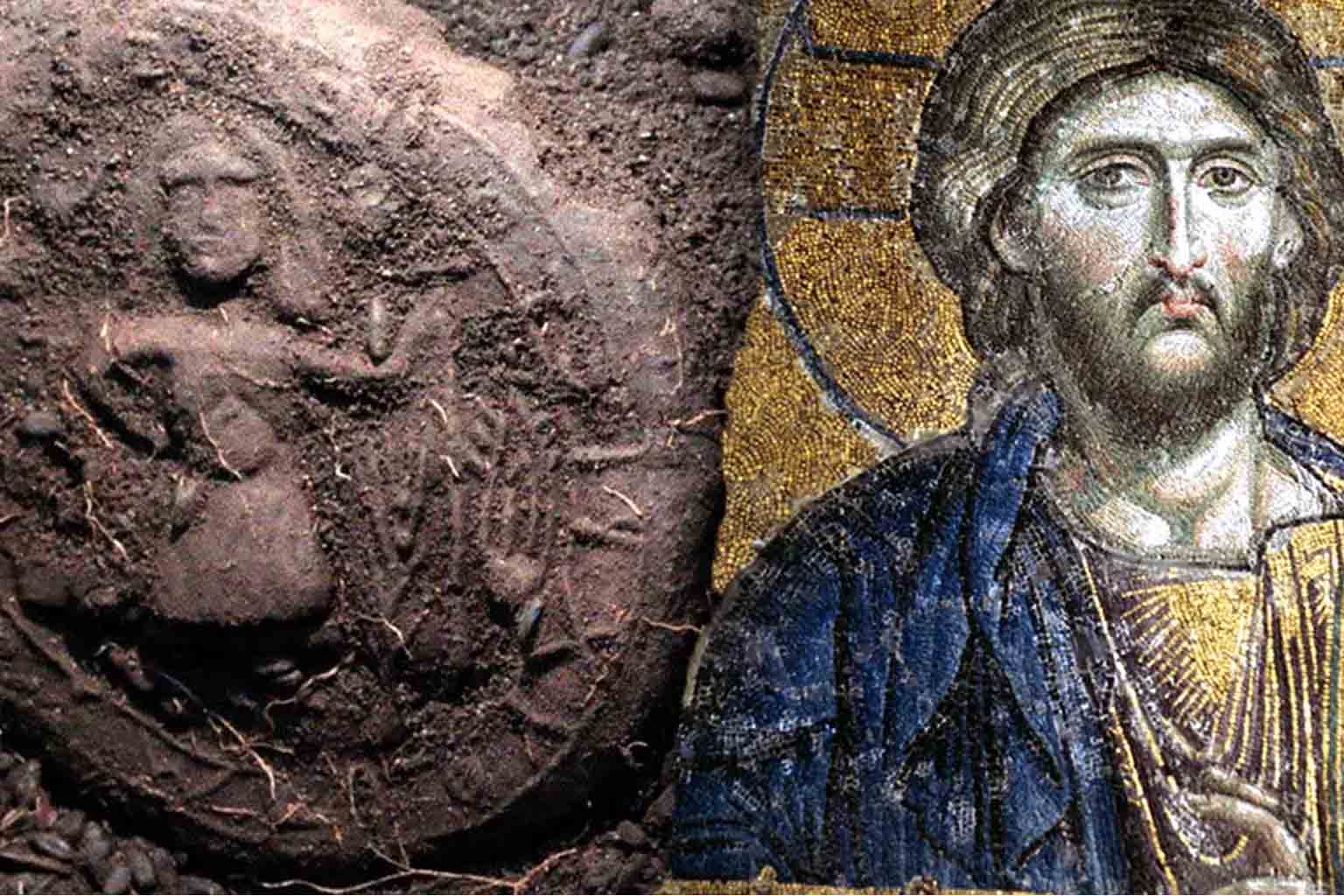
A remarkable discovery in Turkey has captivated archaeologists and historians alike: a 1,200-year-old loaf of bread bearing the image of Jesus Christ. Unearthed at the ancient site of Topraktepe, this extraordinary relic offers a window into early Christian rituals and artistic expression. Preserved through carbonization, the bread presents not only an image but also inscriptions that shed light on its devotional significance.
An astonishing find at an ancient Turkish site
The Karaman Governorship in south-central Turkey announced this exciting discovery on October 8, 2024, via their official Facebook page. The loaf dates back to the 7th or 8th century AD and was among five carbonized loaves uncovered during an excavation at Topraktepe, the once bustling city of Eirenopolis. What makes this find truly unique is the faint but discernible image of Jesus Christ impressed onto the bread’s surface, something rarely seen in such an ancient artifact.
The bread’s inscription reads, “With gratitude to the Blessed Jesus,” a touching message highlighting the spiritual connection early Christians maintained with their Eucharistic bread. This inscription alongside the image indicates that the loaf was more than mere sustenance; it was an object of religious devotion and ceremony.
Unveiling the symbolism of Jesus’ depiction on bread
Intriguingly, the image does not align with the more common Christ Pantocrator iconography, which historically portrays Christ raising his right hand—a standard in Byzantine and Eastern Orthodox art. Instead, Jesus appears as a sower or farmer, symbolizing fertility and labor. This alternative representation reflects the religious thought and symbolism prevalent during the period in the Mediterranean world, where agricultural metaphors were often tied to faith and divine providence.
Officials suggested that other symbols marked the loaves, including an impression resembling the Maltese Cross. This element further ties the bread to Christian ritual and identity.
Communion bread and its exceptional preservation
Experts believe these loaves could have served as “communion bread” or Eucharist bread, used during early Christian rituals—a hypothesis supported by the symbolism and inscription. Such bread was sacramental, consumed as a physical connection with Christ during communal worship. The carbonization of the bread at Topraktepe has remarkably preserved these delicate images and writings, offering those outside of the religious community a rare glimpse at early Christian worship practices.
The Karaman Governorship noted that the survival of these breads speaks to exceptional preservation conditions and called them “among the best-preserved examples ever identified in Anatolia.” This finding enriches our understanding of early Christianity’s spread and how faith was visually expressed in everyday objects.
Context of early Christian archaeological discoveries in Anatolia and beyond
This find adds to a growing list of significant early Christian discoveries in the Anatolia-Caucasus region. For example, in 2024, Armenian officials unveiled one of the world’s oldest Christian churches dating back to the 4th century—the time Armenia first adopted Christianity as a state religion. Similarly, an ancient Lycian port city in Turkey’s Antalya province revealed a 5th-century church inscribed with a message cautioning entry exclusively to “those on the righteous path.”
These findings collectively reinforce the historical importance of this region in the development and spread of early Christianity and its diverse cultural expressions.
“The preservation of these artifacts offers invaluable insights into the material culture of early Christians, as well as the symbolic role of everyday items in religious rites,” explained Dr. Emre Kaya, an archaeologist specializing in Byzantine-era Christianity.
According to a recent report by the Archaeological Institute of America, “Artifacts such as the carbonized bread loaves at Topraktepe provide critical evidence about the interaction between daily life and religious devotion in early Christian communities.” This perspective highlights how such discoveries deepen our historic insight into faith practices over a thousand years ago.
This video explores the latest archaeological finds from Turkey, including the Topraktepe loaves, bringing these ancient stories to life with expert commentary and high-definition images from the excavation site.
The discovery of the 1,200-year-old bread with the image of Jesus Christ reaffirms the powerful ways in which faith can inspire art and ritual. It challenges modern observers to consider how sacred expressions permeated everyday objects and the spiritual lives woven into them.
What do you think about this remarkable find? Share your thoughts and join the conversation below!