


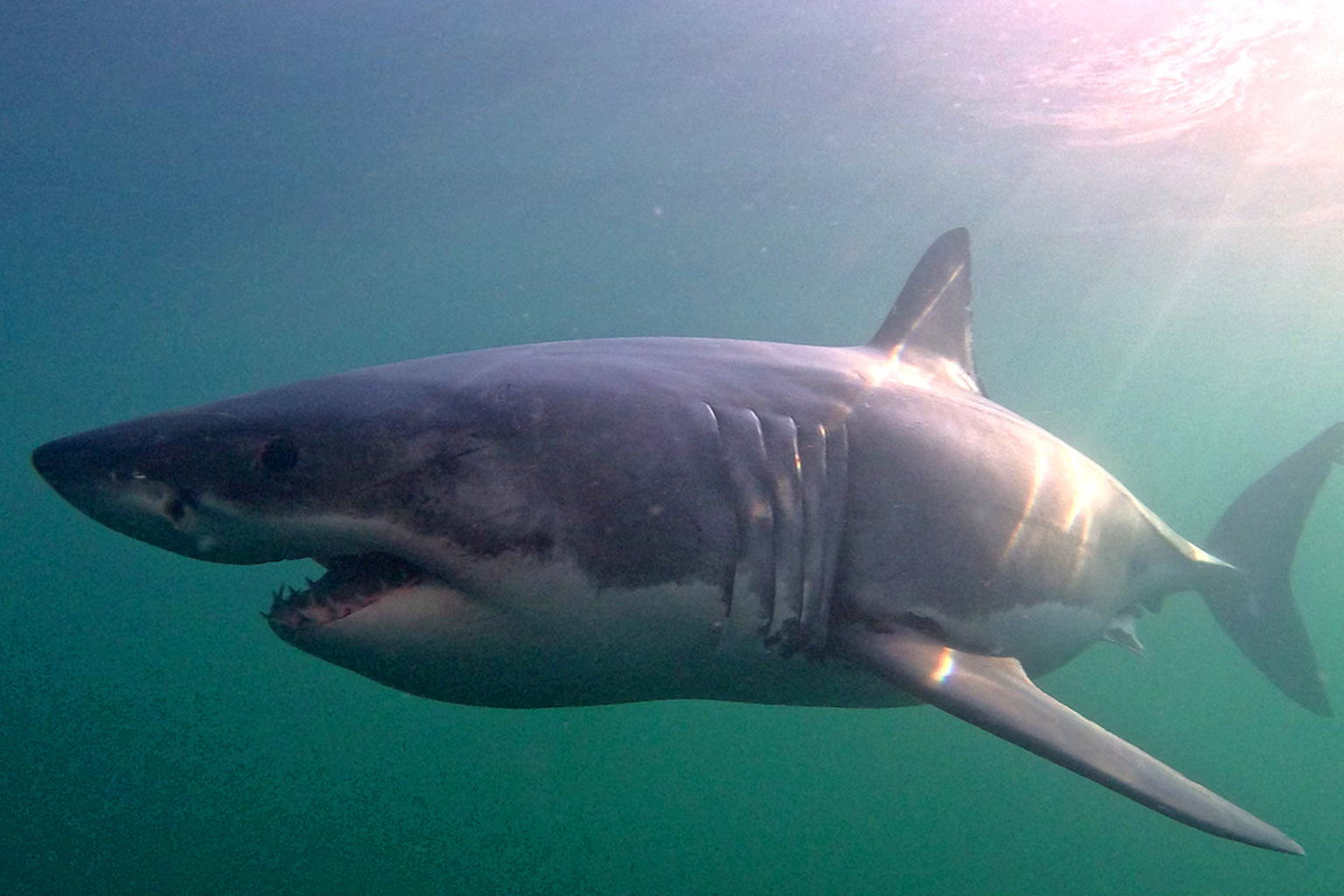
The waters off Florida’s coast have yielded what researchers are calling a landmark discovery in marine biology. A massive great white shark weighing 1,653 pounds and measuring nearly 14 feet in length has been successfully tagged by scientists, representing the largest great white ever recorded in the Atlantic Ocean. This apex predator, dubbed Contender, was captured and tagged approximately 45 miles offshore along the Florida-Georgia border in January 2025.
The significance of this discovery extends far beyond its impressive dimensions. Adult male great whites of this magnitude have remained largely elusive to researchers, making Contender’s tagging a pivotal moment for understanding the behavior and population dynamics of these ancient predators. At an estimated age in his early thirties, Contender represents a mature breeding male whose movements could unlock critical insights about great white shark reproduction and migration patterns in North Atlantic waters. Just as LiDAR technology has revolutionized archaeological discoveries by revealing hidden structures, advanced tracking technology is now unveiling the secret lives of these apex predators.
OCEARCH, the non-profit organization behind this breakthrough, has been methodically building a comprehensive database of great white behavior through their Western North Atlantic White Shark Project. With 95 sharks now tagged, Contender stands as their most significant capture to date.
The Challenge of Tracking Apex Predators
Tagging fully grown great white sharks presents extraordinary challenges that most wildlife research doesn’t encounter. These apex predators don’t follow predictable patterns, and encounters with mature specimens remain frustratingly rare. The specialized baited drumline system used by OCEARCH represents years of refinement in capture techniques, designed to safely handle these powerful animals without causing stress or injury.
Dr. Harley Newton, OCEARCH’s chief veterinarian, has emphasized how adult-sized specimens have proven elusive throughout their research efforts. The rarity of successfully tagging a shark of Contender’s size cannot be overstated. According to NOAA Fisheries research, male great whites typically reach sexual maturity around 11.5 feet and 26 years of age, making Contender’s nearly 14-foot frame a testament to successful survival in increasingly challenging ocean conditions.
“Great white sharks are apex predators with complex life histories, and mature males play crucial roles in population dynamics and genetic diversity” – NOAA Fisheries
The tagging process itself requires precise coordination. The research team must work quickly to attach two types of satellite tags while minimizing the animal’s time out of water. One tag monitors surface movements, while a pop-up satellite tag records diving behavior, depth preferences, and temperature data before detaching after six months.
Advanced Tracking Technology Reveals Migration Secrets
Since his tagging, Contender has already traveled 292 miles south toward northern Florida, providing researchers with real-time data about great white movement patterns. The dual-tag system represents a significant advancement in marine tracking technology, offering both immediate location data when the shark surfaces and detailed environmental information about his underwater behavior.
This tracking capability allows scientists to observe how these predators navigate ocean currents, select feeding areas, and respond to seasonal changes. The data reveals that great whites don’t simply wander aimlessly through the ocean but follow sophisticated migration routes that likely correspond to prey availability and breeding opportunities. Similar to how researchers have documented humpback whale migration patterns challenging previous assumptions, great white tracking data continues to surprise scientists with unexpected behavioral insights.
The real-time tracking feature has democratized shark research in unexpected ways. Anyone can monitor Contender’s movements through OCEARCH’s free desktop tracker and smartphone applications, creating public engagement with marine conservation that extends far beyond academic circles. This technological approach mirrors how innovative technology is transforming various fields by making complex data accessible to broader audiences.
Population Recovery and Breeding Significance
Contender’s capture arrives at a crucial moment for North Atlantic great white populations. These sharks have faced significant declines due to overfishing and habitat disruption, making every mature breeding individual critically important for species recovery. Research published in Ecology and Evolution indicates that large males like Contender play outsized roles in maintaining genetic diversity and population stability.
“White shark populations face significant life history uncertainties, with rebound potential heavily dependent on the survival and reproductive success of mature individuals” – Ecology and Evolution research
The timing of this discovery aligns with growing evidence that great white populations in the North Atlantic may be showing signs of recovery following decades of protection measures. Studies have documented increasing sightings of juvenile great whites in traditional nursery areas, suggesting that conservation efforts may be yielding positive results.
Understanding how mature males contribute to breeding success requires tracking their movements during mating seasons and identifying critical habitat areas. Contender’s data will help researchers map these essential breeding grounds and assess whether current marine protected areas adequately safeguard great white reproduction.
The Behavioral Mysteries That Tracking Can’t Solve
While satellite tracking provides unprecedented insights into great white movements, significant questions about their behavior remain beyond current technology’s reach. The social dynamics between mature males, territorial behaviors, and complex feeding strategies still require direct observation methods that remain largely impossible in open ocean environments.
Researchers acknowledge that tracking data reveals where sharks go but offers limited insight into why they make specific choices. The environmental triggers that initiate migration, the communication methods between individuals, and the decision-making processes that govern hunting behavior remain largely mysterious despite decades of study. Just as prehistoric cave etchings reveal ancient behavioral patterns that researchers are still working to fully understand, great white shark behavior continues to hold secrets that modern technology cannot completely unlock.
Even advanced tagging technology cannot capture the full complexity of great white interactions with their ecosystem. The cascading effects of their presence on marine food webs, their role in maintaining ocean health, and their responses to climate change require research approaches that extend far beyond individual animal tracking.
Contender’s journey through Atlantic waters represents more than scientific achievement—it embodies our evolving relationship with apex predators once feared and hunted to near extinction. As tracking technology continues advancing and conservation efforts mature, each tagged shark becomes a ambassador for species recovery, carrying with them the hopes of researchers working to understand and protect these magnificent predators. The question remains whether our growing knowledge will translate quickly enough into effective conservation action to ensure stable great white populations for future generations.