


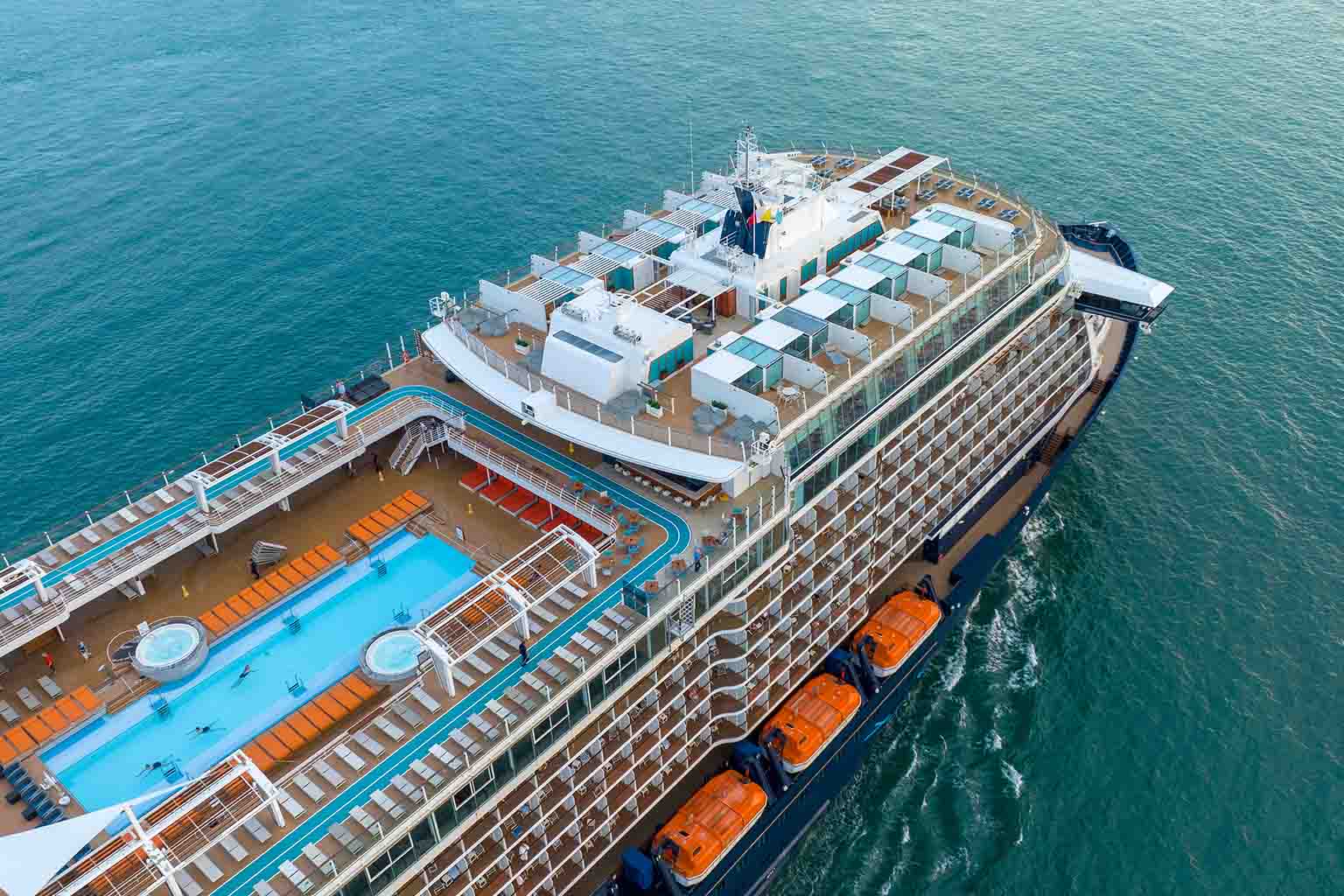
For a quarter-century, one man swapped the ordinary comforts of home for the endless horizon of the sea. Mario Salcedo, a millionaire with an unconventional past, has lived nonstop aboard cruise ships for over 25 years. But after completing his 1,000th voyage, his true challenge is no longer financial – it’s adapting to a life where the ocean’s motion defines his very perception of stability.
The Unstoppable Life of “Super Mario”
Mario Salcedo’s story reads like a maritime legend. Once entrenched in the world of international finance, he walked away from the grind in 1997 at age 47, seeking an escape from jet lag and corporate boardrooms. What began as a short getaway soon became a permanent lifestyle when he realized his place was on the water, moving from one Royal Caribbean cruise ship to the next.
Over 25 years, Salcedo has transformed from a vacationer into a full-time cruiser, logging over 1,000 trips and becoming a familiar face among crew and passengers alike. Nicknamed “Super Mario,” he isn’t just another tourist; his workspace on the Symphony of the Seas—a laptop, a cigar tray, and a hand-painted “Super Mario’s Office” sign set poolside—is a living symbol of his floating office.
Living at sea for this length of time is rare, especially with a lifestyle maintained at a cost that averages around $101,000 per year. Yet Salcedo doesn’t view it as extravagant. Thanks to perks from Royal Caribbean’s Pinnacle Club—their highest loyalty tier—he enjoys free Wi-Fi, priority boarding, and cruise credits, which help offset expenses. He continues managing investment portfolios remotely, working about five hours a day from his maritime office.
Why Long-Term Cruising Makes Financial and Lifestyle Sense
Salcedo’s maritime life taps into a growing trend among retirees and remote professionals. A study on extended cruising published on ResearchGate highlights that living on cruise ships can cost up to 30% less annually than traditional senior living facilities, without sacrificing full-time hospitality or onboard healthcare access.
The benefits of cruising for seniors extend beyond finances. The National Institute on Aging stresses the importance of social engagement, regular routines, and physical activity—all of which cruising offers. Ships provide opportunities to meet diverse people, engage in activities, and maintain an active lifestyle. For someone like Salcedo, these aspects have made the sea a sustainable, vibrant home.
This innovative lifestyle reflects broader shifts in how people perceive retirement and work. The 2024 Harvard Business School report on retirement migration identifies “intentional unrooting” as a growing trend. Professionals with remote income and fewer family ties are increasingly favoring freedom over fixed addresses, making long-term cruising a practical and appealing option.
When Life at Sea Becomes a Neurological Challenge
But this life isn’t without its costs. After years immersed in ocean motion, Salcedo developed mal de débarquement syndrome (MdDS), a rare condition where the brain struggles to adjust from constant rocking at sea to stable land. In his words, “I can’t walk in a straight line on land anymore. The ship feels more natural to me than any apartment ever did.”
MdDS affects fewer than 1 in 100,000 people, according to the American Brain Foundation, and occurs mostly in those exposed to prolonged motion environments. Unlike typical cases that resolve within days or weeks, chronic cruisers like Salcedo may experience persistent symptoms. Treatments focus on managing symptoms, and the neurological mechanisms behind MdDS remain poorly understood.
Despite this, Salcedo embraces his condition as part of the “price of freedom.” He remains socially active, diving in the Caribbean, dancing on deck, and enjoying sunsets from his ever-moving home. His favorite port is Labadee, Royal Caribbean’s private escape in Haiti, and the 11-night Explorer of the Seas cruise marked not just his 1,000th journey but a celebration of a unique way of life.
A Glimpse Into an Alternative Future of Living and Working
Mario Salcedo’s life sheds light on the evolving concepts of work, home, and aging in the digital age. Unlike many remote workers who cobble together freelancers gigs in trendy urban hubs, his office is a floating palace with resort amenities and ever-changing views.
He avoids social media and refrains from promoting his lifestyle, allowing his story to stand as a testament to personal choice and adaptability rather than a curated image. Journalist Jackie Sheckler Finch captured his ethos best: “I’m just living my life,” he said, puzzled by the fascination around him.
In a world where many wrestle with property taxes, maintenance, and urban stress, Salcedo’s story offers an inspiring alternative. His cruise ship life is an ambitious experiment in autonomy and mobility, slipping free from conventional constraints.
This lifestyle, explored further in studies like those from Harvard Business School and articles on ResearchGate, suggests a future where retirement is reimagined—where “home” becomes fluid, and work adapts to wherever the Wi-Fi travels, even if it’s thousands of miles from shore.
Mario Salcedo’s remarkable story, expertly chronicled by cruise industry bloggers and journalists, challenges how we think about life, money, and freedom. Whether it’s the thrill of the next horizon or the quiet hum of a digital nomad’s office at sea, his journey invites us to reconsider what “living well” can mean in an increasingly connected and mobile world.
What do you think about this unconventional lifestyle? Could life at sea be the next frontier for retirees and remote workers alike? Share your thoughts or your own experiences in the comments below—we’d love to hear from you!