


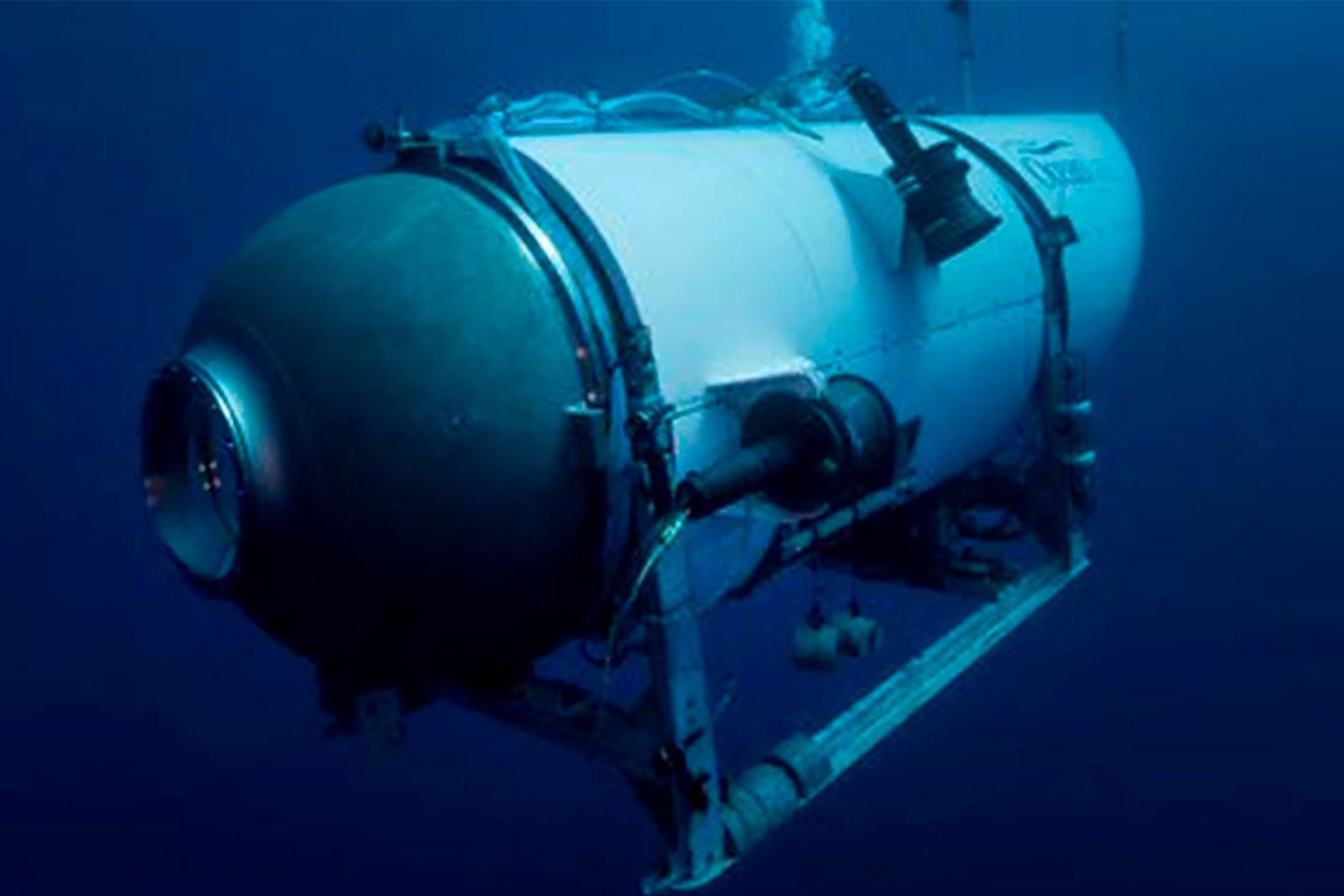
The ocean depths hold secrets that most of us will never witness firsthand, yet sometimes those depths speak to us in ways that send chills down the spine. Nearly two years after the tragic loss of the Titan submersible, federal authorities have released an audio recording that captures the precise moment when five lives were lost in the crushing darkness of the North Atlantic. The sound is brief, stark, and final—a single boom that marked the end of what was meant to be an extraordinary journey to the Titanic wreck site.
This isn’t just another piece of evidence in a maritime disaster investigation. The recording represents something far more profound: our ongoing struggle to push the boundaries of human exploration while grappling with forces that dwarf our engineering capabilities. Much like archaeologists who uncover 3,000-year-old villages that reveal humanity’s ancient relationship with the unknown, this tragedy exposes our modern confrontation with the limits of exploration. The catastrophic implosion occurred in milliseconds, yet its implications continue to ripple through the deep-sea exploration community and beyond.
The audio serves as a stark reminder that the ocean’s depths remain one of the most unforgiving environments on Earth, where the margin for error approaches zero and the consequences of miscalculation are absolute.
The Science Behind the Sound
The National Oceanic and Atmospheric Administration captured this haunting audio through a passive acoustic monitoring system positioned approximately 900 miles from the disaster site. The device, part of NOAA’s Ocean Noise Reference Station Network, was designed to track underwater sounds for entirely different purposes—yet it became the inadvertent witness to a tragedy that would captivate global attention.
What makes this recording particularly significant is its clarity and definitiveness. The acoustic signature of an implosion at such depths creates a distinctive sound pattern that experts can identify with confidence. The steady static hum suddenly interrupted by a sharp, crushing boom tells a story that needs no interpretation—the immense pressure of nearly 13,000 feet of water finally overcame the structural integrity of the vessel.
According to research from Wayne State University’s engineering department, the combination of immense pressure and structural vulnerabilities creates catastrophic failure conditions in deep-sea environments. Research into deep-sea acoustics has shown that sounds can travel extraordinary distances underwater, which explains how monitoring equipment hundreds of miles away could detect this event. The ocean acts as a massive sound conductor, carrying these tragic echoes across vast expanses of the Atlantic.
“Despite its reinforced hull, a combination of immense pressure and structural design flaws can lead to instantaneous catastrophic failure at extreme ocean depths” – Engineering analysis of deep-sea vessel failures
The Human Cost of Deep-Sea Ambition
Behind the technical analysis lies a deeply human tragedy. Stockton Rush, the CEO of OceanGate who piloted the vessel, died alongside renowned deep-sea explorer Paul-Henri Nargeolet, British adventurer Hamish Harding, and Pakistani businessman Shahzada Dawood with his 19-year-old son Suleman. Each passenger had their own reasons for making this journey, but all shared a fascination with one of history’s most famous maritime disasters.
The irony is inescapable—those seeking to witness the remains of the Titanic, a ship that sank due to overconfidence in its engineering, became victims of what many experts now view as similar hubris. Just as archaeologists studying 3,000-year-old fortresses reveal how ancient civilizations faced their own engineering challenges, this modern tragedy exposes the persistent human tendency to push beyond proven safety limits. The eight-hour journey they had planned was cut short within two hours, when communication with the surface vessel Polar Prince was lost forever.
The presence of young Suleman Dawood adds a particularly tragic dimension to this disaster. At just 19 years old, he represents the youngest victim of deep-sea exploration in recent memory, highlighting the generational impact of such losses.
Debunking the False Hope of Survival
Perhaps one of the most psychologically challenging aspects of the Titan disaster was the period of false hope that followed its disappearance. Search teams detected mysterious banging sounds in the area, leading to widespread speculation about potential survivors trapped inside the vessel with a dwindling oxygen supply. Media coverage focused intensely on rescue efforts and survival timelines.
The release of this implosion audio definitively closes the door on those theories. Experts have determined that the banging sounds were unrelated to the Titan, and the acoustic evidence proves that the submersible was destroyed almost instantaneously. This revelation, while providing closure, also underscores how quickly hope can turn to tragedy in the unforgiving environment of the deep ocean.
The timeline now appears tragically clear: the implosion occurred long before the first search teams even arrived on site, meaning that all rescue efforts, while heroic and well-intentioned, were ultimately futile from the beginning. Like the discovery of quarter million statuettes that tell stories of lives lost millennia ago, this audio recording provides definitive evidence of a tragedy that unfolded in mere moments.
The Overlooked Psychological Impact on Maritime Safety
What conventional disaster analyses often miss is the profound psychological effect such incidents have on the broader maritime and exploration communities. The Titan disaster didn’t just claim five lives—it sent shockwaves through an entire industry of deep-sea explorers, researchers, and adventure tourism operators who suddenly found themselves questioning fundamental assumptions about risk and safety.
Studies in maritime psychology have shown that high-profile disasters create lasting changes in risk perception that can persist for decades. The audio recording’s release serves as an particularly visceral reminder of these dangers, potentially affecting the willingness of future explorers to undertake similar journeys. This psychological impact extends beyond individual decision-making to influence funding decisions, regulatory approaches, and public support for deep-sea exploration.
The sound itself—that brief, final boom—becomes a haunting symbol that resonates far beyond its technical significance. It represents the moment when human ambition met immutable physical laws, and lost. For those working in related fields, this audio likely serves as both a sobering reminder and a call for more rigorous safety protocols.
Regulatory Ripple Effects and Industry Response
The Titan disaster has fundamentally altered the landscape of submersible safety regulations and industry standards. The release of this audio recording adds another layer of evidence to ongoing investigations and regulatory discussions about how to prevent similar tragedies in the future.
Maritime safety experts point to this incident as a watershed moment that exposed significant gaps in oversight of private deep-sea exploration vehicles. The unconventional design choices made by OceanGate, including the use of carbon fiber in a deep-sea environment where steel and titanium are typically preferred, have become subjects of intense scrutiny and debate. Analysis by the National Transportation Safety Board has provided detailed examination of the hull failure mechanisms that led to this catastrophic implosion.
“The pressure vessel testing revealed critical vulnerabilities in non-traditional materials when subjected to extreme deep-ocean conditions” – NTSB investigation findings
The audio evidence strengthens the case for more stringent certification processes and mandatory safety inspections. It provides investigators with concrete proof of what happened, eliminating speculation and focusing attention on the engineering and procedural failures that led to this outcome. Much like how archaeological discoveries at sites such as the Tikal archaeological site reveal the consequences of ancient cultural clashes, this modern tragedy exposes the deadly results when innovative engineering meets insufficient safety protocols.
As investigations continue and new safety protocols emerge, this recording will likely be studied for years to come, serving as both evidence of what went wrong and a tool for preventing future tragedies. The ocean depths that claimed the Titan continue to hold their secrets, but this one sound has spoken volumes about the price of pushing human exploration beyond the boundaries of proven safety measures.