


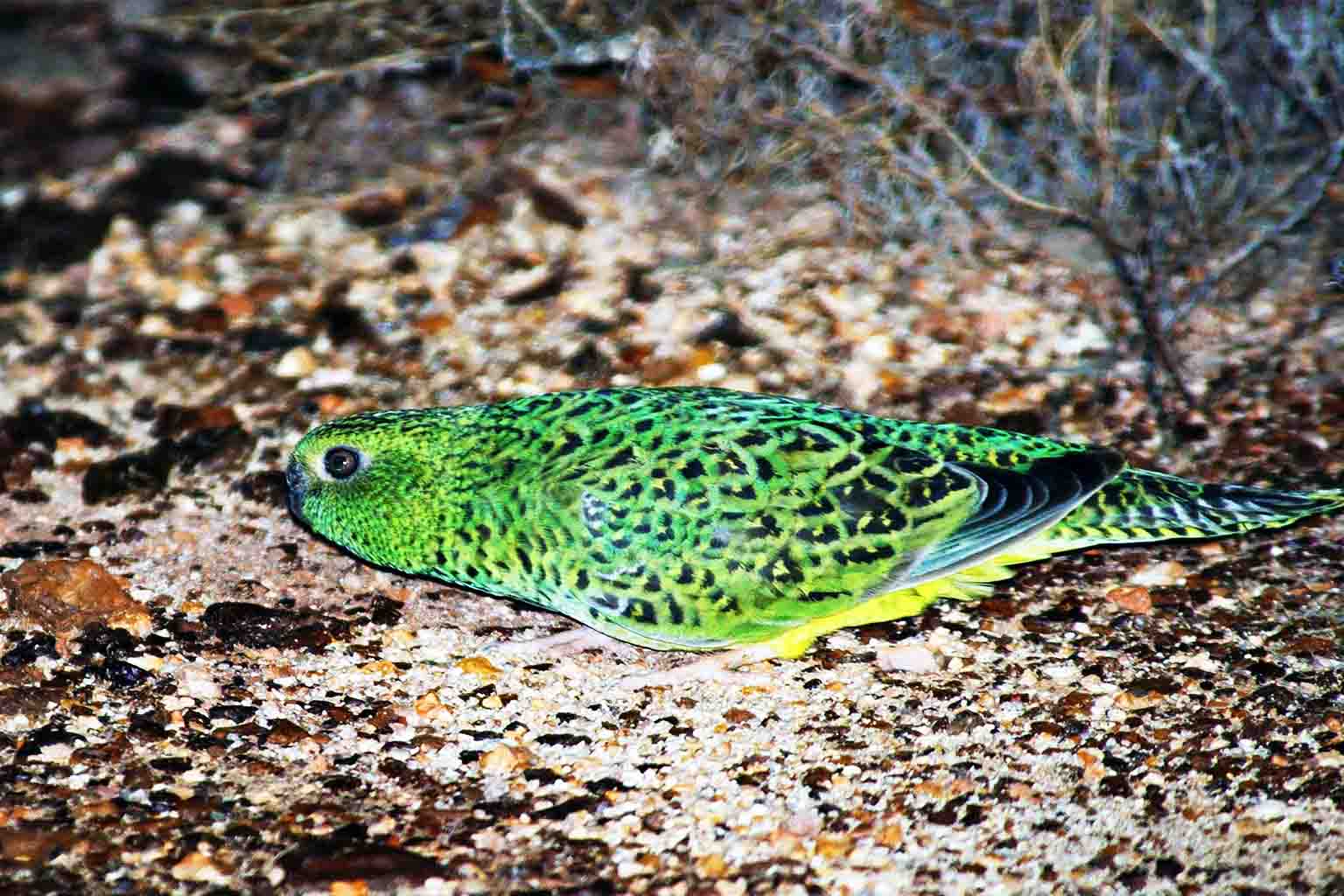
A remote stretch of Australian outback has yielded what conservationists are calling a game-changing discovery. Indigenous Protected Area rangers have uncovered crucial evidence about one of the world’s most enigmatic birds – the night parrot, a species that vanished from scientific records for nearly a century before its stunning rediscovery in 2013.
The find represents more than just another wildlife sighting. For a bird that has mastered the art of invisibility in Australia’s vast wilderness, any tangible evidence of its existence carries profound implications for conservation science. This latest breakthrough could finally unlock the mysteries surrounding the night parrot’s breeding behavior, a critical piece of the puzzle that has eluded researchers for over a decade since the species emerged from presumed extinction. Such remarkable rediscoveries echo other recent conservation breakthroughs, including the harpy eagle comeback in Mexico’s protected forests.
The Century-Long Disappearance
The night parrot’s story reads like a conservation fairy tale with a dark beginning. For more than 100 years, this nocturnal wanderer existed only in museum specimens and fading field notes from the late 1800s. Ornithologists had relegated it to the growing list of Australia’s extinct fauna, another casualty of colonial expansion and habitat transformation.
When researchers finally confirmed living night parrots in 2013, the scientific community experienced something akin to finding a living dodo. According to conservation research from the University of Queensland, the rediscovery sparked an intensive research effort, but the bird’s secretive nature and preference for remote, inhospitable terrain made systematic study nearly impossible. Sightings remained sporadic, often separated by months or years, leaving researchers with more questions than answers about the species’ basic biology.
“The Night Parrot’s near-mythical status and extremely limited distribution data have made establishing effective conservation strategies extraordinarily challenging” – University of Queensland conservation research
The Predator Problem
Australia’s introduced predators have fundamentally altered the survival equation for native species. Feral cats and foxes now roam territories where they have no natural enemies, creating what researchers describe as an ecological perfect storm for ground-dwelling birds like the night parrot.
These invasive hunters possess advantages that native predators never had. They reproduce rapidly, adapt to diverse environments, and show no evolutionary restraint when targeting unfamiliar prey. For a bird that evolved over millions of years without such threats, the learning curve has been steep and often fatal. Environmental researcher Abby Jackson’s observation about ecosystem balance takes on particular urgency when applied to species hanging by such a thin thread.
The night parrot’s ground-nesting habits make it especially vulnerable during breeding season. Unlike tree-nesting species that can escape terrestrial threats, night parrots must commit to earth-bound nests for weeks while raising young, creating extended periods of extreme vulnerability.
Decoding Breeding Mysteries
The rangers’ recent discovery promises to illuminate one of ornithology’s most persistent blind spots. Night parrot researcher Nick Leseberg has emphasized that understanding reproductive behavior isn’t just academic curiosity – it’s the foundation upon which any meaningful conservation strategy must be built.
Current knowledge about night parrot breeding comes largely from historical accounts and educated guesswork. Research published in Biodiversity and Conservation indicates that scientists suspect the birds nest in dense spinifex grass formations, but confirming nest locations, breeding timing, and reproductive success rates has proven extraordinarily difficult. The new evidence could provide researchers with their first concrete data about where and how these birds reproduce in the wild.
This information carries practical implications that extend far beyond scientific journals. Conservation managers need to know when and where to focus protection efforts, how to time land management activities to avoid disrupting breeding cycles, and which habitat features are truly essential for reproductive success.
The Psychological Toll of Near-Extinction
Working with species on the absolute brink of extinction creates unique psychological pressures that mainstream conservation discussions rarely acknowledge. Indigenous rangers and researchers invested in night parrot conservation operate under the constant weight of knowing that any mistake, missed opportunity, or funding cut could spell the difference between species survival and final extinction.
IPA coordinator Christy Davies described the emotional impact of the recent discovery, highlighting how deeply personal these conservation efforts become for those directly involved. Rangers spend countless hours in harsh conditions, often enduring weeks without any sign of the birds they’re trying to protect. The psychological resilience required to maintain hope and focus while working with such an elusive species demands recognition alongside the technical aspects of conservation work. This dedication mirrors the commitment seen in other archaeological and conservation efforts, such as the painstaking work at Tikal archaeological site where researchers spend years uncovering ancient mysteries.
This emotional dimension shapes decision-making in ways that purely scientific approaches might miss. Rangers develop intuitive understanding of landscape patterns and bird behavior that complements formal research methods, creating a more comprehensive conservation approach than either strategy could achieve alone.
Indigenous Knowledge Meets Modern Science
The night parrot’s rediscovery and ongoing monitoring exemplifies how traditional ecological knowledge can enhance contemporary conservation science. Indigenous Protected Area rangers bring generations of landscape understanding to species recovery efforts, offering perspectives that academic training alone cannot provide.
These rangers possess intimate knowledge of seasonal patterns, habitat changes, and ecological relationships that inform their search strategies. Their cultural connection to country creates long-term commitment that transcends typical research project timelines, providing the sustained effort that night parrot conservation requires. This deep understanding of landscape and cultural connections parallels the insights gained from studying 20,000-year-old cave etchings that reveal how ancient peoples understood and mapped their environments.
The collaboration between Indigenous knowledge holders and university researchers represents a evolution in Australian conservation practice. Rather than treating traditional knowledge as supplementary to scientific method, successful night parrot research has integrated both approaches from the beginning, creating more robust and culturally grounded conservation strategies. Such interdisciplinary approaches have proven valuable across various fields, from understanding early human cultural ties in archaeological contexts to modern wildlife conservation.
“Effective conservation management for critically endangered species requires integrating traditional ecological knowledge with contemporary scientific methods to develop comprehensive protection strategies” – Biodiversity and Conservation research
The night parrot’s future remains precarious, but each new piece of evidence brings hope that this remarkable species might yet step back from the extinction precipice. Whether current conservation efforts prove sufficient may depend as much on continued collaboration between Indigenous rangers and researchers as on the mysterious birds themselves. In Australia’s vast and unforgiving landscape, perhaps the most endangered species require both ancient wisdom and modern science to survive.