


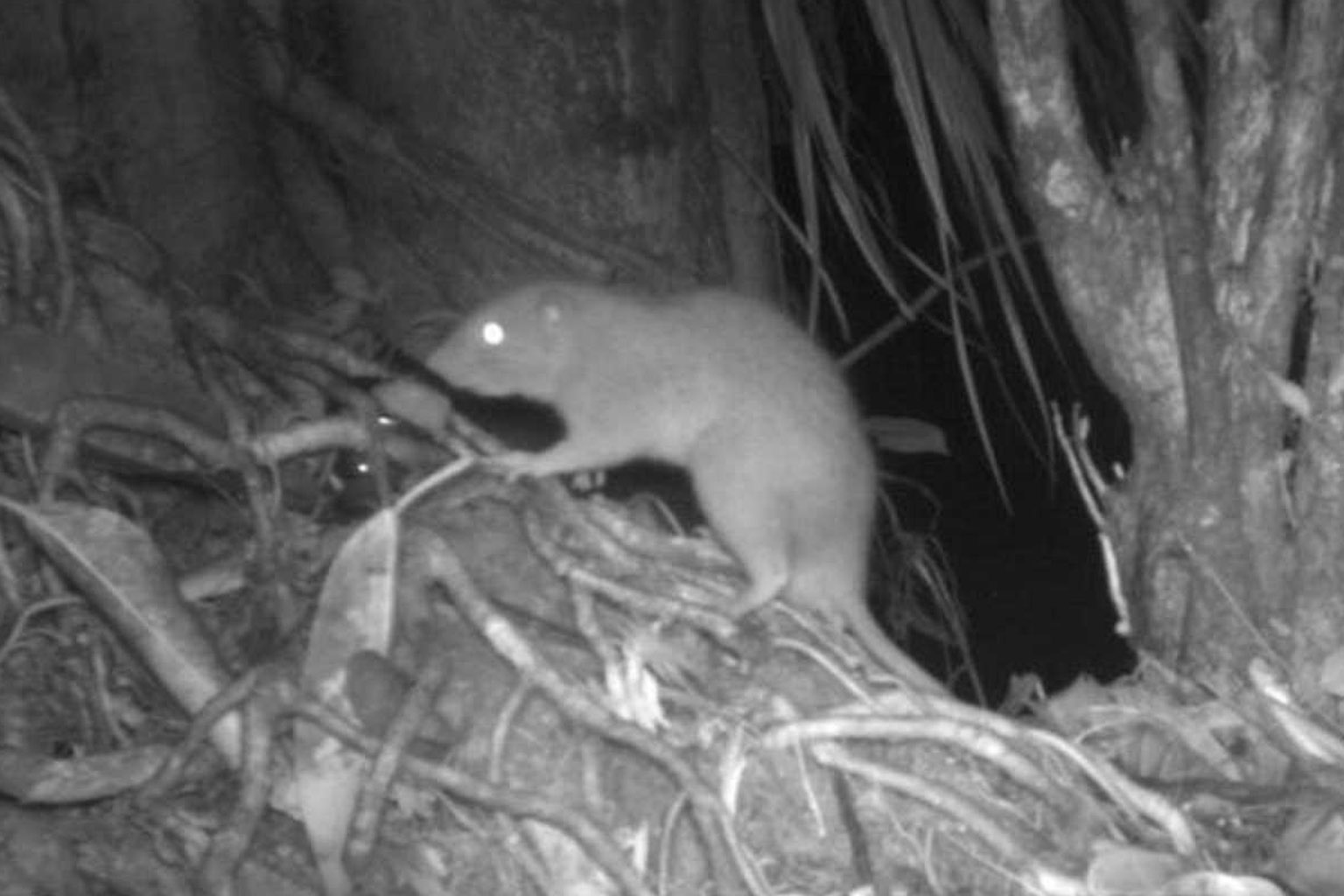
The dense, mist-shrouded mountains of New Guinea have long guarded many secrets, but none quite as astonishing as the elusive subalpine woolly rat—recently captured on camera for the first time in the wild. This giant rodent, measuring nearly three feet in length and weighing over four pounds, has finally stepped out from the shadows of museum drawers into the spotlight of natural science. Its discovery not only marks a milestone in rodent research but also highlights the hidden biodiversity thriving in one of Earth’s most remote ecosystems.
The Unveiling of New Guinea’s Giant Woolly Rat
For nearly 40 years, the subalpine woolly rat (Mallomys istapantap) existed solely in scientific collections, known only from preserved specimens. It wasn’t until a recent groundbreaking study led by František Vejmělka, a doctoral researcher at the Czech Academy of Sciences and the University of South Bohemia, that this remarkable species was finally documented alive. Expeditioning deep into the rugged montane forests of New Guinea, Vejmělka and his team employed camera traps and local expertise to capture the first living footage of this magnificent rodent in its natural home.
The subalpine woolly rat thrives at elevations between 8,000 and 12,600 feet in New Guinea’s remote highlands, areas often inaccessible to most researchers. Its habitat consists of thick forests and grassy slopes on steep mountains, making field study a particularly daunting challenge. This elusive creature’s nocturnal, arboreal lifestyle – including climbing trees to feed on leaves – helped keep its presence a mystery for so long despite its imposing size.
Physical Wonders and Evolutionary Mysteries
Stretching up to 33.5 inches (85 cm) in length and tipping the scales at nearly 4.4 pounds (2 kilograms), the woolly rat is among the largest rodents in the world. One of its standout features includes thick, dense fur adapted for the chilly mountain environment. Its paws are impressively large—about 3 inches (8 cm) long—equipped to maneuver through the forest canopy with ease. Its sharp incisors are perfect for a herbivorous diet, primarily leaves and plant matter gathered by night.
Experts attribute the massive size of the subalpine woolly rat to a phenomenon known as insular gigantism. This evolutionary adaptation is common on islands where species often grow larger due to factors like limited predation and reduced competition. New Guinea’s isolation and unique evolutionary history—where marsupials and monotremes dominate instead of placental mammals—have provided a perfect backdrop for such remarkable adaptations.
Vejmělka expressed awe at the discovery, stating, “It’s astonishing that such a striking animal remained virtually unstudied for decades. This raises important questions about what other hidden species might inhabit the tropical mountains we still know so little about.”
Ecological Significance and Conservation Challenges
Understanding the subalpine woolly rat offers vital clues about the balance of New Guinea’s montane ecosystems. As a herbivore, the rodent plays a crucial role in shaping vegetation dynamics by feeding on leaves and potentially dispersing seeds. Its nocturnal habits and underground burrows contribute to soil turnover and nutrient cycling, enriching the forest environment.
The recent study also documented the woolly rat’s interactions with parasites and its activity rhythms, emphasizing the complexity of its ecological niche. However, research on this giant rodent remains in its infancy, primarily due to the logistical difficulties imposed by its remote habitat.
This expedition’s success owes much to the invaluable participation of local indigenous hunters, whose deep knowledge of the land and its wildlife was paramount in locating these elusive creatures. Collaborating with indigenous communities has become increasingly recognized as a cornerstone of ethical and effective biodiversity research.
The Bigger Picture: Unlocking New Guinea’s Biodiversity
New Guinea’s tropical montane habitats represent one of the last frontiers for biological discovery. The woolly rat’s documentation underscores how much remains to be learned about long-overlooked species and ecosystems. Experts like Vejmělka emphasize that continued exploration and protection of these habitats are critical for preserving biodiversity.
Supporting this view, a 2023 report by the Conservation International highlights New Guinea’s exceptional species richness and the urgent need for sustainable conservation strategies. Fragile mountain ecosystems face increasing threats from climate change and human activities, making scientific discoveries like this both timely and crucial for informing policy and conservation efforts.
Your thoughts and experiences with wildlife discoveries matter to us. Have you ever encountered an extraordinary animal in the wild? Join the conversation — share your stories or questions below, and help spread the wonder of our planet’s incredible biodiversity.