


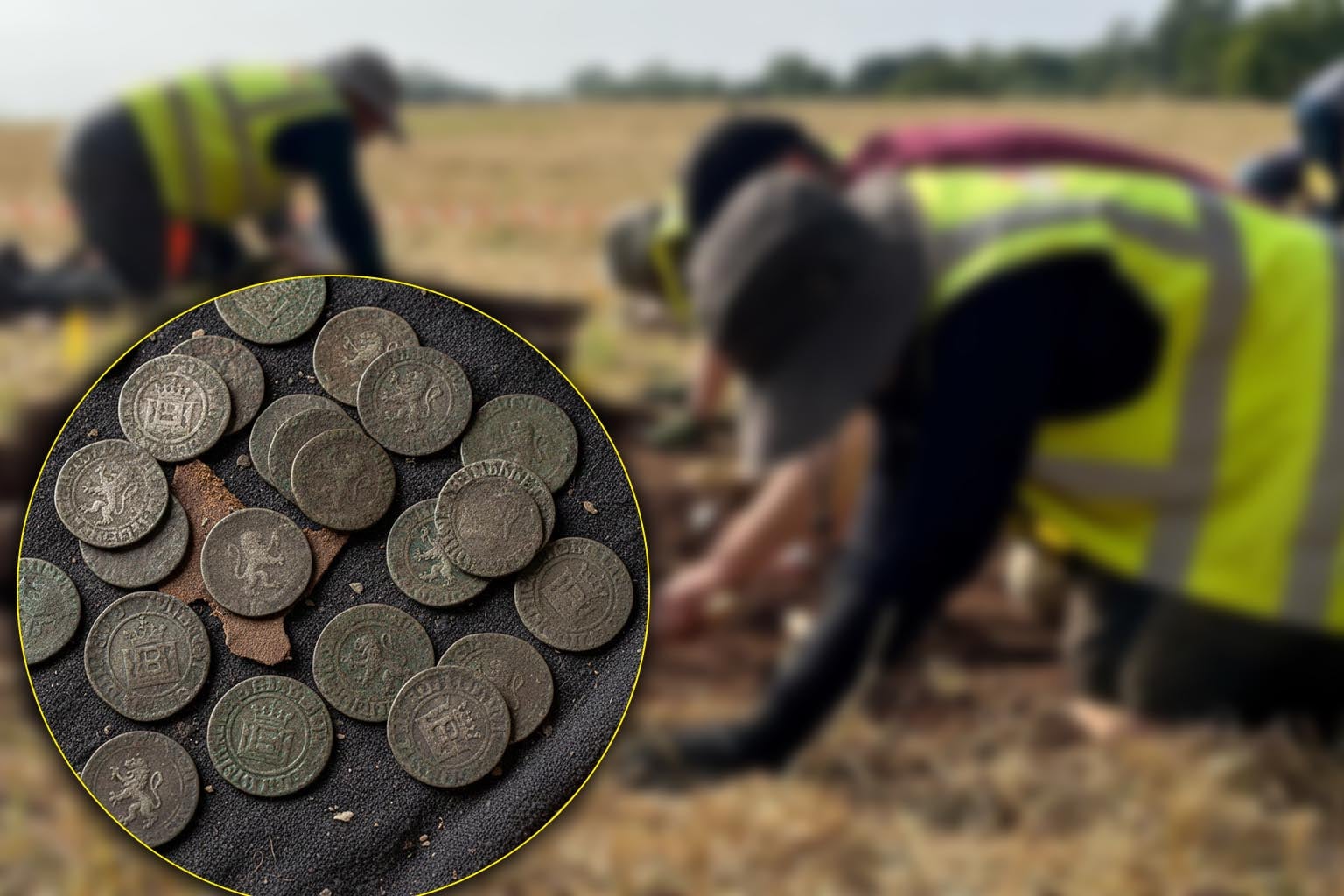
The thrill of discovery is something every treasure hunter lives for, and who could blame them? In a tale that seems like it stepped out from a medieval chronicle, amateur detectorists Keith Young and Lisa Stephenson stumbled across an astonishing find—a cache of coins dating back to the 15th century. This unexpected discovery in the Scottish Borders, near Cappercleuch, has ignited excitement among historians, archaeologists, and history buffs, as they eagerly dive into this unique glimpse of the past.
A Surprise Beneath Scotland’s Soil
It was a day like no other when Young and Stephenson unearthed the collection of over 30 gold and silver coins. Their find, often dubbed the “find of a lifetime,” wasn’t just old; it was a remarkable mix of both English and Scottish currency from a time when kingdoms clashed and collaborated. According to a report by The Scotsman, these artifacts originated under the reigns of notable figures—Henry V, Edward IV for the English coins, and James I and James II for the Scottish coins. This mingling of cultures highlights the economic and political entwining of Scotland and England during this pivotal period.
The significance of this blend of coins can’t be overstated. The English silver groats, tracing back to a time when Edward I first introduced them in the 13th century, had become integral to the currency systems in both England and Scotland by the 1400s. This collection doesn’t just tell a story of money but paints a vivid picture of how these nations were economically linked.
Insights into a Bygone Era
The Scotsman’s findings remind us of more than just trade; they give us a lens into medieval life. The groats under Henry V (1413–1422) and Edward IV (1461–1483) survived through tumultuous times, where their presence on Scottish soil testified to the complexity of cross-border relations. And, let’s not forget, the Scottish coins like the gold demy and its half version, minted under James I and James II. The demy itself was valued roughly at nine shillings—a tidy sum—carrying a French influence that nods to another layer of historical connection.
You might wonder what this discovery really unveils about Scottish, English, and French ties. Well, it tells us how expansive and interconnected the medieval world was. It shines a light on how these coins—esteemed for their monetary value—were also tokens of cultural exchange and influence between these nations. In today’s world driven by rapid digital transactions, it’s a fascinating contrast.
The Discovery Unfolds
When Young and Stephenson first spotted a glint in the soil, who would have guessed what fortune they had hit upon? Their ethical approach—promptly reporting the find—was commendable and crucial. Antony Lee, part of Scotland’s Treasure Trove Unit, praised them for their timely action. Thanks to this, archaeologists could step in, leading to the discovery of five additional coins nearby, boosting the total to 35.
Imagine the scene: a seasoned treasure hunter’s heart pounding as a golden edge peeks from the earth. These moments add a tangible thrill to the life of archaeology—where history isn’t locked away in dusty tomes but emerges unexpectedly, almost magically, from the ground.
“The hoard is the find of a lifetime,” enthused Lisa Stephenson, as noted in a statement from Scotland’s Crown Office and Procurator Fiscal Service. Antony Lee remarked on the rarity of such hoards from this era in Scotland, making this a uniquely exciting find.
The implications are immense. This find deepens our understanding of Scotland’s medieval economy, shedding light on its turbulent yet intriguing relations with England during periods often marked by conflict.
What Lies Ahead for the Hoard?
With meticulous care, archaeologists and historians will now scrutinize the hoard. Their aim? To extract every ounce of knowledge hidden within these ancient coins. Once their work concludes, the Scottish Archaeological Finds Allocation Panel (SAFAP) will decide on the collection’s value. It’s an exciting prospect, imagining these coins on display in a museum, inviting visitors to connect with Scotland’s rich history.
This find also raises an intriguing question: what other treasures lie beneath Scottish soil, waiting for a curious explorer to unearth them? The story stands as a testament to the role amateur detectorists play, underlining how their efforts—bridged by professional archaeologists—are key to bringing history to light. If you’ve got a sense of adventure, perhaps it’s time to pick up a detector, because who knows? The soil might just be crying out to reveal its mysteries to you.
So, here’s your call to action: if this tale stirs something within, why not explore what history is out there for you to find? Maybe your hands hold the key to the next “find of a lifetime.