


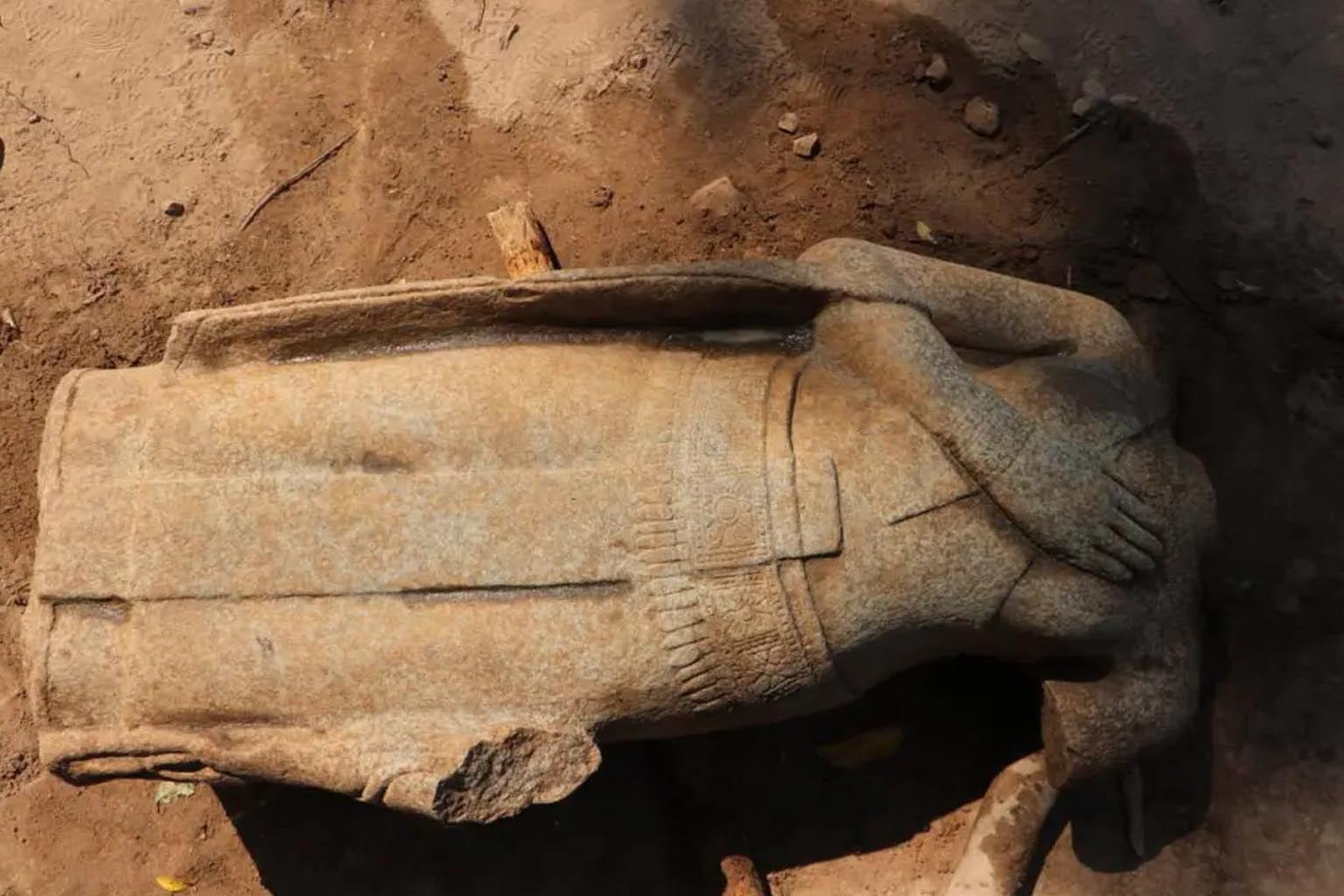
Unearthing history can sometimes be a game of hide and seek, with archaeologists as the determined players who occasionally stumble upon unexpected finds. At the heart of Cambodia’s Angkor Wat temple complex, a discovery that merges the historical with the mystical has rekindled a century-old mystery. The long-lost torso of an ancient statue has been uncovered, and this could very well be the missing piece needed to link two fragmented parts of the past. Let’s dig a little deeper and unravel this intriguing archaeological tale.
An Unexpected Discovery at Angkor Wat
Not all secrets remain buried forever. In the crumbling remains of Ta Prohm temple, a team of archaeologists found a **1.16-meter-tall Buddha torso**. This significant find is believed to date back to the 12th or 13th century and is intricately carved in the prestigious Bayon art style. The torso was unearthed a mere 50 meters from where its head was discovered back in 1927—almost like the two pieces were playing an epic game of tag over the decades.
Hopes had been brewing that the missing piece might still lie somewhere within the temple ruins, taunting researchers with its absence. According to The Independent, advances in optical scanning technology have now confirmed a perfect match between the newly found torso and the statue head preserved in Cambodia’s National Museum in Phnom Penh. Haven’t you ever wondered if a single discovery could reignite efforts to restore a piece of history?
The Artistic Grace of Bayon Style
The cultural importance of this find extends beyond its mere physicality. **The Buddha statue bears the hallmarks** of Bayon art, a reflection of Cambodia’s Khmer Empire. This style is celebrated for its exquisite details, from the intricate jewelry to the finely sculpted robe and sash that adorn the torso. The craftsmanship speaks volumes about the artisans’ skill and devotion during that period, capturing the spiritual essence of the era.
But there’s more here than meets the eye. What’s particularly interesting about this Buddha figure is its uncommon left-hand gesture positioned thoughtfully across the chest. This variation hints at a **unique historical significance**, offering a fresh perspective on the region’s sculptural traditions. Could it represent a yet-unappreciated aspect of the temple’s legacy?
The Mysterious Separation of Head and Torso
It’s intriguing—and downright curious—how the torso and head ended up just 50 meters apart. One can’t help but ponder alternative scenarios. Was the statue deliberately fragmented during a time of religious shifts, or did natural calamities play a role? **Cambodia’s history of religious transitions**, along with environmental factors like heavy monsoon rains, could have contributed to this fragmentation.
Multiple theories circulate about the statue’s separation. Could the partial destruction turn out to be an unintended consequence of structural collapses? Or did subsequent conflicts compound its displacement? With historical accounts hinting at the chaotic dispersal of Khmer artifacts, this statue’s journey might mirror the turbulent paths of countless relics muddled by war and looting.
The Reconstruction Challenge
With the revelation that the torso matches the head, a new challenge emerges: bringing the fractured pieces together in unity. This isn’t simply about attaching pieces; it’s about preserving the historical integrity of the original sculpture. **Balancing conservation with authenticity** is no easy task. Modern techniques must be employed to ensure the final work honors its ancient roots.
Restoration experts face the ethical question of whether or not to recreate the missing right hand using similar art from the period as a guide. It’s an idea that stirs debate in archaeological circles. Yet, reimagining this would offer visitors a more complete representation, enriching their understanding and appreciation of the piece’s history.
Angkor Wat: A Treasure Trove of History
Angkor Wat and Ta Prohm are more than just sites; they are living chronicles of a once-mighty empire. Angkor Wat, sprawling across 400 square kilometers, stands as a testament to the architectural prowess and spiritual depth of the Khmer Empire. Meanwhile, Ta Prohm, with its **iconic tree roots** weaving through ancient stones, is a mesmerizing theater of history frozen in time.
King Jayavarman VII, known for his dedication to Buddhism, oversaw the construction of Ta Prohm as both a monastery and a university—places of learning and devotion. Unlike other Angkorian temples, Ta Prohm is left in a partially unrestored state, reminding us of nature’s grandeur entwined with man’s creations and offering a timeless backdrop for discoveries like this beguiling statue.
Now, as we reassemble this ancient wonder, we invite you to follow its journey and perhaps visit Angkor Wat, not just as tourists, but as seekers of a story that intertwines the threads of the past with the present. Curious? Share your thoughts or even pay a visit; history keeps whispering its secrets, and who knows what the next chapter might reveal.