


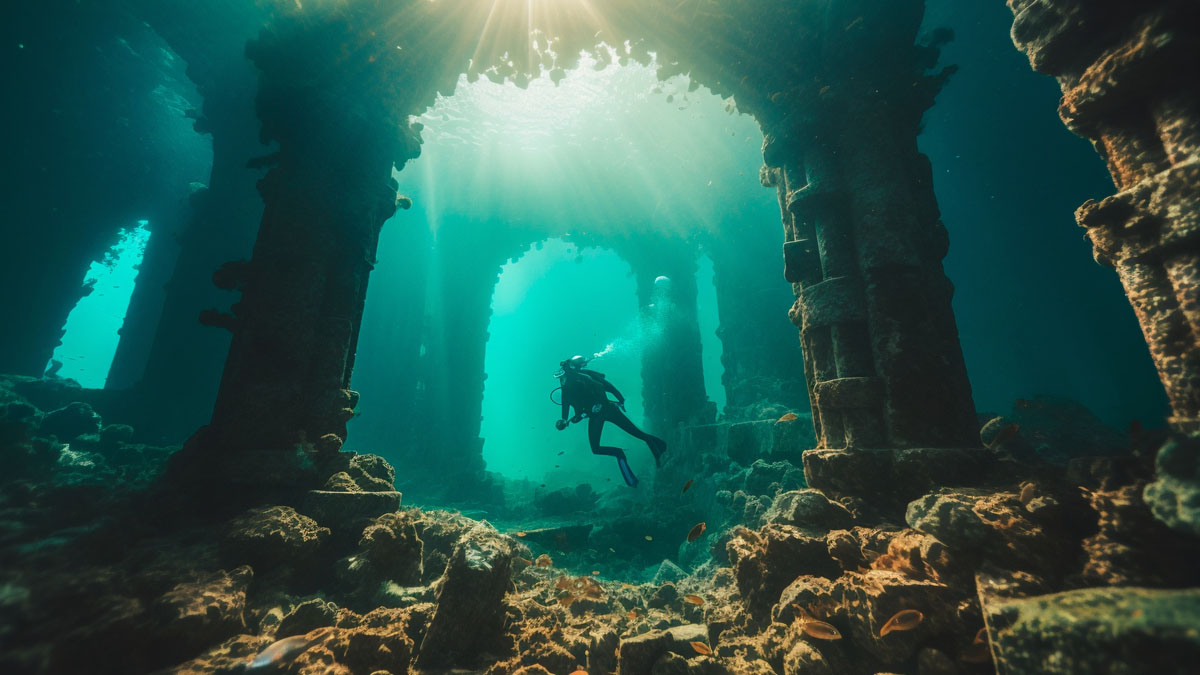
They thought it was just trash—until a daring dive into a remote Mexican cave revealed a treasure trove preserved for 500 years. What began as a routine exploration quickly turned into a groundbreaking archaeological discovery, shedding light on a forgotten Indigenous culture and its sacred rituals.
A dangerous dive into the Cave of Badgers
Nestled deep in the mountains of Guerrero, Mexico, the Tlayócoc cave—meaning “Cave of Badgers” in the Nahuatl language—stands 7,800 feet above sea level. For centuries, no one dared or managed to enter its shadowy depths. That changed in September 2023 when speleologist Katiya Pavlova and her guide Adrián Beltrán Dimas embarked on a perilous journey through narrow, water-filled tunnels. The explorers had to hold their breath to swim through submerged passages and squeeze through openings where the ceiling dipped to just six inches above the water.
About 500 feet into the cave’s heart, their patience paid off. They stumbled upon 14 carefully arranged artifacts, but at first glance, these seemed like modern litter. It was only after closer inspection that the group realized these were no ordinary objects—they were 500-year-old ritual treasures from a long-lost time.
Unearthing clues to a forgotten civilization
The discovery was soon investigated by Mexico’s Instituto Nacional de Antropología e Historia (INAH), which attributed the objects to the Tlacotepehua culture, a relatively obscure Indigenous group from the Postclassic period (A.D. 950–1521). According to archaeologist Miguel Pérez Negrete, who led the formal excavation, this chamber likely held profound spiritual significance.
“For pre-Hispanic cultures, caves symbolized the underworld and the womb of the Earth,” Pérez explained. The artifacts’ placement supported the idea that the space was used for fertility rituals. Among the finds were four shell bracelets looped around stalagmites shaped in phallic forms—clear symbols tied to fertility and creation.
Further supporting this theory were intricate carvings on the bracelets. These included the xonecuilli, an S-shaped motif associated with the planet Venus and the cycles of time, and a human-like figure thought to represent Quetzalcoatl, the revered Mesoamerican creator god. These rich symbols reveal a worldview combining nature, cosmology, and ritual practice—offering a deep window into the Tlacotepehua spiritual life.
A natural vault preserving history
One of the most remarkable features of the Tlayócoc discovery is the exceptional condition in which these items were preserved. The cave’s humid yet stable environment acted as a natural vault, protecting both organic and mineral materials for half a millennium. “The stable humidity likely prevented deterioration, allowing the objects to remain intact all this time,” said Pérez.
Among the artifacts, carbonized wood fragments suggest the use of fire or light within the ritual space, illuminating ceremonies performed in complete darkness. The deliberate orientation of each object highlights a carefully choreographed sacred act—not a random discard.
The sheer inaccessibility of Tlayócoc hints that it was reserved for elite or secret ceremonies, visited only by those privileged or entrusted with its mysteries. This level of preservation and secrecy offers archaeologists and historians a rare opportunity, as many ritual sites in Mesoamerica have been damaged by time, looting, or modern development.
Why this discovery matters today
This extraordinary find at Tlayócoc is more than just a collection of ancient objects; it’s a preserved window into belief systems and rituals that shaped Indigenous identities centuries ago. Discoveries like this help bridge the past and present—reviving cultural heritage and enriching our understanding of Mesoamerican civilizations beyond the well-known Aztec or Maya.
According to a recent National Geographic report, similar cave discoveries have been instrumental in piecing together indigenous cosmologies and sacred practices. This reinforces that caves were not mere geological features but dynamic ritual spaces central to spiritual life.
Dr. María Lopez, an expert in Mesoamerican archaeology, comments on the significance: “The intact nature of these findings allows us to study the nuances of ritual behavior and symbolism with unprecedented clarity—a rare gift for anthropology.”
As we continue to explore such hidden chambers, the hope is to unlock further secrets and honor the enduring legacies of Indigenous cultures who maintained sacred connections with the natural world through ritual.
If this story intrigued you, share your thoughts or questions below. What ancient mysteries do you hope modern explorers will uncover next? Your insights deepen the conversation around preserving and understanding humanity’s shared heritage.