


They thought it was empty at first, but what rested inside this 200-year-old time capsule reshaped history right before their eyes. Buried beneath a Revolutionary War hero’s statue at the United States Military Academy, its secrets spilled out a day after its seemingly anticlimactic opening, revealing a captivating story from early America. This remarkable discovery not only highlights the rich heritage of West Point but also invites us to reflect on the values and innovation of a bygone era.
A Surprise Unearthed at West Point
The story begins during routine renovations to the base of the Thaddeus Kościuszko monument at West Point, New York. Kościuszko, a Polish military engineer and hero of the American Revolutionary War, has been commemorated by a statue with a foundation designed by cadet John H.B. Latrobe in 1828. As structural cracks raised concerns, the statue was carefully dismantled, uncovering a sealed, lead box roughly one cubic foot in size, embedded deep beneath the pedestal.
Experts initially studied the capsule with X-ray technology through West Point’s Department of Physics and Nuclear Engineering. Though these scans proved inconclusive, the tension remained high during the ceremonial opening livestreamed on August 28. Unfortunately, the first glimpse inside appeared to reveal nothing but silt and debris. The moment felt like a historical dead end — sparking comparisons to Geraldo Rivera’s infamous “Al Capone’s Vault” fiasco in 1986.
The Hidden Treasure Within the Silt
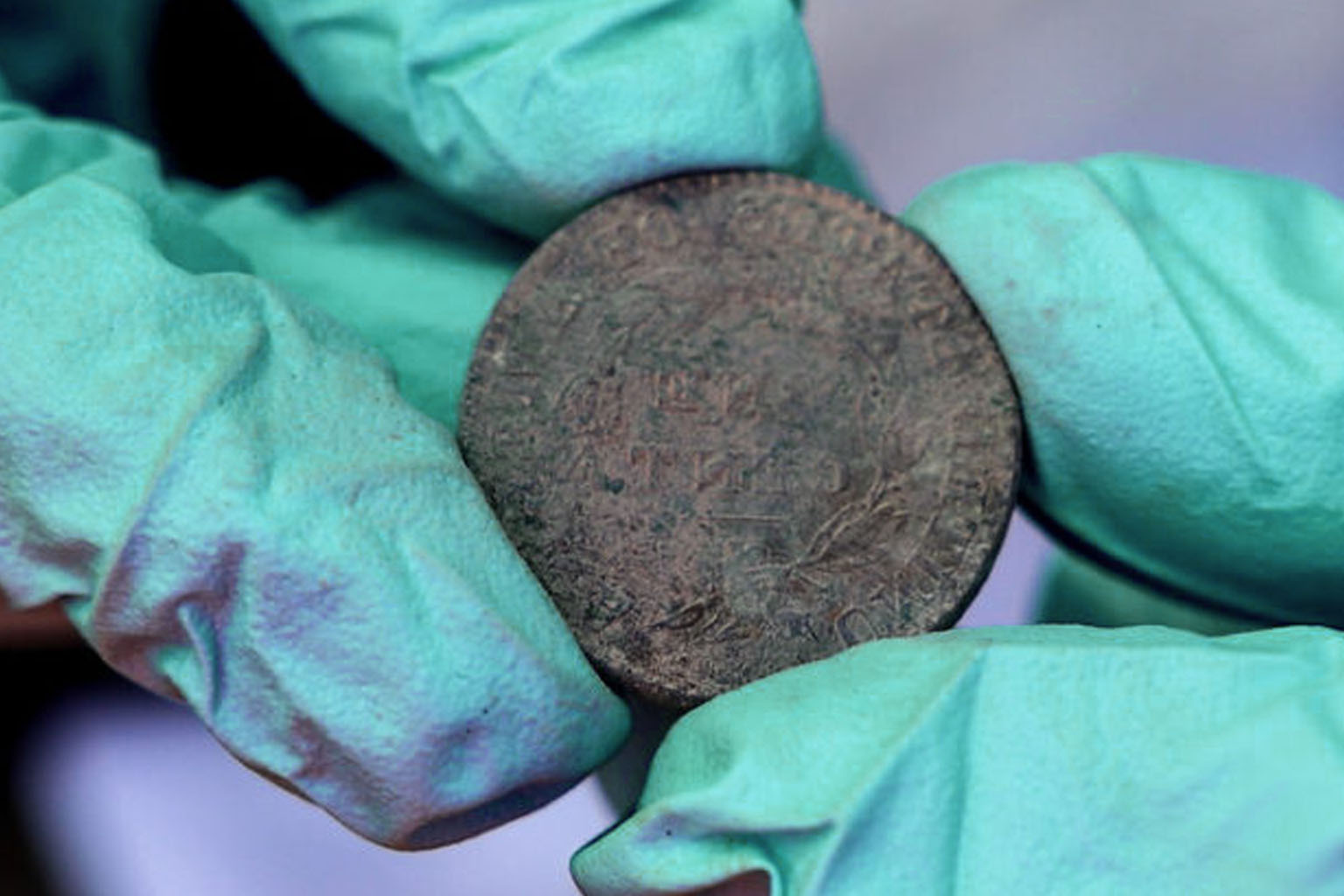
What looked like failure soon flipped into fascination the very next day. As Paul Hudson, the academy’s lead archaeologist, worked under bright lab lights, patience led to discovery. Methodically sifting through the sediment with gentle brushes and wooden picks, Hudson unearthed a surprise: six silver U.S. coins and a commemorative Erie Canal medal, dating back between 1795 and 1828.
This unexpected trove not only proved the time capsule’s authenticity but also opened a window into the era of its burial. The Erie Canal medal especially stands out — made just a few years after the canal’s completion, a symbol of a revolutionary project that connected the Great Lakes to the Atlantic Ocean, dramatically transforming trade and transportation in early America.
“These artifacts confirm the capsule was sealed by cadets in 1828, marking a significant moment in West Point’s history,” Paul Hudson noted in a recent interview.
Insights Into 19th Century Values and Innovation
The contents of the capsule say much about the mindset of early West Point cadets. The coins embody economic value and stability, while the Erie Canal medal reflects the country’s pride in its engineering accomplishments. The canal itself was one of the greatest civil engineering feats of the 19th century, aligning with West Point’s own focus on military and civil engineering training.
Although no paper documents have yet been recovered—likely lost to decay—the presence of these artifacts suggests the cadets intended to capture the spirit of progress and patriotism. This aligns with the broader American narrative of the era, emphasizing growth, innovation, and national identity.
A 2023 study by the National Museum of American History highlights how time capsules serve as cultural snapshots, preserving societal values and technology for future generations. The West Point capsule fits this model perfectly, illuminating the academy’s foundational era through tangible relics of its past.
The Road Ahead: Unlocking More Secrets
With the initial treasure safely cataloged, researchers have begun studying the capsule’s sediment in detail, hoping to find microscopic traces of vanished materials—perhaps letters or parchments. These organic remains may offer more direct insights into the thoughts and spirits of the 1828 cadets.
Dr. Lisa Nguyen, a historian specializing in early American military education, underscores the significance of such finds:
“This discovery enriches our understanding of West Point’s early years, connecting us tangibly to the cadets’ aspirations, challenges, and patriotic fervor,” Dr. Nguyen explained in a 2024 lecture.
Further interdisciplinary work involving archaeology, chemistry, and history promises to deepen this unique dialogue between past and present. The capsules like this one are rare glimmers into the formative chapters of American institutions.
—
What do you think of the incredible story behind this hidden relic? Have you ever encountered a family or local time capsule that surprised you? Share your thoughts and experiences in the comments below — let’s keep history alive together!