


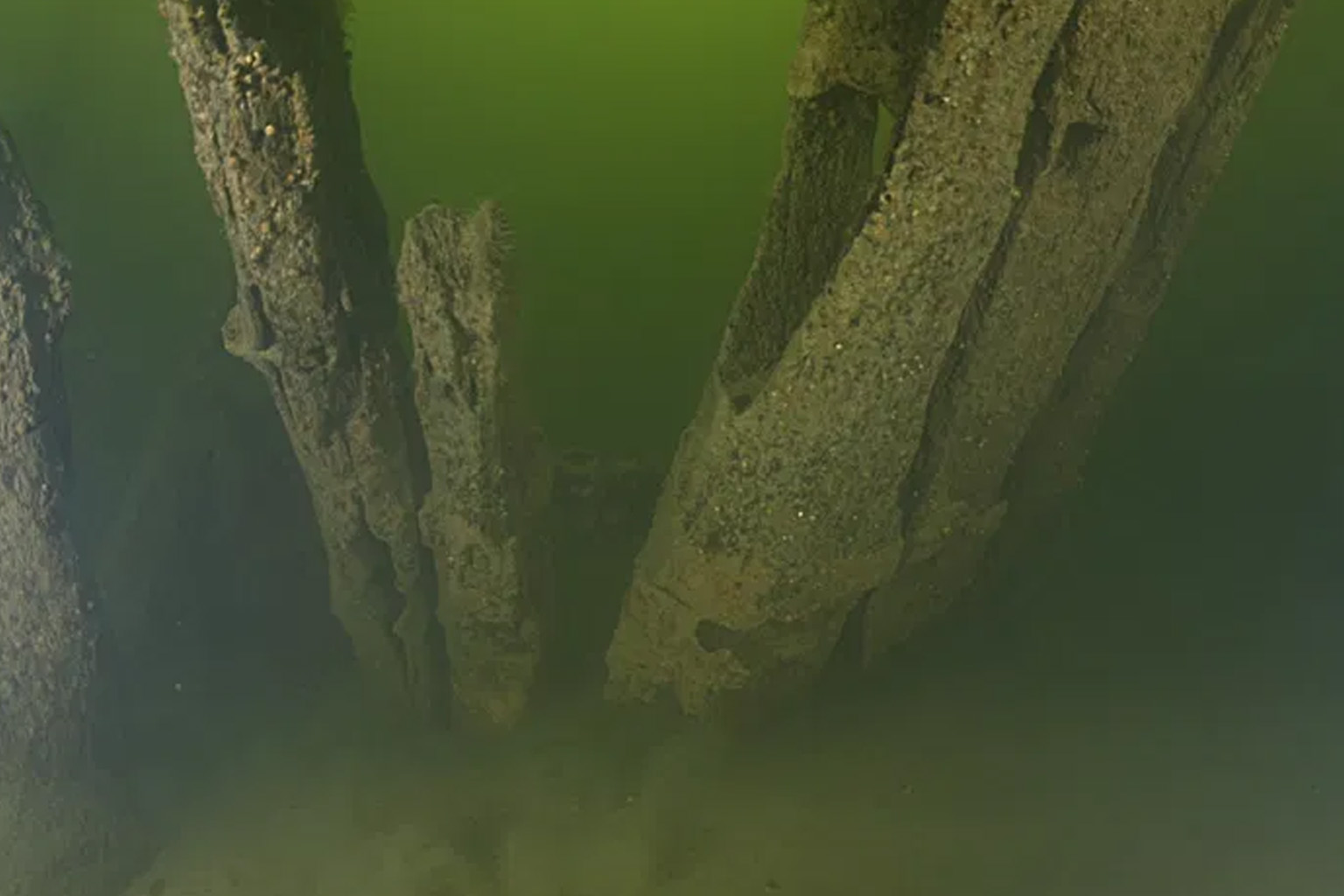
The Baltic Sea has always been Europe’s great time capsule, its cold, low-oxygen waters preserving wooden vessels for centuries. When maritime archaeologists from Sweden’s Museum of Wrecks descended into the waters of Landfjärden, south of Stockholm, they expected to find another medieval vessel. What they discovered instead was a shipwreck that fundamentally challenges our understanding of when and how revolutionary shipbuilding techniques reached Scandinavia.
Wreck 5, as researchers have dubbed it, represents far more than another archaeological curiosity. Dating to the 1460s or 1480s, this remarkably preserved vessel appears to be the oldest carvel-built ship ever found in the Nordic region. The discovery forces us to reconsider how quickly technological innovations spread across medieval Europe, and why Swedish shipbuilders were experimenting with advanced construction methods decades earlier than previously believed.
The timing of this ship’s construction coincides with a period of intense political and economic transformation in Scandinavia. The late 15th century marked the height of the Kalmar Union, when Denmark, Norway, and Sweden were unified under a single crown, creating new opportunities for technological exchange and maritime expansion.
Revolutionary Construction in an Age of Change
The significance of Wreck 5 lies not just in its age, but in its construction method. While most Scandinavian vessels of this period were built using the traditional clinker technique—with overlapping planks that provided flexibility but limited size—this ship employed carvel construction. This method, which placed planks edge to edge rather than overlapping them, created a smooth, rigid hull capable of supporting much larger structures.
Measuring approximately 35 meters long and 10 meters wide, Wreck 5 dwarfs most medieval Scandinavian vessels. The ship’s frame still rises dramatically above the seabed, with both the sternpost and rudder remaining upright after five centuries underwater. This exceptional preservation offers researchers an unprecedented opportunity to study construction techniques that were cutting-edge for their time.
The carvel method wasn’t merely an aesthetic choice. These ships could carry heavy cannons without the structural stress that would have compromised clinker-built vessels. As European powers increasingly relied on naval artillery, the ability to mount cannons became essential for both military and merchant vessels operating in contested waters.
Scientific Dating Reveals Swedish Innovation
Dendrochronological analysis of the ship’s timbers has provided remarkable precision in dating and provenance. The wood was felled in either Möre, in the Kalmar region, or eastern Blekinge, confirming that this was a Swedish-built vessel rather than an imported ship. This detail is crucial because it demonstrates that Swedish shipwrights had independently mastered carvel construction, rather than simply purchasing advanced vessels from southern European builders.
The tree ring analysis places the ship’s construction in the late 15th century, making it contemporary with some of the most significant maritime expeditions in European history. While Christopher Columbus was crossing the Atlantic and Vasco da Gama was rounding the Cape of Good Hope, Swedish builders were quietly revolutionizing their own naval capabilities.
This timing suggests that the adoption of carvel construction in Scandinavia wasn’t merely about following technological trends. The late 1400s were a period of increasing maritime competition in the Baltic, with the Hanseatic League’s influence waning and emerging nation-states seeking to control lucrative trade routes. Like the ceremonial centers that marked important cultural transitions in ancient civilizations, this ship represents a pivotal moment in Scandinavian maritime development.
Context of a Contested Waterway
The Landfjärden site has yielded five shipwrecks in total, initially presumed to be Viking vessels but now dated across several centuries. Three of the four largest wrecks date to the 1600s and 1700s, with one identified in 17th-century historical records. This temporal spread reveals how certain locations remained strategically important for centuries, serving as natural harbors or defensive positions.
The concentration of wrecks in this area reflects the broader geopolitical tensions of the Baltic Sea region. During the late medieval period, control of sea routes meant control of the lucrative trade in timber, iron, and grain that flowed from Scandinavia to the rest of Europe. A larger, more heavily armed vessel like Wreck 5 would have provided significant advantages in protecting merchant convoys or asserting territorial claims, much like the defensive structures that protected ancient cities from invasion.
Research indicates that the ship’s size and construction suggest it was built for more than local coastal trading. The investment in advanced construction techniques implies that its builders envisioned long-distance voyages or military applications that would justify the additional expense and complexity.
The Technical Innovations Nobody Discusses
While most coverage focuses on the ship’s age and size, the technical aspects of its construction reveal insights that traditional maritime histories often overlook. The transition from clinker to carvel building required fundamental changes in how shipwrights approached their craft. Carvel construction demanded different tools, new joinery techniques, and a completely different understanding of hull dynamics.
The smooth hull design of carvel ships created challenges that Scandinavian builders had never faced. Unlike clinker vessels, which derived much of their strength from the overlapping planks themselves, carvel ships required more sophisticated internal framing systems. The fact that Wreck 5’s frame remains intact suggests that Swedish shipwrights had successfully solved these engineering problems using complex strategies that paralleled innovations in other fields of medieval engineering.
The ship’s preservation also reveals details about medieval wood treatment and maintenance practices that are rarely documented in written sources. The choice of timber, the methods used to season the wood, and the techniques for protecting the hull from marine borers all contributed to the vessel’s remarkable survival. These practical innovations were just as important as the construction method itself, yet they receive little attention in conventional historical accounts.
The discovery of Wreck 5 opens new questions about the pace of technological change in medieval Europe. Rather than viewing innovation as something that flowed solely from south to north, this ship suggests that regional centers of expertise developed their own solutions to maritime challenges. The cold waters of the Baltic may yet reveal other vessels that challenge our assumptions about when and where crucial technologies first appeared.