


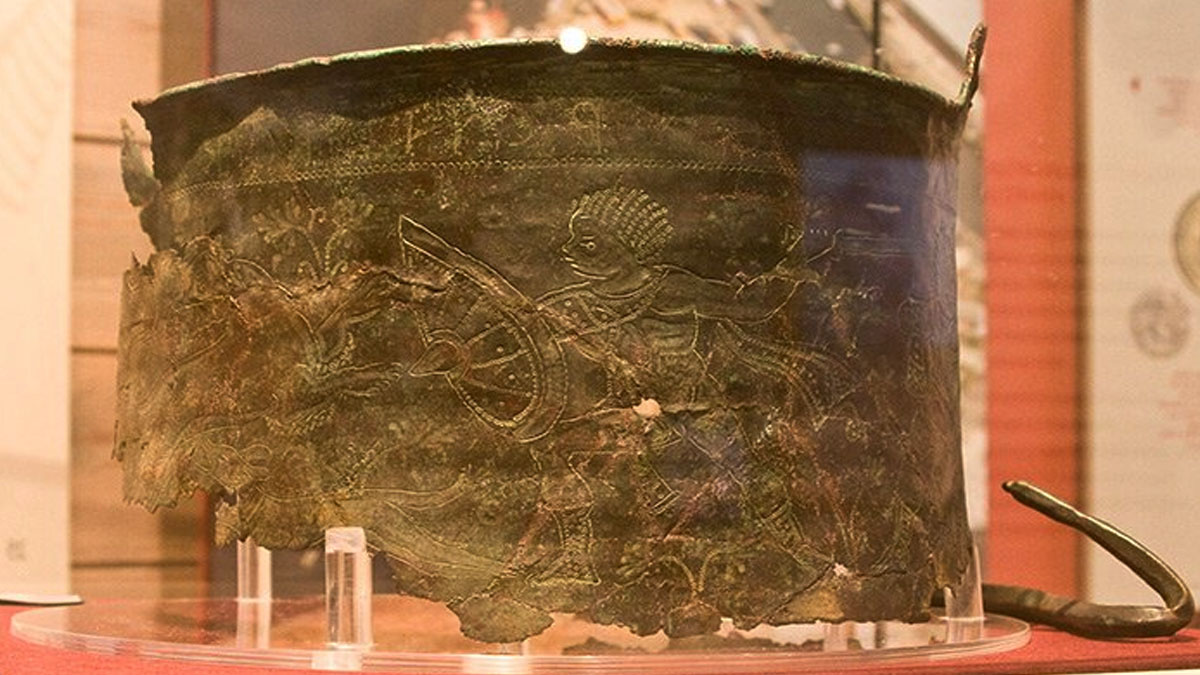
A mysterious sixth-century bucket found at Sutton Hoo is rewriting history books and captivating archaeologists worldwide. What was once considered a simple ornamental object has now been revealed as a vessel containing the cremated remains of an elite individual. This remarkable discovery is adding fresh layers to the story of one of England’s most enigmatic early medieval burial sites.
A stunning find in Sutton Hoo’s rich archaeological landscape
Sutton Hoo, renowned for its iconic ship burial and treasure trove of artifacts, has surprised experts yet again. During a recent micro-excavation led by the York Archaeological Trust in collaboration with Time Team, FAS Heritage, and the National Trust, researchers analyzed a copper alloy bucket originally discovered in 1986. Known as the Bromeswell Bucket, this object dates back to the sixth century and bears exquisite North African hunting scenes that link it to the Byzantine world.
Previously overlooked, the bucket’s contents have now been meticulously studied, revealing that it served a deeply personal and funerary purpose. Archaeologists uncovered fragments of cremated human bones alongside items such as an antler comb and animal bones, possibly from a sacrificial horse. Angus Wainwright, an archaeologist with the National Trust, emphasized the significance: “We knew that this bucket would have been a rare and prized possession back in Anglo-Saxon times. Now we know it was used to contain the remains of an important person in the Sutton Hoo community.”
A diplomatic gift turned funerary vessel
The Bromeswell Bucket’s story deepens with the discovery of a Greek inscription etched onto its surface. It reads: “Use this in good health, Master Count, for many happy years.” Scholars believe this makes the bucket a rare diplomatic gift, possibly once exchanged between elite figures of the Byzantine Empire—modern-day Turkey—and early Anglo-Saxon England. The use of such a luxurious imported object in burial rites reveals a fascinating blend of international trade and local ritualistic practices.
Interestingly, the bucket predates Sutton Hoo’s famous ship burial by roughly 100 years, highlighting the site’s long-standing significance as a cultural crossroads. This find underscores how cross-cultural interactions and material wealth shaped identities in early medieval Britain.
Insights into Anglo-Saxon burial rituals and identity
The discovery provides compelling evidence about burial customs in early Anglo-Saxon Britain. Cremation was a widespread practice among Germanic tribes in the sixth century, but the choice of a high-status imported vessel for holding cremains suggests the deceased was someone of great prominence.
The inclusion of an antler comb, a personal grooming tool likely used in ritual purification, adds another dimension. Such combs were not gender-specific, so the individual’s exact identity remains tantalizingly uncertain. Archaeologists hope that ongoing radiocarbon dating and DNA analysis of the bone fragments and comb will shed new light on the individual’s life and social standing.
The Sutton Hoo site itself is a historic melting pot, renowned for its combination of Scandinavian, Mediterranean, and local Anglo-Saxon influences. This latest find strengthens the argument that early medieval Britain was far from isolated and instead actively engaged in networks of trade, diplomacy, and cultural exchange.
Cutting-edge technology drives new discoveries at Sutton Hoo
This exciting revelation comes during a new phase of archaeological work at Sutton Hoo, spearheaded by the revived Time Team television series in partnership with FAS Heritage and the National Trust. The project employs advanced techniques like micro-excavation, 3D scanning, and ancient DNA analysis to explore lesser-known burial mounds and undisturbed parts of the site.
Tim Taylor, creator and producer of Time Team, conveyed the enthusiasm shared by many involved: “This next phase of the dig offers an incredible opportunity to continue uncovering the secrets of Sutton Hoo, and we can’t wait to see what new discoveries await us in 2025.” The combination of public engagement and rigorous research reflects a broader trend in archaeology towards transparency and inclusivity.
According to a recent report by the University of Oxford’s School of Archaeology, incorporating non-invasive technologies into excavations reduces site disturbance while uncovering richer data, ultimately leading to more nuanced understandings of historic sites like Sutton Hoo.
As this remarkable story unfolds, Sutton Hoo reaffirms its place as a window into the tumultuous and interconnected world of the early Middle Ages.
If this discovery has intrigued you, we invite you to share your thoughts and reactions. What do you think this tells us about early Anglo-Saxon society? Join the conversation by commenting below or sharing this article with history enthusiasts near you!