


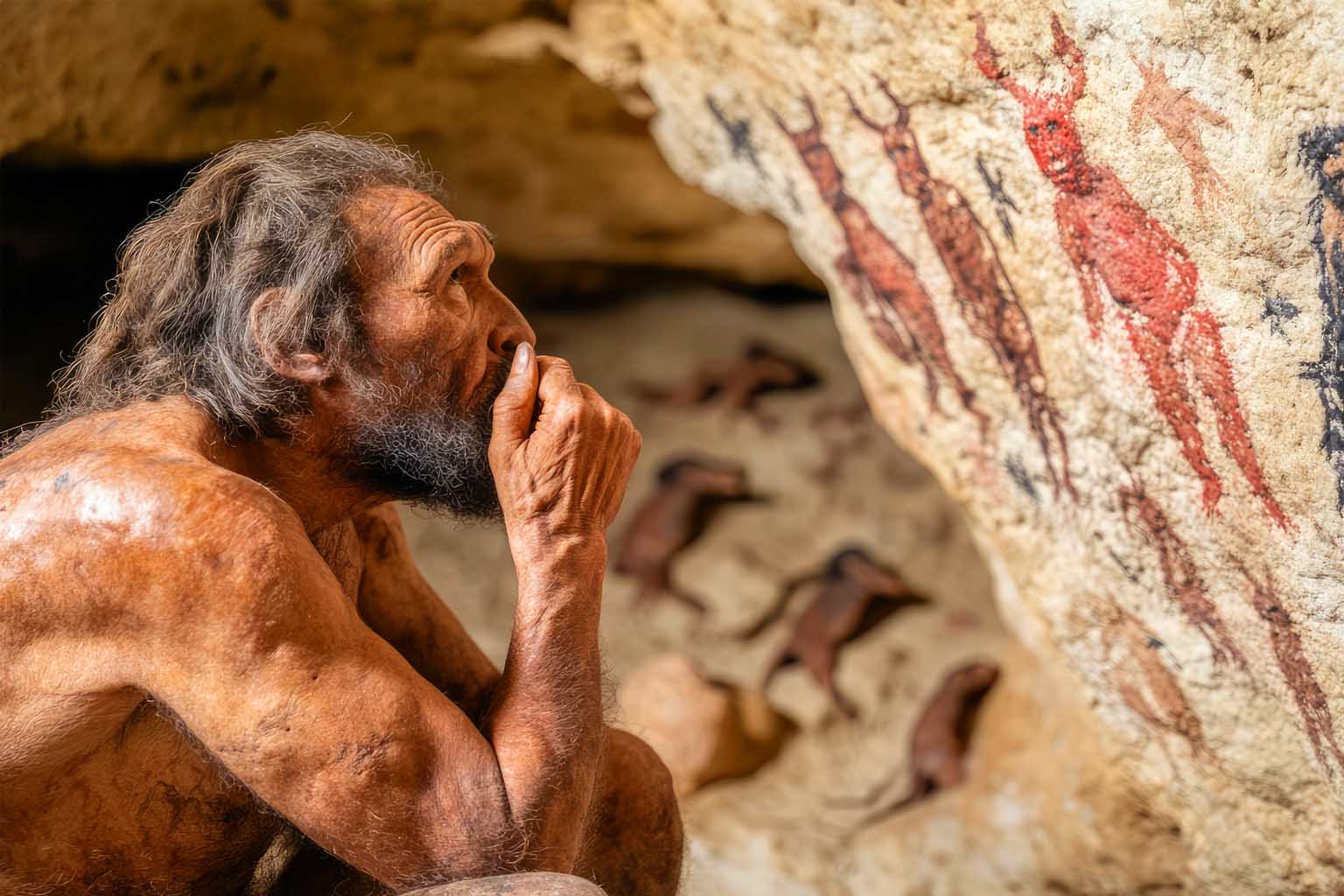
Neanderthals have long fascinated scientists and the public alike, but new research is rewriting what we know about their final chapters. A recent groundbreaking study reveals a sudden and catastrophic event in Neanderthal history that drastically narrowed their genetic diversity, challenging decades-old assumptions about how and when they began to disappear.
This fresh insight opens a vivid window into the fate of our closest ancient relatives and forces us to reevaluate our understanding of human evolution.
A sharp genetic bottleneck reshapes Neanderthal history
Until now, many experts believed that Neanderthals underwent a gradual loss of diversity over hundreds of thousands of years. However, researchers led by Alessandro Urciuoli at the Catalan Institute of Paleontology Miquel Crusafont have uncovered compelling evidence of a dramatic genetic bottleneck—a sudden and severe reduction in population—that tore through Neanderthal groups late in their evolutionary timeline.
Published in Nature Communications, this study analyzes the shape of the inner ear semicircular canals, tiny structures crucial for balance and sensitive to genetic variations. By looking at fossils from across Eurasia—including Spain and Croatia—the team found that early Neanderthals showed much higher morphological diversity than their later counterparts.
“The loss of variation is striking and points to a bottleneck event that had a clear impact on Neanderthal populations,” noted Urciuoli. This sharp decline likely made continued survival more precarious, setting the stage for their eventual extinction around 40,000 years ago.
Inner ear anatomy offers a unique evolutionary lens
The semicircular canals of the ear serve as an ingenious biological proxy for studying population diversity. Because these structures vary depending on genetic background, they provide a snapshot of how diverse a group really was over time. By comparing fossils from the Krapina site in Croatia to others from the Sima de los Huesos cave in Spain, the researchers painted a detailed picture of shifting diversity patterns.
Fossils from Krapina showed a marked drop in diversity compared to the earlier Spanish samples, signaling population pressure likely driven by environmental factors. Intriguingly, pre-Neanderthal fossils from Spain maintained a level of diversity similar to early Neanderthals, revealing a more complex and dynamic evolutionary story than simple decline.
This technique highlights the power of paleontological research—where morphology meets genetics—to uncover hidden chapters of human prehistory.
Climate upheaval and its role in Neanderthal decline
The timing of this bottleneck coincides with extreme climatic fluctuations during the Middle to Late Pleistocene, periods characterized by harsh glacial and interglacial cycles. These devastating environmental changes likely led to localized extinctions and isolated pockets of survival that fractured Neanderthal populations.
Scientists believe these shifts reshaped ecosystems, making it difficult for Neanderthal groups to maintain genetic health and numbers. The evidence suggests that rather than a smooth, linear decline, Neanderthals experienced multiple population contractions and expansions before their final disappearance.
According to a report by the National Park Service, such climatic instability significantly influenced hominin survival strategies and migration, underscoring the profound connection between environment and human evolution.
Hearing from experts like Dr. Juan Luis Arsuaga of the Complutense University of Madrid can deepen our appreciation of how climate shaped Neanderthal destinies in fluctuating Ice Age landscapes.
Rethinking human evolution with new Neanderthal findings
This revelation of a late-stage bottleneck challenges the common narrative that Neanderthals steadily lost genetic diversity soon after their emergence. Instead, it suggests Neanderthals maintained robust diversity for much of their history, hinting at a prolonged and complex interplay between human groups.
The timing and pattern of population collapse hold important clues about interactions between Neanderthals and early modern humans. Evidence is mounting that these groups interbred and exchanged genes over thousands of years, making the evolutionary split less of a clean break and more of a tangled web.
Such findings emphasize the need to study paleodemes, or localized subpopulations, which adapted differently based on geography and changing environments. The diversity preserved in certain fossils highlights how Neanderthals’ story was not a simple tale of decline, but a dynamic saga shaped by resilience and isolation alike.
By integrating fossil morphology with ancient DNA and proteomic data, paleontologists can continue unraveling the intricate web of human ancestry and better understand our shared past.
If you found this exploration into Neanderthal history as captivating as I did, I invite you to share your thoughts and questions below. How do you think this new understanding of Neanderthal diversity changes the story of human evolution? Let’s start a conversation that brings the ancient world a little closer to home.