


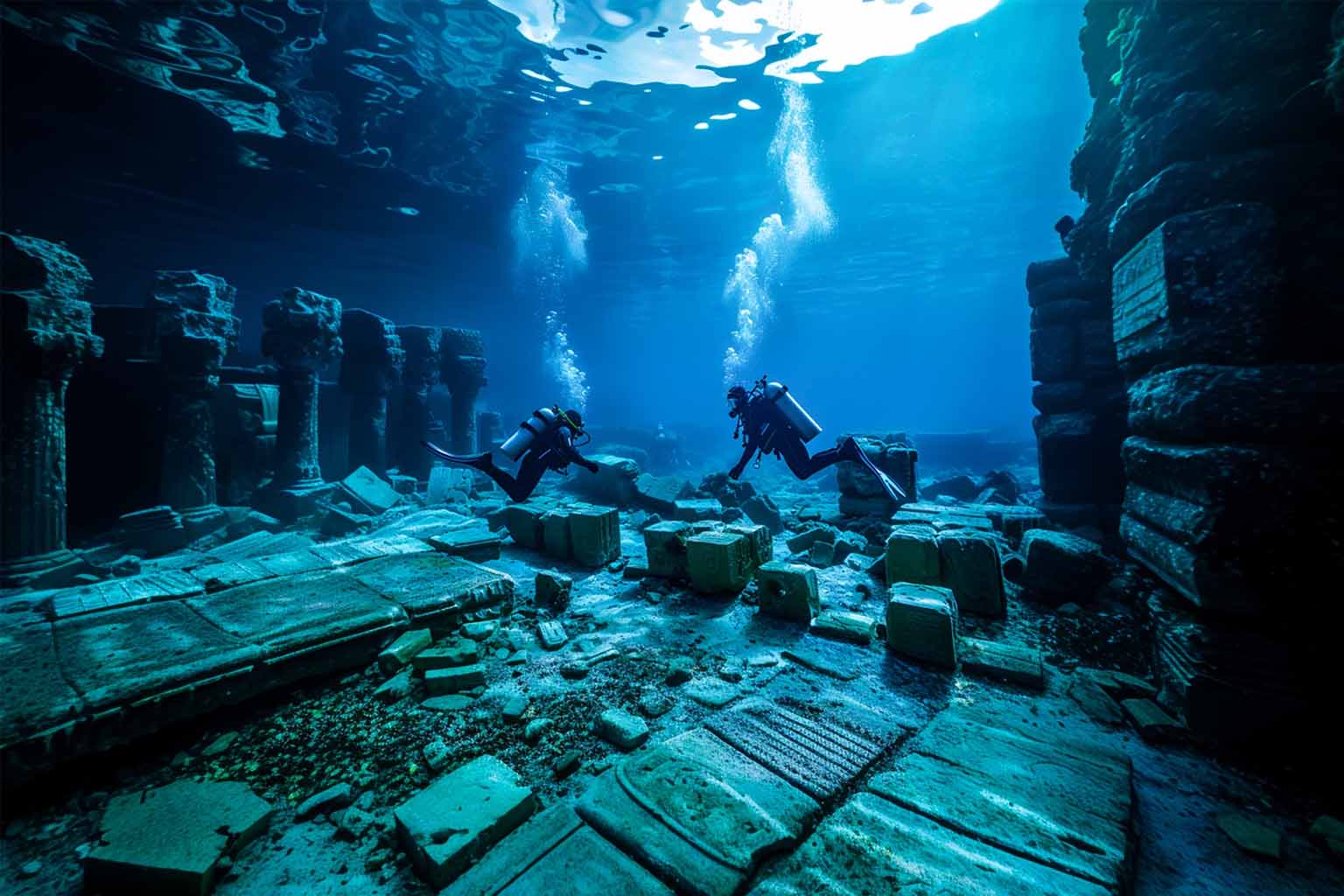
The notion of a 10,000-year-old civilization hiding beneath the waters of Lake Huron sounds like something out of a thrilling novel, doesn’t it? Yet, this story is very much a part of our real history. Recently, underwater archaeologists have unveiled stunning evidence of ancient hunting camps and artifacts lost to time but now providing a remarkable view into a prehistoric world.
An Unexpected Discovery Beneath the Waters
Submerged below Lake Huron, researchers have unearthed what some call the “Pompeii of the Great Lakes.” Among the ancient finds are camps dating back 10,000 years, revealing intricate details about the early people who lived and thrived in this region. Over a hundred feet below the surface, this site is like a time capsule, offering clues that are both precious and exceedingly rare.
In what seems like a page from history itself, these discoveries include stone structures, caribou hunting pits, drive lanes, and even sleeping quarters. Such findings suggest a highly organized community dependent on its understanding of the land and its resources. One of the most astonishing discoveries is an impressive 1,148-foot-long drive lane. This ancient path vividly paints a picture of survival techniques from an entirely different era.
Caribou Corridors and Ancient Trails
Picture this: a strip of land known as the Alpena-Amberley Corridor once connected what we now call Michigan to the Ontario region. Caribou roamed these lands, making it a predestined area for Paleo-Indians who relied heavily on these animals for food and materials. Now submerged, it is these waters that have preserved the land bridge — showcasing history frozen in time, waiting to be explored.
Archaeologists have meticulously catalogued the site, discovering obtrude tools and rock beds along with plant remains that provide rare insights into early agricultural practices and trade trails. According to a University of Michigan study, such finds underline the interconnectedness of ancient communities, reaching as far west as what is now Oregon, suggesting extensive trading routes or interactions.
A Geological Time Capsule
Lake Huron’s cold, fresh waters act like a guardian of history. Here, organic materials are remarkably well-preserved, offering archaeologists the kind of data that is hard to procure from land-based sites where time and nature take a greater toll. The artifacts, surprisingly, have much to tell us — whispering stories of past lives, cultures, and migrations that shaped present-day North America.
While excavations continue, the site is constantly revealing more about early human culture. Researchers find themselves at a race against time to rescue and study these artifacts before natural forces, development, or a lack of funding regrettably erase these treasures forever.
The “Pompeii” of the Great Lakes
Called the “Pompeii of the Great Lakes” for its sudden immersion and preservation, this underwater site offers invaluable snapshots of life lived thousands of years ago. Unlike the volcanic catastrophe of Italy’s Pompeii that preserved a city in ash, Lake Huron’s site was submerged due to rising water levels, hiding and protecting it from tattling tongues of time.
Still, with so much learned, there’s so much more to uncover. The underwater habitat poses unique challenges, and funding remains a critical concern. Without further investment, crucial parts of this puzzle may, unfortunately, remain hidden — potential insights lost forever to the depths of the lake.
Revisiting the past, we realize just how interconnected our world was, even 10,000 years ago. From traded tools to shared hunting routes, these findings remind us that ancient humans were resourceful, adaptable, and surprisingly connected.
Are you as fascinated by these ancient revelations as we are? Keep curiosity alive by following more archaeological wonders and uncovering layers of shared human history. Together, let’s keep the past remembered and treasures uncovered.