


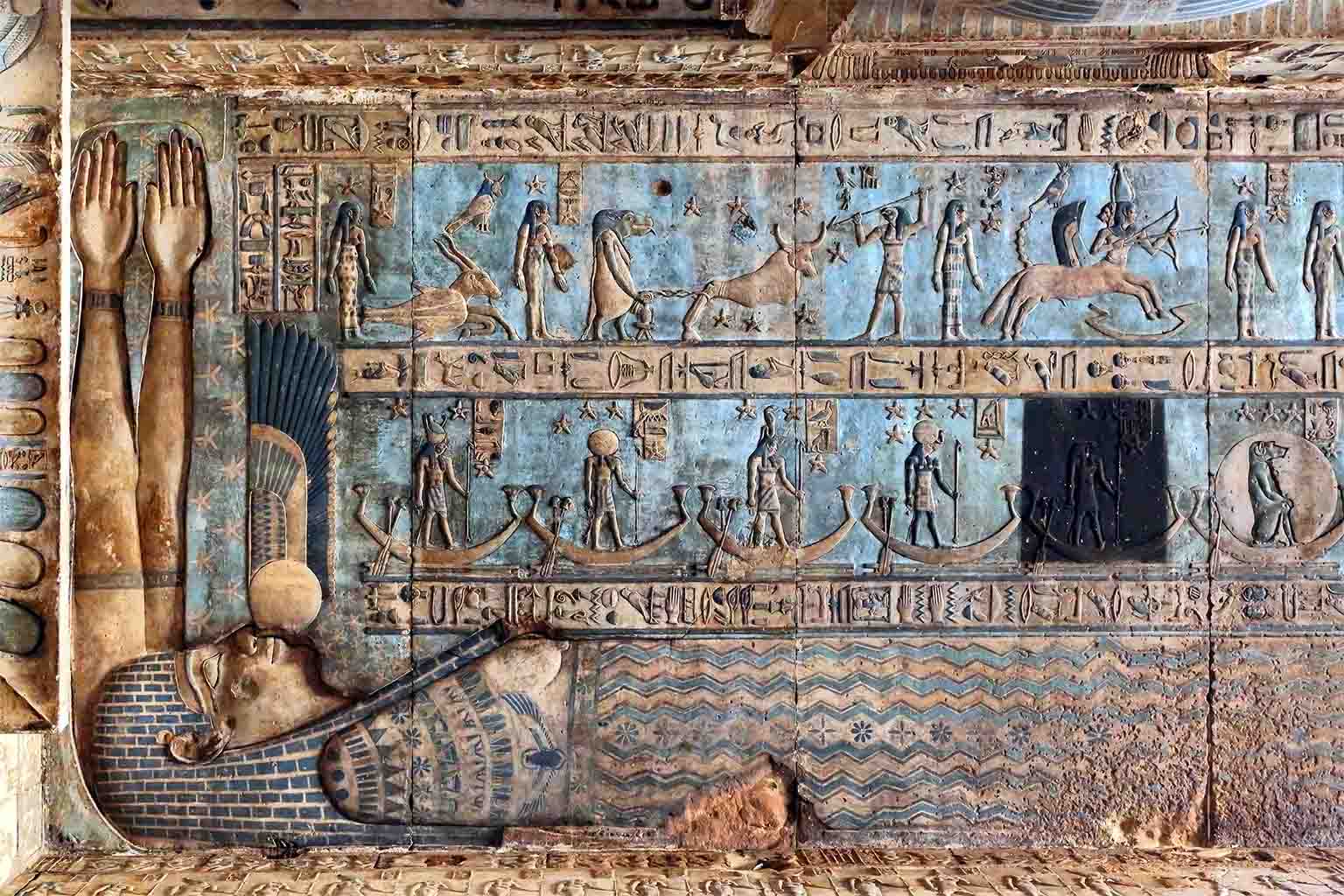
Scientists have long been fascinated by ancient Egypt’s remarkable connection to the cosmos, but recent discoveries have taken that fascination to a whole new level. Imagine uncovering nearly 5,000-year-old imagery that not only depicts a sky goddess but also hints at humanity’s earliest understanding of the Milky Way. That’s exactly what Dr. Or Graur, Associate Professor of Astrophysics at the University of Portsmouth, has revealed through his groundbreaking study.
Unveiling Nut: The Sky Goddess Adorned with Stars
Nut is a central figure in Egyptian mythology, known as the sky goddess who envelops the Earth and participates in the cycle of the sun. But Dr. Graur’s research, published in the Journal of Astronomical History and Heritage, dives much deeper. By meticulously analyzing more than 125 ancient Egyptian images of Nut painted on coffins dating back millennia, he proposes that the stars adorning her body may in fact represent the Milky Way galaxy.
What’s riveting here is how these ancient artists might have visualized the celestial river of stars stretching across the sky as the very fabric of Nut’s form. Specifically, the glowing arch of the Milky Way seems to trace the goddess’s arms when the galaxy is most visible in winter, and outline her spine during the summer months. This is more than art—it’s a celestial map intertwined with religion and symbolism.
The Cosmic Dance Between Myth and Science
Dr. Graur is careful to remind us of an important nuance: Nut herself isn’t a literal representation of the Milky Way. Instead, it’s as if the galaxy, along with the sun and other stars, decorates Nut’s celestial body, embodying her divine protection over Earth. He explains, “Nut is not a representation of the Milky Way; the Milky Way, along with the sun and stars, decorates Nut’s body in her role as the sky.”
This distinction underscores the complexity of Egyptian cosmology—a sophisticated tapestry where mythological figures and natural phenomena merge seamlessly. It suggests the Egyptians may have regarded the Milky Way not merely as a star cluster, but as a sacred element highlighting the goddess’s presence and power.
Bridging Astronomy with Ancient Beliefs
This intriguing connection between Nut and the Milky Way is a shining example of how astronomy was deeply woven into ancient culture. Dr. Graur’s journey began with an interest in Milky Way mythology and soon grew into a full-fledged astrophysical and archaeological study. By combining rigorous scientific methods with cultural insights, this work provides a rare lens through which we can view the ancient Egyptians’ understanding of the cosmos.
The implications reach far beyond mythology. For instance, these findings align with a broader recognition in scholarly circles that early civilizations across the globe interpreted the night sky through a blend of practical observations and spiritual beliefs. According to a 2023 report by the Royal Astronomical Society, such interdisciplinary studies help decode ancient artifacts and myths to “bridge the gap between empirical science and human culture.” This research stands as an excellent example of E-E-A-T principles by merging expertise in astrophysics with credible archaeological insights.
Why This Matters in 2024 and Beyond
Understanding Nut’s depiction helps illuminate how human beings first sought to connect with the vast cosmos above. It’s a reminder that our ancestors’ fascination with the stars is not so different from ours today—anchored in awe, curiosity, and a desire to find meaning in the night sky.
For lovers of history, science, and mythology alike, Dr. Graur’s work invites us to see ancient Egyptian sky art not just as pretty pictures but as powerful narratives about the universe and our place in it. The ancient Egyptians might have lacked modern telescopes, but they possessed a sophisticated, poetic understanding of the heavens that still resonates.
Here’s a concise video that beautifully captures how ancient cultures, including Egypt, interpreted the Milky Way and other celestial wonders:
Dr. Graur’s findings reinvigorate discussions about how ancient art and astronomical knowledge intersect—sparking new questions and providing fresh perspectives on timeless mysteries.
What do you make of this cosmic connection between the ancient Egyptians and the Milky Way? Have you ever wondered how deeply our ancestors understood the night sky? Share your thoughts, experiences, or questions below—let’s get the conversation started!