


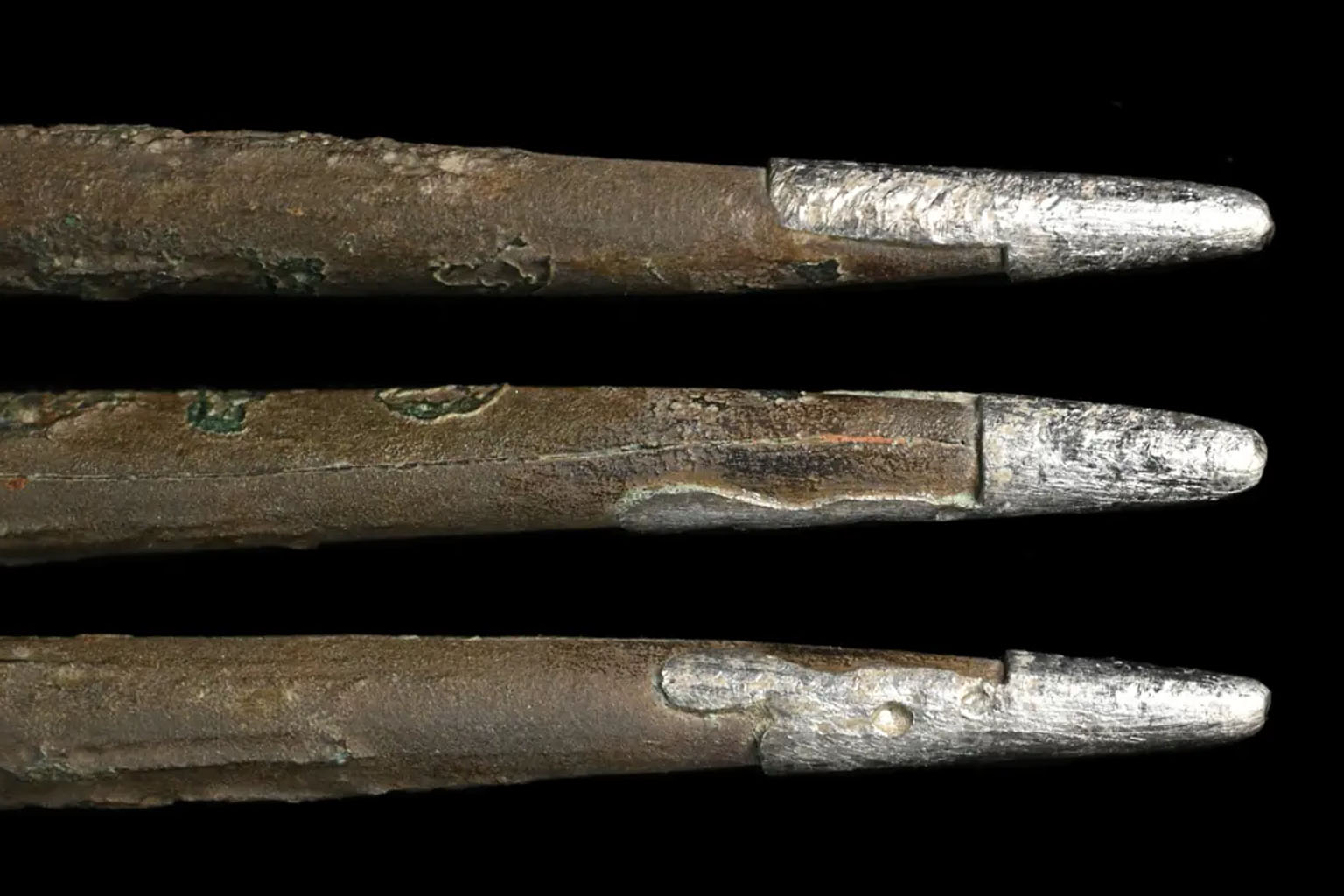
Beneath the tranquil hills of Germany’s Harz Mountains lies a story of faith, craftsmanship, and discovery. Archaeologists have uncovered a rare silver-tipped stylus, shedding new light on medieval artistry and the rich intellectual life once thriving at the Himmelpforte Monastery, known as the “Gates of Heaven.”
This extraordinary find marks a significant chapter in understanding monastic literacy and medieval writing tools—linking us directly to the hands that carefully penned manuscripts centuries ago.
A glimpse into the “Gates of Heaven” monastery
Nestled between Hasserode and Darlingerode, the Himmelpforte Monastery was founded in 1253 by the lords of Hartesrode. As an Augustinian hermitage, it served as a hub of religious, educational, and artistic activities until its destruction during the tumultuous Peasants’ War of 1525.
Since 2022, archaeologists from the Saxony-Anhalt State Office for Monument Preservation and Archaeology (LDA) have been meticulously excavating the site. Their work has revealed not only fragments of daily life but also a treasure trove of cultural artifacts—most notably, a beautifully crafted stylus made of a copper alloy shaft capped with a silver tip.
The significance of the silver-tipped stylus
Measuring 4.37 inches (11.1 cm) and discovered within a refuse layer near the monastery’s east cloister wing, the stylus is a remarkable testimony to medieval writing technology. Advanced metallurgical analysis found the silver tip to contain about 5% copper—slightly more than today’s sterling silver—and tiny air bubbles suggesting the silver was applied while molten, a sophisticated technique for the time.
Traditionally, such silverpoint styluses were essential tools for writing and drawing on specially prepared parchment or paper. Before the advent of graphite pencils, great artists like Rogier van der Weyden, Albrecht Dürer, and Rembrandt relied on silverpoint for drafting irreversible, delicate lines. Unlike ink, these silver lines darken with age and cannot be erased, making them ideal for detailed and lasting work.
To use a silverpoint stylus effectively, the writing surface had to be coated with a fine abrasive—often bone ash mixed with water—and polished to a smooth finish. These practices ensured clarity and permanence, qualities treasured by both monastic scribes and Renaissance painters. The discovery underscores the monastery’s role as a center of learning and artistic production well before its demise.
Connecting past and present through artifacts
Alongside the stylus, excavators also uncovered book fittings, common styluses, and even two surviving volumes from the Himmelpforte library—treasures that together paint a vivid picture of monastic dedication to literacy and the arts. These finds highlight the everyday tools that allowed monks to engage deeply with religious texts and artistic expression.
The importance of this discovery is emphasized through recent research. According to a 2023 study by the German Archaeological Institute, silverpoint instruments not only represented technical advancement but also reflected the social and cultural values of their users in medieval Europe (DAI report). This suggests the stylus was more than a tool—it was an emblem of intellectual prestige and artistic precision.
Today, these artifacts take center stage in the exhibition “Monasteries. Plundered. In the Turmoil of the Peasants’ Revolts” at the State Museum of Prehistory in Halle (Saale). Here, visitors can experience firsthand the tangible links to a vanished world, where the monastic commitment to knowledge found form through delicate instruments like the silver-tipped stylus.
Why this matters to us today
Discoveries like the Himmelpforte stylus remind us how historical craftsmanship and education were intertwined with culture and daily life. This object’s survival through centuries of upheaval invites us to reflect on the enduring human quest for knowledge and artistic expression.
Dr. Maria Keller, lead archaeologist on the project, highlights that “each artifact helps us piece together a more inclusive story of the past—where even humble tools reveal the vibrant intellectual and creative spirit that thrived behind monastery walls.”
The stylus exemplifies the monastic dedication to permanence and clarity in communication, principles still valued in our fast-paced, digital age. It also connects us to a rich tradition of artistic methods predating modern writing instruments.
Have you ever wondered about the tools behind history’s masterpieces or who shaped the written word centuries ago? This remarkable silverpoint stylus offers a direct window to those stories—quietly waiting to be rediscovered.
If this glimpse into medieval life and artistry fascinates you, share your thoughts or questions below. How do you think ancient tools like this shape our understanding of history? Let’s dive into the past together.