


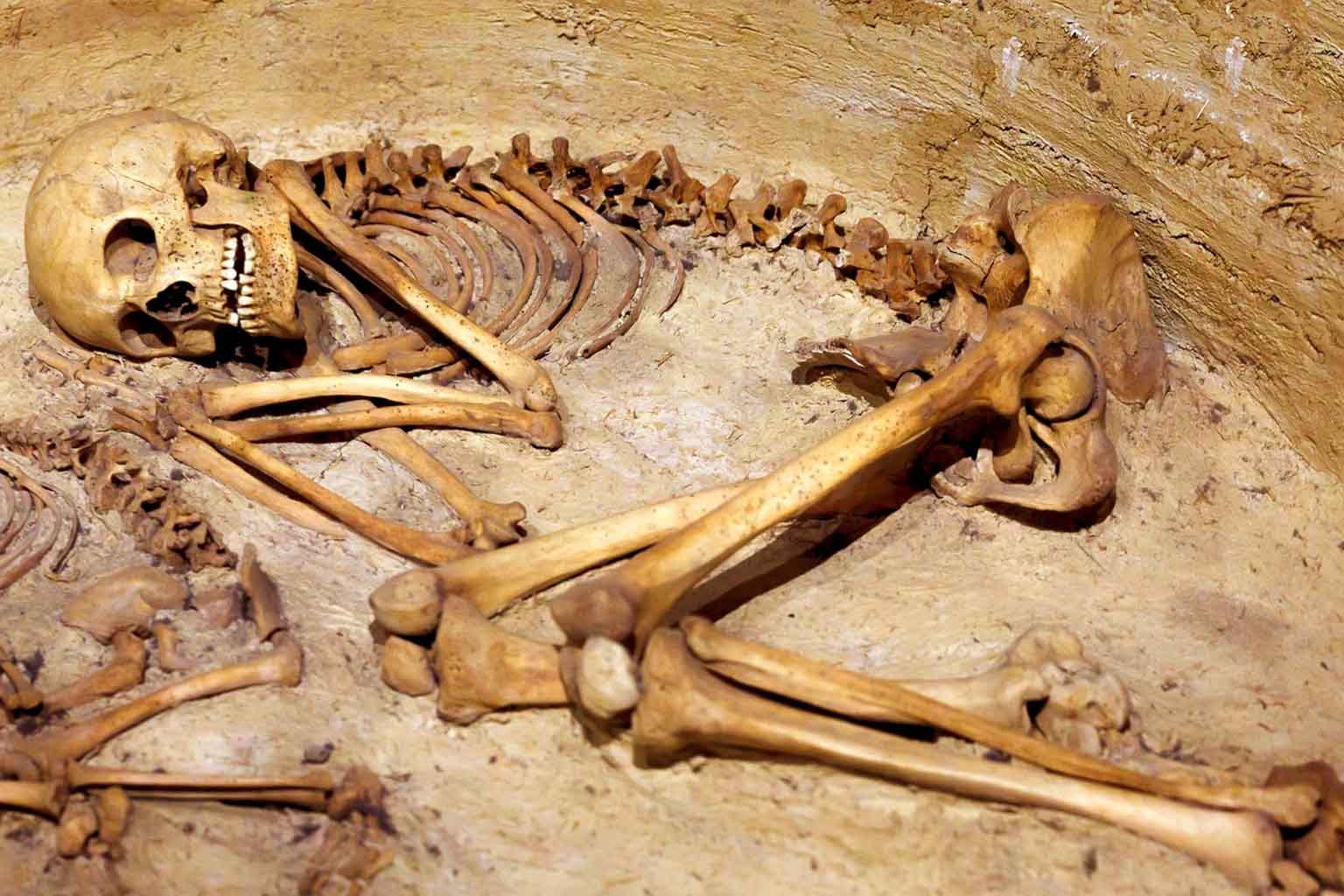
Rare medieval bed burials are revealing astonishing secrets about Europe’s shadowy past, casting fresh light on the traditions, migrations, and social structures of early medieval societies. Across Germany, England, and Scandinavia, these rare burial sites challenge long-held assumptions and open new doors to understanding the lives—and deaths—of people over a thousand years ago.
Dr. Astrid Noterman, a respected archaeologist and European medievalist, recently published a landmark study titled Sharing a bed but nothing else: bed burial traditions in first millennium AD Europe (2025), featured in the European Journal of Archaeology. Her work explores the variety and cultural meanings behind these uncommon and mysterious bed burials, focusing on their geographic spread and social significance within medieval Europe.
German bed burials: simplicity with symbolic craftsmanship
In Germany, bed burials are generally found in modest cemeteries without elaborate markers. Individuals were laid to rest upon simple wooden bed frames, accompanied by mostly everyday objects like wooden bowls and rings. Occasionally, more ornate possessions appear, such as lyres or ornate chairs, offering a hint of social standing but maintaining an overall humble profile.
What stands out most in German female burials is the consistent presence of weaving tools — spindle whorls, needles, and distaffs underscore the central role textile production played in the life and economy of medieval rural communities. Dr. Noterman interprets these tools as symbols of social identity and status, highlighting how women’s work in crafts was valued within the household. This points to a nuanced economic and cultural structure where household economies and artisan crafts formed essential community pillars.
England’s symbolic bed burials and foreign origins
England presents a distinctive approach to bed burials. Here, beds are often found dismantled within ancient burial mounds, signifying a ritual reuse of sacred spaces tied to long-standing traditions of ancestor worship. Instead of mere resting places, these beds appear to function as symbolic markers of status or lineage.
Significantly, English bed burials overwhelmingly honor females, though notable exceptions exist, such as a rare male bed burial discovered at Lapwing Hill in Derbyshire. What adds even more intrigue is the isotopic analysis performed on these burials, revealing that many individuals laid to rest in England originated from continental Europe. This evidence highlights extensive medieval migration and cultural exchange, indicating that these burial customs were part of a larger movement of people and ideas rather than isolated local traditions.
This insightful video offers an expert overview of medieval burial traditions across Europe, with a deep dive into the distinctive features of bed burials highlighted by Dr. Noterman’s pioneering research.
Scandinavian bed burials: grand monuments and afterlife journeys
Scandinavia’s bed burials contrast dramatically with those of Germany and England. Featuring large burial mounds and celebrated ship burials such as those at Gokstad and Oseberg, these sites emphasize social prestige and a profound belief in the afterlife. The deceased were often interred with exquisite weapons, jewelry, and other luxurious grave goods indicating elite status.
Strategically located near waterways and trade routes, these burial sites were intended to be visually prominent, signaling the importance of the individual within their community and possibly their clan’s influence. Unlike the communal cemeteries typical in Germany and England, Scandinavian beds frequently stand as isolated monuments, highlighting the cultural emphasis on individual legacy and spiritual passage.
Migrations and social meanings embedded in medieval burials
An intriguing aspect of Dr. Noterman’s study lies in how bed burials reveal medieval attitudes toward age and social status. For example, German bed burials often involve younger children aged 3 to 7, while English bed burials tend to be adolescents aged 13 to 18. This age difference implies divergent cultural views on the transition to adulthood and social roles within each region.
Isotopic evidence further paints a picture of widespread migration. Individuals buried in English sites such as Edix Hill and Trumpington often originated from continental Europe, while Scandinavian burials include women from as far as the Black Sea region. This confirms that bed burials were not isolated customs but part of broader cultural networks, facilitated by trade routes, migration, and intercultural connections.
These findings are supported by a 2025 report in the European Journal of Archaeology, which emphasizes the role of these burial practices in reflecting medieval social hierarchies, gender roles, and the exchange of cultural beliefs across Europe.
This growing research spearheaded by experts like Dr. Noterman enriches our understanding of medieval life and death, revealing how even rare, localized customs contribute to the complex social fabric of early Europe.
If these revelations about bed burial traditions captivate you, what do you think they tell us about medieval society’s interconnectedness and cultural values? Share your thoughts in the comments below, and help spread the word to fellow history enthusiasts intrigued by Europe’s hidden past.