


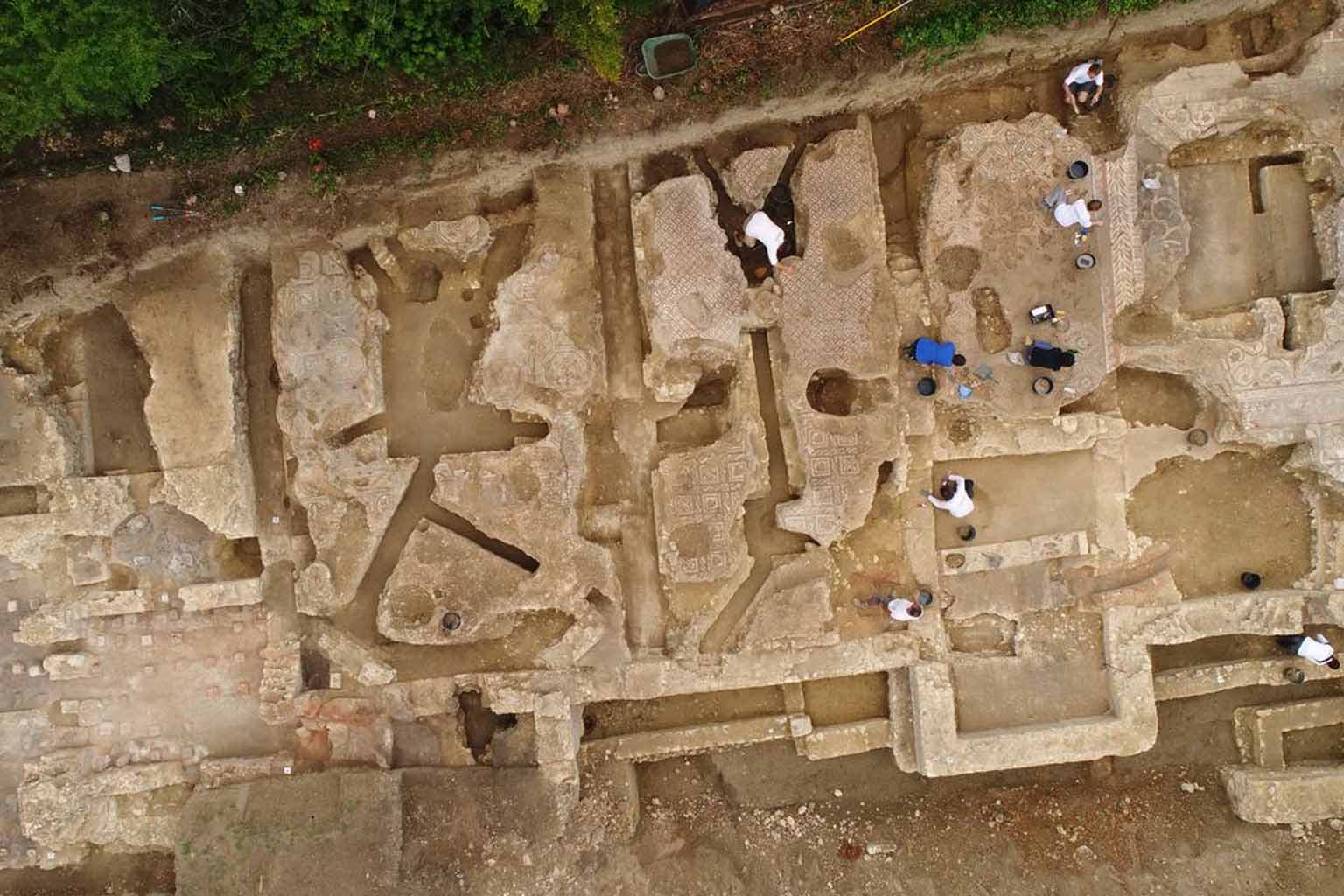
If stones could whisper, oh, the tales they would recount! In Stuttgart’s district of Bad Cannstatt, a spot that once was just an unremarkable piece of earth, has recently divulged a story buried in time. Excavators, engaged in a routine dig, have stumbled upon a burial site that could reshape our understanding of Roman military life. Though the discovery is already remarkable, there is one aspect that gives the unearthed scene an unexpectedly human dimension.
The Largest Known Horse Cemetery
Let’s start with the numbers. Imagine standing among the remains of over 100 Roman cavalry horses, a veritable testament to an era when such majestic creatures were indispensable to a legion’s might. According to recent reports, this appears to be the largest Roman horse cemetery discovered in southern Germany. These horses, dating back to the second century CE, were part of an elite Roman unit known as an ‘Ala’ which comprised about 500 riders. Surely, you can picture it: each rider needing not just one, but several trusted horses.
Lead archaeologist Sarah Roth of the State Office for Monument Preservation noted that these animals weren’t all laid to rest following a single catastrophe. Instead, these burial sites suggest a continuity — horses gradually put to rest over time as they became unfit for duty, akin to a methodical end rather than an explosive finale.
The Pragmatic Process of Burial
Visiting the site, you’d notice the somber rows of shallow pits where these noble creatures were interred. The uniformity of these burials speaks volumes. It’s not a scene of hurried chaos nor a battlefield aftermath. Rather, it’s a testament to efficiency—almost like an assembly line where fallen tools are laid to rest once they’ve served their purpose. Roth mentions that this systematic burial suggests a “pragmatic military disposal process,” not unlike the disposal of outdated equipment.
Many were placed on their sides, forelegs folded or outstretched, with no ceremony, no pomp. It was a procedure devoid of personal sentiment. Or so it seemed—until one particular grave surfaced with a different narrative.
A Soldier’s Hidden Grief
And then, there’s an unexpected turn—a single burial that defies the mechanical rigidity of the others. Amongst the uniformity of practical graves was a horse tenderly interred with customary human grave goods. Imagine the scene: two ceramic jugs and a small oil lamp nestled close, almost as though whispering secrets and sentiments. According to Roth, this specific burial carries poignant evidence of personal sorrow and attachment.
This scene, almost cinematic in its tenderness, suggests a soldier parting with more than a horse. This was a steed with whom he shared silent conversations and rare bonds in the weighty stillness of the night. “Here we see a particularly close bond between the owner and the horse,” Roth said. “Despite the passage of some 1,800 years, the grief over the loss of this animal can still be felt.”
Revisiting Stuttgart’s Roman Past
What we see here, beyond bones and relics, is a historical canvas of practicality interspersed with emotional splashes. Such finds help piece together the magnitude of logistics compelled by Roman military maneuvers. Notably, experts had suspected the area’s historical significance since isolated horse finds as early as the 1920s. This wasn’t just a ‘Schindanger’—an animal graveyard. It was a calculated operation serving a military need with a textured narrative underneath.
Interestingly, this discovery aligns with Stuttgart’s linguistic roots. The very name ‘Stuttgart’ is allegedly derived from ‘stuotgarden,’ or ‘mare’s garden,’ hinting at a longstanding equine heritage.
Now, as fieldwork wraps up, archaeozoologists will delve into the details — the age, health, and even the diet of these horses; the questions are endless. Were these horses imports from far-flung Roman territories, or perhaps they were local, born and bred?
A compelling video on this topic can be found embedded here:
As you let these stories sink in, consider this: Somewhere in the minutiae of rubble and dirt lie echoes of lives that once were. Whether you’re an intrepid adventurer at heart or a cozy armchair traveler, there’s always something profound about peering into time’s passageway, isn’t there? If this intrigues you, consider visiting historical sites—or read up a little more. You never know what whispers you might hear.