


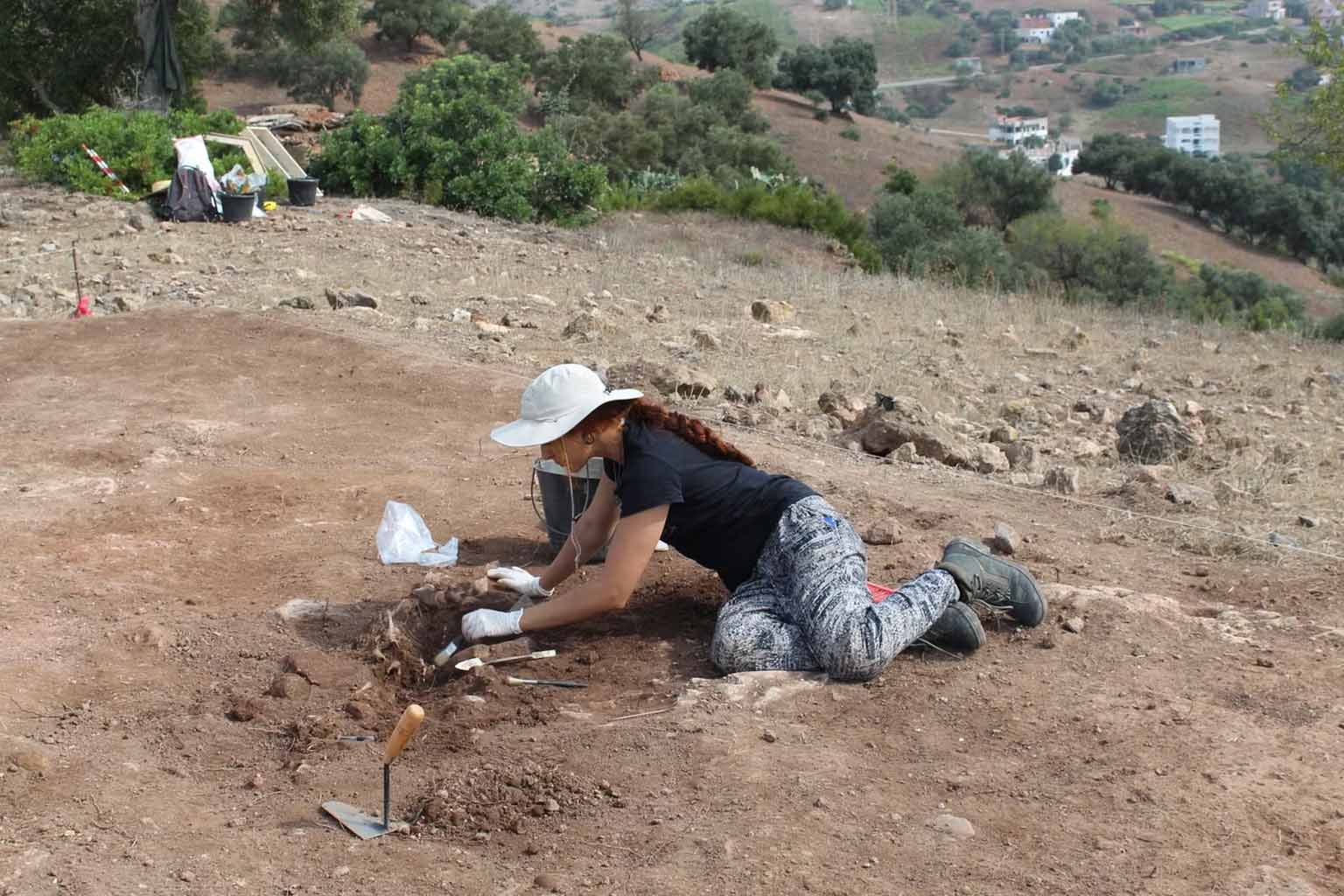
Archaeological discoveries often force us to rewrite historical narratives, but few revelations have the power to fundamentally alter our understanding of an entire region’s past. The recent excavation at Kach Kouch in northwest Morocco represents precisely this type of paradigm-shifting moment. For generations, scholars have viewed North Africa’s Maghreb region through the lens of Mediterranean colonization, treating it as a passive recipient of advanced civilization rather than a dynamic center of indigenous development. Similar paradigm shifts have occurred elsewhere, such as the recent 1,700-year-old altar discovery at Tikal that revealed unexpected cultural connections in ancient Mesoamerica.
This perception has now crumbled under the weight of evidence unearthed from Morocco’s ancient sands. The discovery of the first Bronze Age settlement in the Maghreb predates Phoenician arrival by nearly fourteen centuries, revealing sophisticated local communities that thrived between 2200-2000 BCE. The implications extend far beyond academic circles, challenging fundamental assumptions about cultural development in North Africa and forcing a complete reevaluation of the region’s historical significance.
What makes this discovery particularly striking is how it dismantles the colonial-era narrative that portrayed North Africa as historically dependent on external influence for technological and social advancement. The evidence from Kach Kouch tells a radically different story.
A Sophisticated Agricultural Society Emerges from the Past
The excavations led by researchers from the University of Barcelona have revealed a complex, multi-layered settlement that challenges every assumption about Bronze Age North Africa. The earliest occupation phase shows clear evidence of mud-brick architecture, sophisticated food storage systems, and advanced agricultural practices that sustained a stable, sedentary population.
The presence of rock-cut silos and grinding stones indicates not just survival-level farming, but surplus production and long-term planning. These communities cultivated crops while maintaining herds of sheep, goats, and cattle. Such diversified agriculture requires deep environmental knowledge, seasonal planning, and coordinated community effort that speaks to a level of social organization previously unrecognized in the region.
According to research published in PLoS One, archaeological sites in northern Africa provide a rich record spanning from the Middle Stone Age through to the Neolithic, offering crucial chronological context for understanding the development of complex societies in the region. Research indicates that the inhabitants of Kach Kouch developed these systems independently, without external influence. This autonomous development represents a crucial shift in understanding how complex societies emerged across different regions of the ancient world.
“Archaeological sites in northern Africa provide a rich record of cultural development spanning millennia, revealing sophisticated indigenous societies that developed independently of Mediterranean influence” – Archaeological research
Cultural Evolution Across Multiple Phases
The site’s three distinct occupation phases provide a rare window into how Bronze Age communities adapted and evolved over more than a millennium. The second phase, spanning 1300-900 BCE, shows expansion of agricultural activities and continued architectural innovation using local materials and techniques. This type of long-term settlement preservation mirrors other significant discoveries, such as the perfectly preserved Roman village in Bulgaria’s Pazardzhik region that remained hidden for over 1,600 years.
What emerges from this evidence is a picture of cultural continuity rather than external replacement. The same communities that established the original settlement continued to inhabit and develop the site, refining their technologies and expanding their economic base. This contradicts historical models that suggested the region remained largely static until Mediterranean contact.
The final occupation phase, between 800-600 BCE, introduces Mediterranean elements like wheel-thrown pottery and iron tools. Yet even this represents cultural synthesis rather than replacement, with local traditions persisting alongside new influences.
The Archaeological Blind Spot That Shaped Historical Understanding
The scarcity of Bronze Age archaeological research in the Maghreb has created a historical blind spot that inadvertently reinforced colonial-era narratives about North African development. While sites in Egypt, Mesopotamia, and the Levant have been extensively excavated for over a century, the western regions of North Africa remained largely unexplored. Similar gaps exist across Europe, where discoveries like the 3,000-year-old prehistoric hub in France continue to reshape our understanding of ancient European societies.
This research gap had profound consequences for historical interpretation. Without evidence of indigenous Bronze Age civilizations, scholars naturally emphasized later Mediterranean influences, creating a narrative of external cultural dominance. Studies from archaeological research institutions have shown how archaeological gaps can perpetuate historical biases, and the Maghreb represents a textbook example of this phenomenon.
The discovery at Kach Kouch demonstrates that the absence of evidence should never be confused with evidence of absence. The sophisticated nature of this Bronze Age settlement suggests that similar sites likely exist throughout the region, waiting to be uncovered and to further revolutionize our understanding of North African prehistory.
The Neglected Question of Cultural Networks
What conventional analyses often overlook is how the discovery of advanced Bronze Age settlements in Morocco fundamentally alters our understanding of ancient cultural and economic networks. The sophistication evident at Kach Kouch suggests these communities were not isolated outposts but active participants in broader regional exchanges that predated Mediterranean expansion.
Evidence suggests that trans-Saharan connections may have been far more extensive than previously recognized. The agricultural techniques, architectural methods, and social organization patterns found at the site show influences that could have originated from multiple directions, including sub-Saharan Africa and other North African regions. Such complex cultural networks for social control and influence are not unique to North Africa, as evidenced by discoveries showing how ancient South American civilizations used psychedelic rituals to maintain social cohesion and reinforce power structures.
“North African archaeological research reveals sophisticated cultural networks that challenge assumptions about indigenous technological development and inter-regional exchange systems” – Archaeological data analysis
This network perspective reveals a crucial gap in current historical models. Most studies of ancient North Africa focus on east-west Mediterranean connections while largely ignoring north-south African networks that may have been equally significant for cultural and technological exchange. The independent development of complex society at Kach Kouch suggests that multiple centers of innovation existed across the continent, connected through trade and cultural exchange systems that remain poorly understood.
The implications stretch far beyond North Africa itself. If Bronze Age communities in Morocco were developing sophisticated agricultural and architectural techniques independently, similar processes were likely occurring throughout the continent. This discovery opens questions about how many other advanced ancient African societies remain buried beneath centuries of historical oversight, waiting to reshape our understanding of human cultural development on a global scale.