


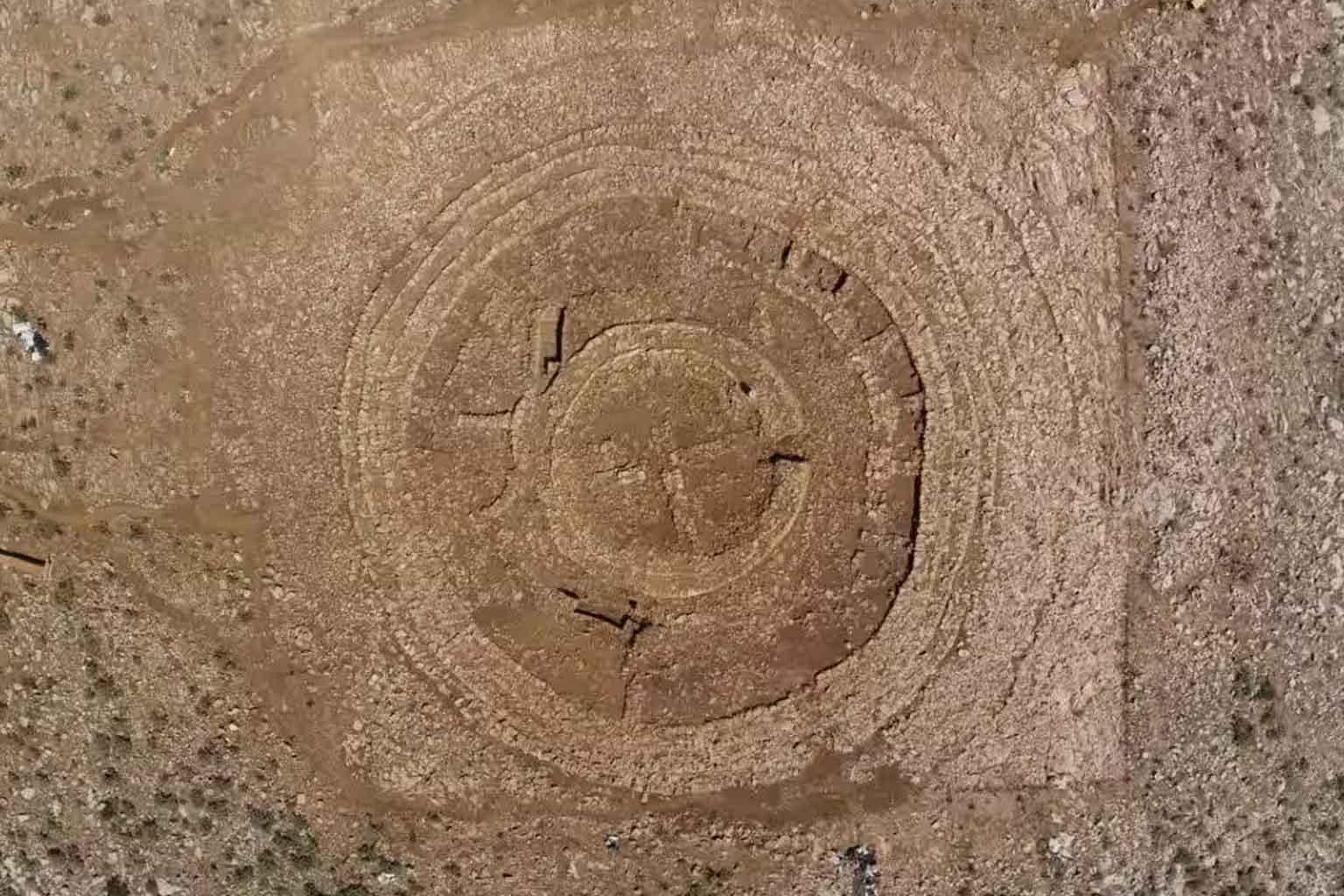
A recently unearthed ancient structure on the Greek island of Crete is captivating archaeologists and historians alike. This mysterious 4,000-year-old circular building challenges what we know about Minoan architectural styles and cultural practices, offering a rare glimpse into a world long buried beneath time.
An extraordinary Minoan discovery on Crete
Nestled on a hilltop near Kastelli, researchers uncovered a remarkable circular structure that dates back to the heart of the Minoan civilization, between 2000 and 1700 B.C. Unlike the grand rectangular palaces such as Knossos, this ancient building features a unique maze-like design composed of eight concentric stone rings. Spanning approximately 157 feet in diameter, with a large central circular chamber measuring around 49 feet wide, the structure’s layout evokes a labyrinthine complexity rarely seen in Minoan architecture.
This discovery was unexpectedly made during the installation of a surveillance radar system for a nearby new airport, and insights shared by the Greek Ministry of Culture highlight how this building diverges significantly from previously identified palatial sites.
Unraveling the function behind the maze-like walls
Unlike palaces traditionally associated with royal residence and administrative functions, this structure offers scant evidence of domestic life or bureaucratic use. Instead, archaeologists discovered numerous animal bones and artifacts pointing toward feast-related activities. Such findings strongly suggest the site was a center for ritualistic or communal ceremonies, possibly involving food, wine, and offerings.
Greece’s Minister of Culture, Lina Mendoni, emphasized the site’s likely sacred function: “The evidence favors a ceremonial role aligned with Minoan religious customs rather than everyday habitation.”
This insight aligns with what scholars understand about the Minoans’ deeply spiritual society, renowned for intricate ritual practices that permeated their culture. The hilltop location and circular design further hint at a place that may have been reserved for significant communal rites.
Connecting myths and history: The labyrinth mystery
The building’s intricate maze-like pattern inevitably recalls the famous myth of King Minos’ labyrinth, which housed the legendary Minotaur according to Greek mythology. While the new find’s actual purpose may differ from these stories, its complexity invites comparisons and fresh interpretations.
The Minoan civilization, which flourished roughly from 3000 to 1100 B.C., was known for its advanced architecture and complex societal structures but still holds many secrets. This ancient site offers an unprecedented opportunity to better understand the diverse cultural expressions and sophisticated ceremonial architecture of the Minoans.
Dr. Elena Papanikolaou, an expert in Aegean archaeology, commented in a 2024 research publication: “Discoveries like this redefine the boundaries of what we know about Minoan ceremonial life. The site’s form and function challenge previous assumptions of linear palace design.”
The future of the Kastelli site: Protective research and discovery
Current archaeological efforts, in collaboration with the Greek Ministry of the Interior and the Hellenic Civil Aviation Authority, prioritize the protection and detailed study of this fragile site, especially given its proximity to modern infrastructure. Researchers are focused on documenting the structure’s dimensions, architectural details, and potential uses.
In the coming years, further excavations and analyses are expected to clarify the full range of activities the structure hosted. These findings could dramatically reshape scholarship on Minoan ceremonial spaces and religious architecture.
The discovery of this ancient circular structure does more than shed light on a long-forgotten building; it invites us to re-examine the spiritual life and cultural ingenuity of the Minoan people. As the layers of history unfold, this site promises fresh revelations about the complexities of early Mediterranean civilizations.
What are your thoughts on this mysterious discovery? Share your reactions or questions below, and let’s uncover the secrets of ancient Crete together!