


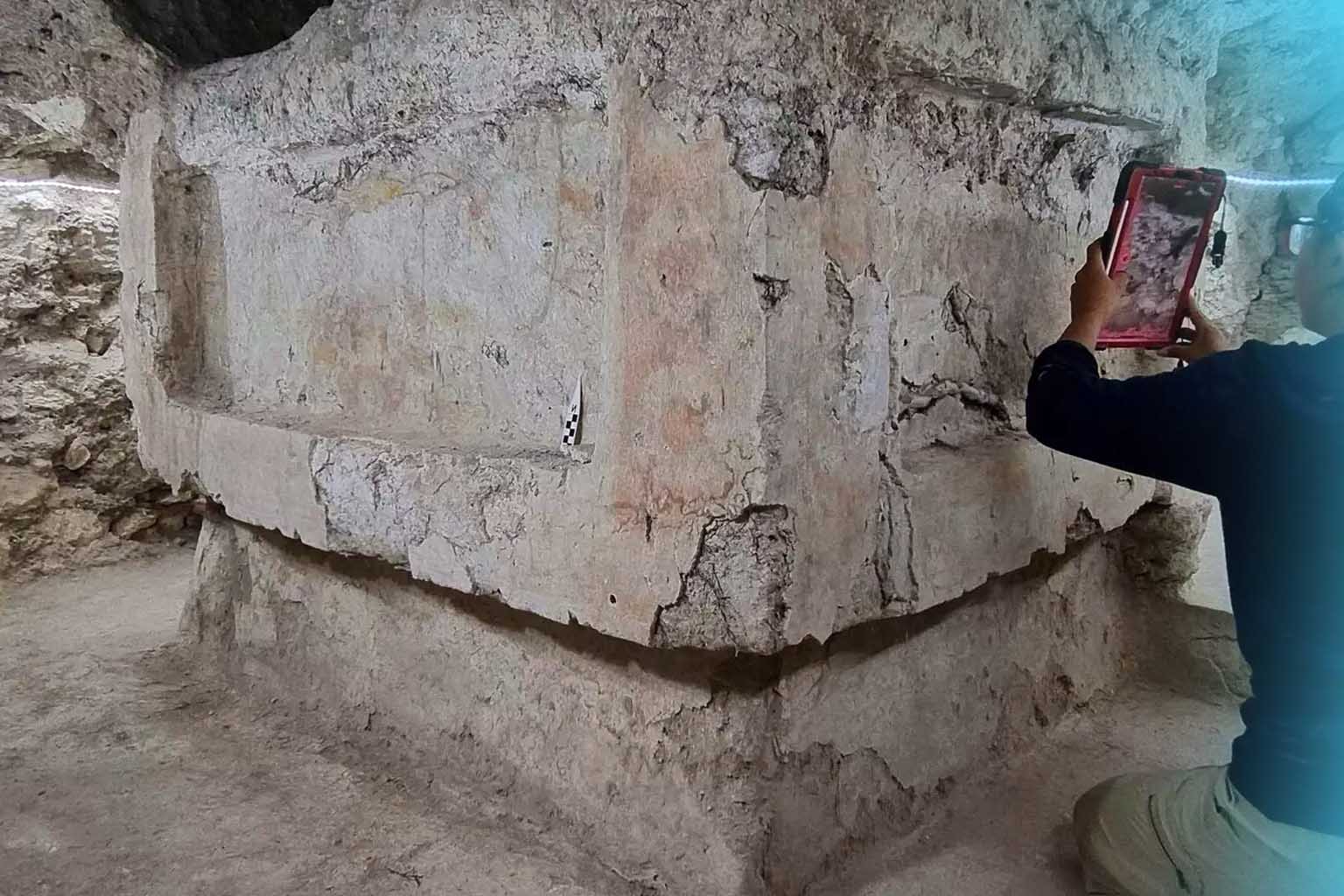
The ancient city of Tikal, nestled deep in the Guatemalan rainforest, has long been considered a crown jewel of Maya civilization. But a recent discovery at this iconic archaeological site is reshaping our understanding of cultural clashes and exchanges in ancient Mesoamerica. A 1,700-year-old altar, unlike any found before at Tikal, reveals a startling connection to Teotihuacan — a massive metropolis over 600 miles away in what is now central Mexico. This finding challenges long-held beliefs and throws light on the complex relationship between these two great civilizations.
A Stunning Discovery Unveils Teotihuacan’s Presence at Tikal
In 2019, archaeologists began excavating a large altar structure in Tikal that would rewrite history books. According to the research published in the journal Antiquity, this altar was crafted by artisans from Teotihuacan, a sprawling city famous for its pyramids and urban planning. This evidence confirms that the influence of Teotihuacan reached far into the Maya Lowlands during the 5th century A.D.
The altar’s ornate decorative panels bear stunning imagery reminiscent of Teotihuacan style: figures adorned with nose bars and elaborate feathered headdresses, symbols closely linked to the Storm God deity worshiped at Teotihuacan. The use of vibrant pigments and artistic techniques match those found in murals of the central Mexican city, serving as clear proof of cultural diffusion or presence. This suggests a period not only of dominance but significant cultural exchange between the two powers.
Human Remains Reveal Foreign Burial Rituals
What makes the altar even more extraordinary are the human burials interred within it. Archaeologists found the remains of at least four individuals, including a child placed in a seated position—a burial practice uncommon in Maya culture. Alongside the child lay an adult buried with a green obsidian dart point, an artifact associated with rituals specific to Teotihuacan elites.
These findings underline a critical point: the rituals performed at this site were not native to the Maya but reflect Teotihuacan customs. The seated burial posture and use of obsidian darts are emblematic of Teotihuacan’s distinctive ceremonial traditions. This challenges previous assumptions that Tikal’s culture was homogeneously Maya and instead supports the theory of a more complicated intersection involving conquest, settlement, and cross-cultural rituals.
The Altar Burial: A Monument to Conflict and Cultural Tension
Between A.D. 550 and 645, the altar along with surrounding buildings was deliberately buried and left untouched. Brown University anthropologist Andrew Scherer, one of the lead researchers on this project, explains this act as highly symbolic. “The Maya regularly buried buildings and rebuilt on top of them,” Scherer says. “But here, they buried the altar and just left it, almost like a memorial or exclusion zone. This likely reflects the complex and uneasy feelings toward Teotihuacan’s legacy.”
The decision to seal off such a strategically significant site indicates Tikal’s desire to sever ties and distance itself from Teotihuacan influence. This act of burial echoes a form of cultural repudiation, transforming the altar into what may have felt like a “radioactive zone” to the Maya — a place representing a painful chapter of foreign domination or rivalry.
Understanding the Broader Historical Context
Tikal flourished from approximately 600 B.C. until A.D. 900, emerging as a dominant Maya city-state. Meanwhile, Teotihuacan’s rise to power in central Mexico reached its peak between A.D. 100 and 550. Historical and archaeological data suggest that Teotihuacan exerted immense military and political influence over distant regions, including Tikal. A 1960s discovery of a stone carving celebrating a Teotihuacan general’s conquest of Tikal around A.D. 378 fits well with the altar’s era and the signs of foreign ritual activity.
Experts like Dr. Lisa Lucero, professor of anthropology at the University of Illinois, stress that these findings reveal a nuanced dynamic of competition, cultural blending, and adaptation. “This altar highlights not only conflict but the interconnected networks and shifting alliances that characterized the ancient Mesoamerican world,” she notes.
These insights align with broader scholarship indicating that ancient societies were rarely isolated but instead engaged in vibrant and often fraught exchanges. According to a Cambridge report, archeological evidence across Mesoamerica supports the view that major centers like Teotihuacan and Tikal were part of extensive trade, political, and cultural networks.
The Lasting Impact of Teotihuacan on Maya Civilization
The discovery of the altar at Tikal opens fresh perspectives on how ancient geopolitical forces shaped Mesoamerica. It alters the simplistic narrative of the Maya as an isolated civilization by emphasizing that cultural and political relationships were fluid and often aggressive. Teotihuacan warriors and elites leaving ritual traces so far from their capital underscores a time of intense rivalry and complex cultural blending.
For those fascinated by archaeology and history, this find serves as a powerful reminder: ancient ruins hold stories not just of isolated peoples but of civilizations entwined in vast networks of influence, conquest, and exchange.
Have these revelations changed how you think about Maya and Teotihuacan relations? Join the conversation below—share your thoughts and send this article to friends eager to learn more about these ancient mysteries!