


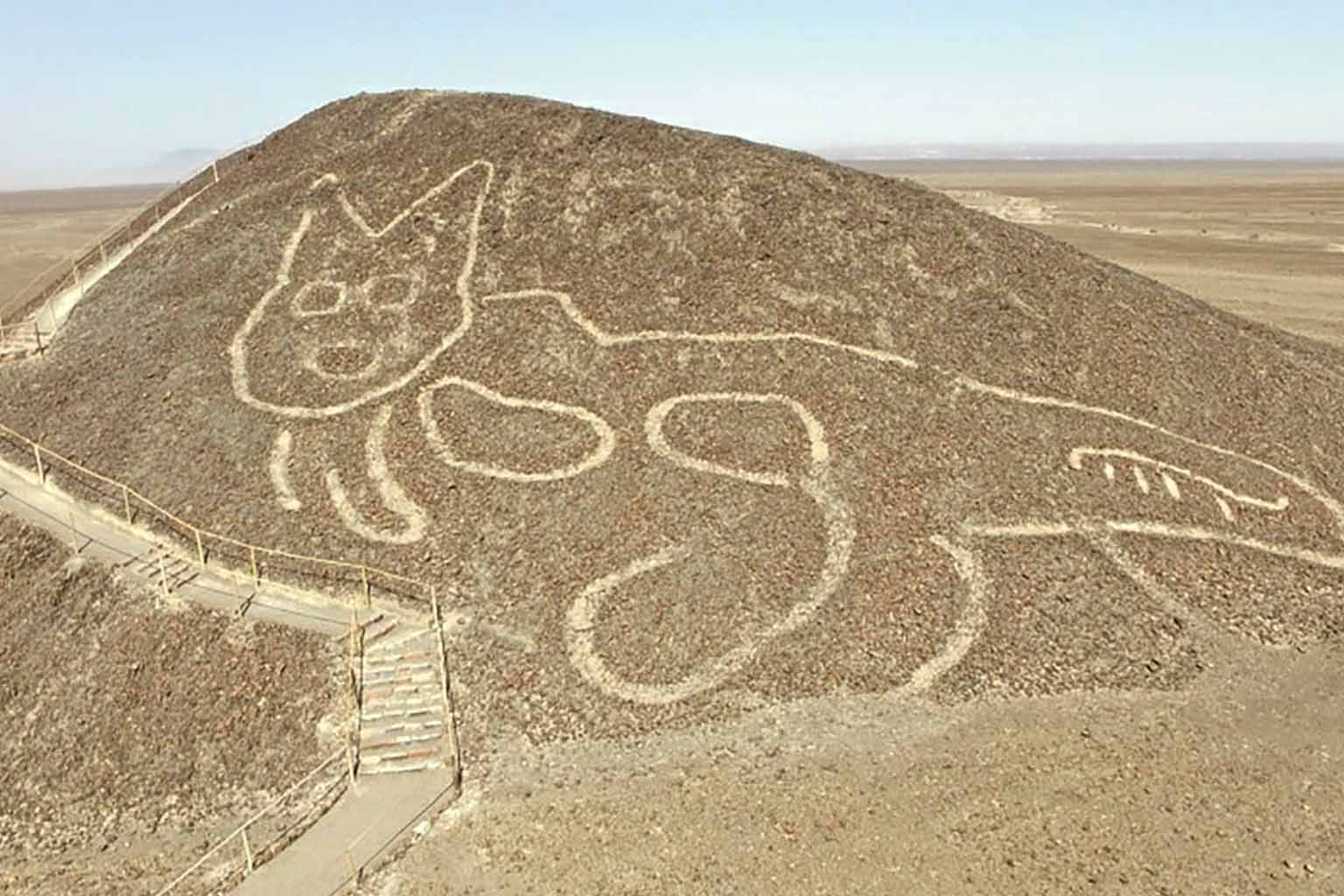
The discovery of a massive, 2,000-year-old cat geoglyph at Peru’s Nazca Lines is reshaping what we know about ancient civilizations in South America. Nestled high on a steep hillside, this newly found giant figure holds the record as the largest animal carvings yet uncovered at the site—and it offers a fascinating glimpse into the symbolic life of the Paracas culture.
The grandeur of the newest Nazca Lines giant
Stretching over 120 feet in length, the ancient cat geoglyph joins the mystifying family of images laid out across Peru’s desert plateau. This creation dates approximately between 200 B.C. and 100 B.C., placing it squarely in the late Paracas period—a time known for extraordinary artistic and cultural expression.
What sets this feline figure apart is the precision and scale of its design. Its sharply etched eyes, pointed ears, and gracefully long tail echo common motifs found on Paracas ceramics and textiles, suggesting that cats held deep symbolic meaning for these ancient people. Peru’s Ministry of Culture describes the discovery as a testament to the “rich and varied cultural legacy” that these lines represent.
This recent find is reinforced by modern science: archaeologists combined traditional fieldwork with high-resolution 3D mapping technology to reveal this monumental shape, invisible at ground level but breathtakingly clear from above. Such use of technology illustrates how cutting-edge tools continue to transform our understanding of pre-Columbian history.
Preserving ancient art against the odds
The geoglyph’s precarious setting on a steep slope makes preservation a tremendous challenge. According to the Ministry’s announcement, the carving was “about to disappear” due to natural erosion worsened by wind and rain. This vulnerability underscores the fragile nature of the Nazca Lines, a UNESCO World Heritage Site protected by strict regulations that limit public access.
The perimeter remains largely off-limits to preserve these archaeological treasures, with official viewing restricted to low-flying aerial tours and observation posts. Conservators and scientists are engaged in ongoing efforts to monitor and protect the geoglyphs, which are still at risk from natural degradation and human impact.
Notably, the discovery of this cat geoglyph demonstrates that the vast Nazca plateau still holds secrets beneath its surface, with researchers optimistic about the potential for new, hidden figures waiting to be uncovered. It is a vivid reminder that even well-studied sites can yield groundbreaking revelations.
Why the Nazca Lines continue to captivate the world
The Nazca Lines are a sprawling web of earthworks spanning approximately 174 square miles, etched between 100 B.C. and 700 A.D. Their lines, shapes, and figures create a map open to interpretation. Scholars have long debated their purpose, proposing explanations ranging from ceremonial pathways and astronomical markers to symbolic guides for travelers or water sources.
Despite numerous studies, the reasons behind the figures remain elusive, which only adds to their allure for historians and tourists alike. The newly uncovered cat figure connects broader iconographic traditions from the Paracas and Nazca cultures, offering tantalizing clues about how these people perceived animals in their environment and spirituality.
Johny Isla, chief archaeologist for the Nazca Lines project, remarked on the remarkable nature of ongoing discoveries: “It’s quite striking that we’re still finding new figures.” His insight suggests that the lines are more than static relics—they are a living puzzle slowly unveiling more about ancient societies and their worldviews.
A cultural and archaeological milestone
This discovery also resonates with the wider historical narrative of Pre-Columbian South America. The cat geoglyph contributes to the growing evidence that understanding ancient cultures is a dynamic process supported by interdisciplinary methods—combining archaeology, art history, and digital science.
For instance, a 2023 report from the Archaeological Institute of America highlights how recent geoglyph studies have benefited from aerial surveys and satellite imagery. This has enabled finer distinctions between cultural phases and artistic styles within the Nazca region.
Ultimately, this impressive cat carving is a vivid reminder of how much more there is to learn about ancient cultures—and it strengthens the urgent call to protect these irreplaceable relics. As author and archaeologist Dr. Ana Maria Torres states, “The Nazca Lines are not just Earth’s art; they are narratives passed across millennia, teaching us about connection, symbolism, and time.”
We invite you, our readers, to share your thoughts on this extraordinary find. What questions do you have about ancient geoglyphs, and how do you see technology shaping the future of archaeology? Join the conversation by commenting below or sharing this article with fellow history lovers and curious minds alike.