


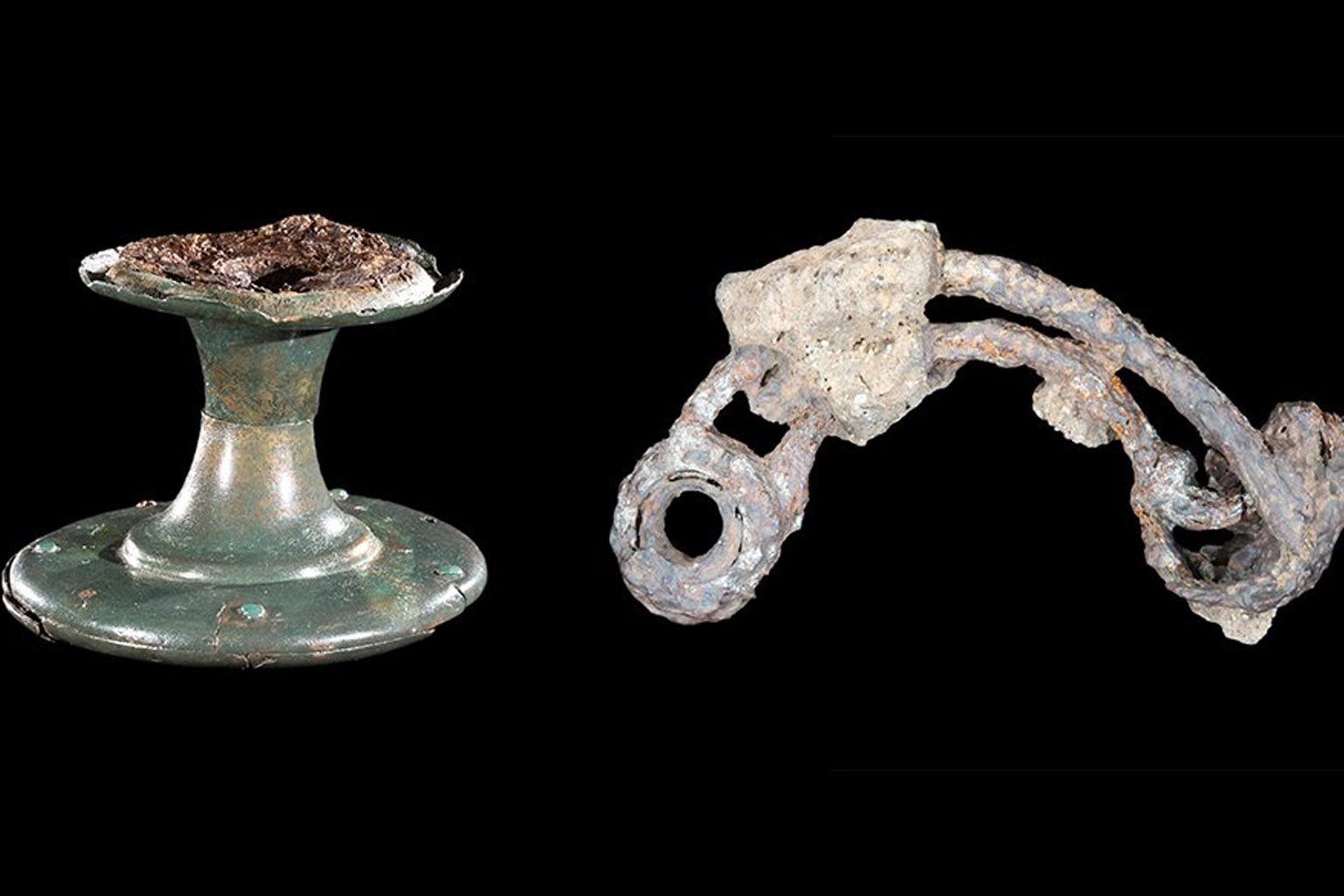
In the quiet hills of western Hungary, a remarkable discovery has surfaced, revealing secrets that have been buried for over 3,400 years. Somló Hill, a volcanic butte long whispered about in archaeological circles, has yielded a trove of over 900 ancient artifacts that shed new light on the culture, craftsmanship, and power dynamics of prehistoric Europe. This extraordinary find bridges the Late Bronze Age to the Early Iron Age, revealing a rich tapestry of human activity, ritual, and political significance.
Unearthing Secrets on Somló Hill
Somló Hill rises like a beacon above the Hungarian plains, its volcanic origins giving it a unique prominence in the landscape. Known to archaeologists but never fully explored in depth, recent excavations led by Bence Soós, an expert in European prehistory, have uncovered this hidden wealth of artifacts. Soós remarked on the discovery’s importance: “Thanks to the efforts of our volunteers, our investigations documented the first metal hoards on Somló. In the first year of research, six Late Bronze Age and Early Iron Age metal assemblages were discovered.”
These hoards include an array of objects—bronze lumps, ingots, casting jets, jewelry, and weaponry—that collectively suggest Somló Hill was more than a mere settlement. Instead, it was likely a hub for metalworking and possibly a center of ritual activity. Metal hoards discovered in ceramic pots—a practice previously undocumented in this region—hint at complex customs concerning the burial and deposition of valuable items.
The Bronze to Iron Age Transition
The significance of these finds extends beyond their age or impressive craftsmanship. They offer a rare snapshot of a pivotal moment in European history: the shift from the Bronze Age to the Iron Age. This transition marked dramatic changes in technology, social structure, and cultural practices. At Somló Hill, the variety and strategic arrangement of metal objects suggest they were deliberately placed, perhaps as offerings or symbolic deposits.
Such practices align with wider European trends where hoards often served ritual purposes, possibly linked to beliefs about prosperity, protection, or the community’s relationship with their land and ancestors. The presence of amber beads and animal tusks alongside metals further supports this interpretation, emphasizing a blend of material value and spiritual meaning.
According to a 2023 study by the European Archaeological Review, deliberate metal deposition in hoards during this transitional era often reflected complex social behaviors, including the crystallization of elite power and the negotiation of cultural identities. This reinforces the notion that Somló Hill was more than just an industrial site—it was a place where culture and authority intertwined.
Power and Prestige at the Hilltop
The wealth of objects found, particularly from the Early Iron Age (Hallstatt B1–B2 periods), strongly indicate that Somló Hill may have served as a seat of power for an elite class. The assemblages suggest control over local resources and involvement in metallurgy on a scale sufficient to support both utilitarian tools and ornamental items, symbolizing status and authority.
Soós explains, “The recent discoveries indicate that Somló might have been one of their seats of power, as well as the host of a prominent community whose culture included the deposition of metal hoards.” This points toward a hierarchical society where elite warriors or leaders maintained influence over the surrounding lowlands. Such hilltop settlements were common centers of power and ritual in prehistoric Europe, reflecting the emergence of early forms of urbanism and governance.
This discovery at Somló Hill contributes to a broader understanding of how European societies organized themselves just before recorded history, offering valuable evidence of cultural complexity and political sophistication.
The Technology Behind the Finds
The artifacts found at Somló Hill also reveal much about ancient metallurgical techniques. Among the hoards are fragments associated with the metal casting process—casting jets and finished objects—that underscore the site’s role as a production hub. The combination of raw materials and crafted goods illustrates a high level of technical skill as well as the importance of metal as both a practical resource and a status symbol.
Employing modern technologies like Lidar mapping and metal detector surveys, researchers have uncovered the density and distribution of these artifacts without disturbing the site unnecessarily. This approach, combined with meticulous excavation, allowed the discovery team to document the hoards’ placements and potential ceremonial contexts in unprecedented detail.
A Window Into Ancient Europe
The uncovering of over 900 artifacts on Somló Hill is a breakthrough that pushes the boundaries of our knowledge about prehistoric Europe’s social and cultural landscapes. It reveals a community deeply engaged in metalworking, ritual practice, and power consolidation during a time of great change.
If this glimpse into ancient Hungarian history fascinates you, share your thoughts and reactions! What do you think these discoveries say about the people who lived on Somló Hill thousands of years ago? Join the conversation and help keep the story alive.