


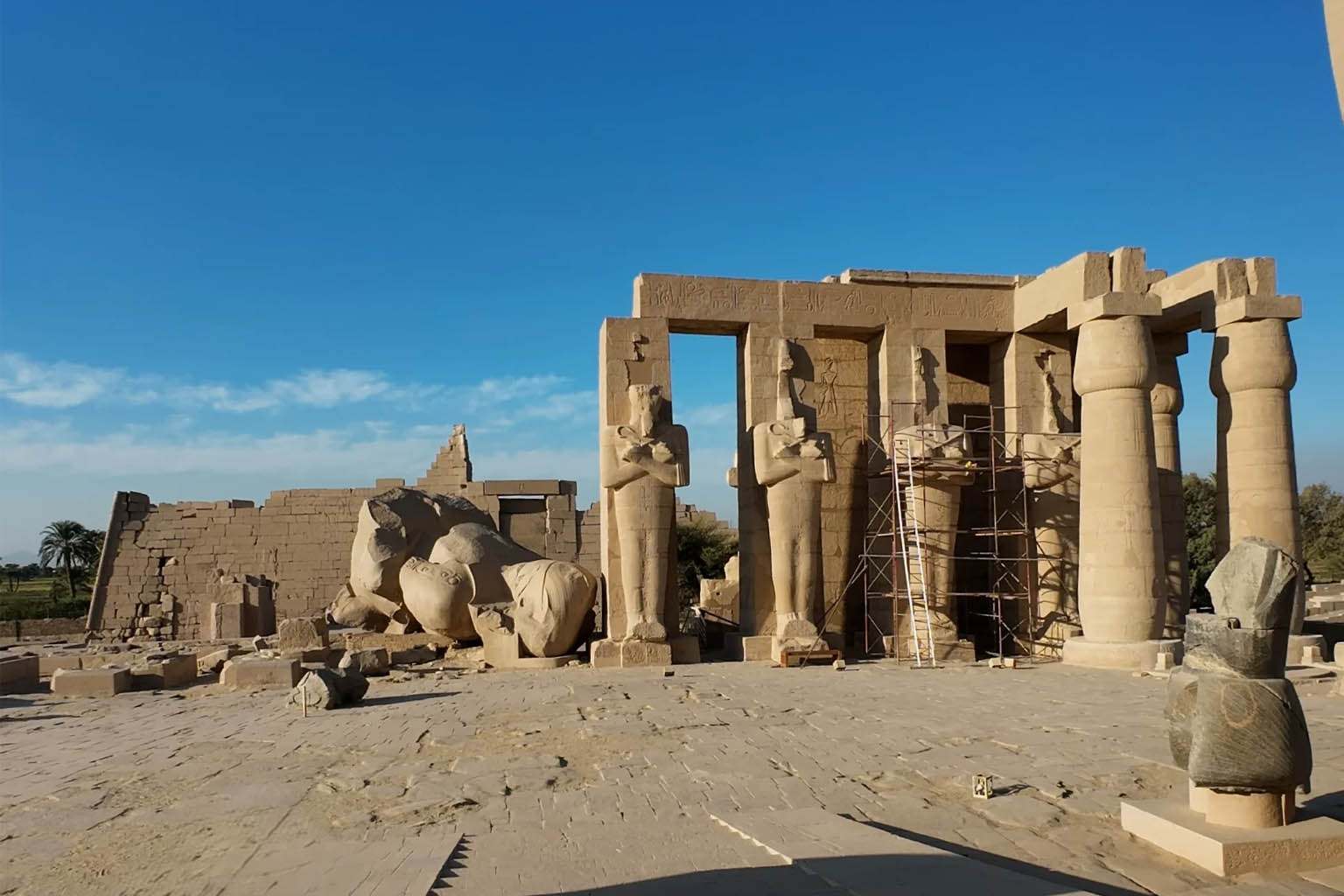
It’s almost like stepping into a time machine — a revelation that stirs curiosity and paints a vivid picture of history. The recent discovery at the famous temple of Ramesses II isn’t just your run-of-the-mill find. It uncovers some tantalizing secrets that give us a peek into a rarely seen side of ancient Egypt. This archaeological breakthrough unearths a remarkable past where a special school laid its roots, inviting the inquisitive minds of young elites into its hallowed halls.
The magical world of Egypt comes alive in ways we couldn’t quite imagine, shedding light on a dynamic and vibrant culture.
The Legendary Ramesseum: A Center of Life
Imagine the Ramesseum not only as a grand monument but as a **bustling nucleus** of activity in ancient Egypt. Built during the majestic reign of Ramesses II, often known as Ramesses the Great, his temple was a hub for more than just worship. This incredible structure served as a focal point for religious, educational, administrative, and economic life. Dr. Mohamed Ismail Khaled, a knowledgeable voice from Egypt’s Supreme Council of Antiquities, **emphasized the importance** of this site. In his view, this discovery redefines our understanding of how the Egyptians structured their living and working environments.
But there’s more, much more.
The Hidden School: House of Life Comes to Light
This isn’t just any discovery. Finally confirmed, the House of Life — an illustrious educational institution within the Ramesseum — comes to the forefront. Egyptologists had long theorized its existence, but tangible evidence had eluded them until now. Specifically designed for the offspring of Egyptian aristocracy, this temple school was a training ground, nurturing future **scribes and administrators** for a complex government.
The findings are mesmerizing: student sketches, fragments of learning toys, and ancient educational tools. These artifacts reveal a structured, lively educational environment focusing on cultivating officials and scribes crucial for ancient Egyptian society—a society known for its intricate organization. And let’s be honest, envisioning such a vibrant setting can truly awaken the imagination.
Unveiling the Architectural Genius
Archaeologists have outdone themselves by unearthing the architectural layout of the House of Life. It provides scholars with a **never-before-seen blueprint,** a window through which we can now see how these institutions were integrated within temple settings. This architectural gem is a vital piece in the puzzle of ancient Egyptian education systems, laying out classrooms and living spaces that educators today might find surprisingly modern.
But the discoveries don’t stop here.
Beyond these walls, the Ramesseum extended its reach. **Administrative buildings stood** on the temple’s east side, marking it as a nucleus of both religious and community affairs. Ancient storage areas filled with olive oil, honey, animal fat, and even wine cellars highlight the temple’s role in regional trade and resource management.
A Tapestry of Time: The Changing Face of Ramesseum
As the excavation dove deeper, surprises emerged with the unearthing of tombs from the Third Intermediate Period. These revelations cast light on how the Ramesseum shifted from being a prestigious institution to a sacred burial ground. Within these tombs, burial shafts, well-crafted canopic jars, and nested coffins stood as solemn testaments to an ancient belief in eternity.
Notably, the re-discovery of the Middle Kingdom tomb of “Sahtab Ayb Ra,” first unearthed in 1896, enriches our understanding. Its detailed wall scenes, depicting funeral processions, offer a glimpse into Middle Kingdom rituals, painting a rich tapestry of how burial customs evolved over centuries.
Preserving History: Restoration Efforts
Restoring any relic isn’t child’s play; it’s about breathing life back into history, and at the Ramesseum, remarkable strides have been made. The restoration team focused on significant sections like the southern portion of the Hall of Columns, leading to the Holy of Holies. Figures such as the statue of Queen Toya and Ramesses II’s own majestic effigy have been carefully restored to capture their former glory.
Dr. Christien LeBlanc, renowned for his expertise, praised the unwavering efforts made to restore the royal palace near the courtyard. Though **primarily skeletal at first,** the team reconstructed its structure, identifying its reception hall and throne room—spaces where power once mingled with ceremony.
The Ramesseum is indeed more than meets the eye. It stands as a testament to human ingenuity, where walls whisper tales long forgotten, and stones bear witness to an era where learning and tradition thrived. Curious about how else history continues to unfold? Stay tuned to the pulsating rhythm of new discoveries in ancient lands. Join the journey and explore the realms yet uncovered.