


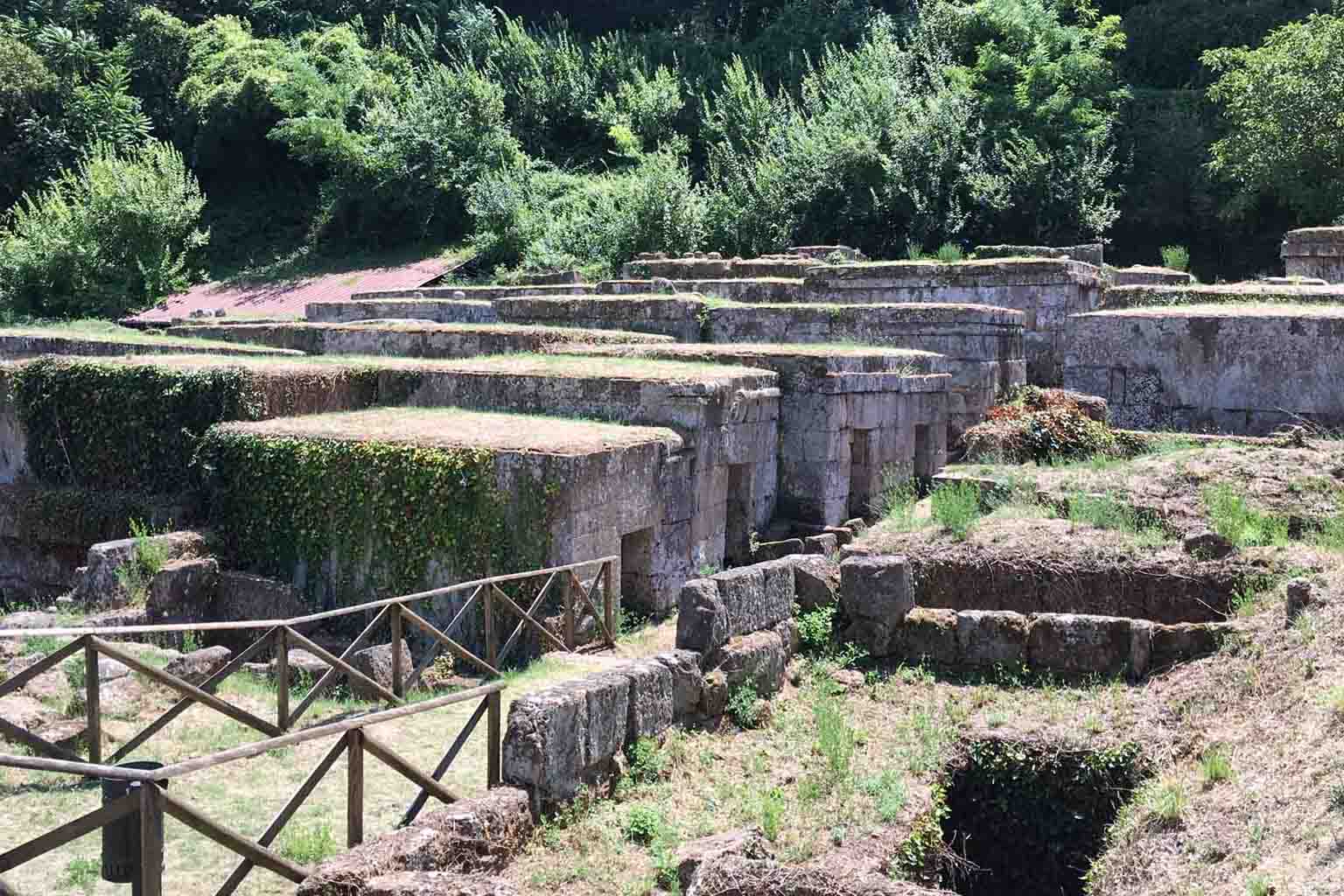
The ancient world continues to surprise us with discoveries that challenge our understanding of lost civilizations. In Tarquinia, Italy, archaeologists have uncovered a 2,500-year-old Etruscan tomb that stands apart from typical funerary art of the period. What makes this discovery exceptional isn’t just its age or artistic quality, but a rare depiction that offers insights into the economic foundations of Etruscan society. Like other remarkable finds such as the massive cat geoglyph at Peru’s Nazca Lines, this discovery reveals how ancient civilizations used artistic expression to communicate complex cultural meanings.
Hidden beneath a collapsed structure in the UNESCO World Heritage necropolis, this tomb reveals vibrant frescoes that include an unprecedented scene: a metallurgical workshop. Among the thousands of tombs in Tarquinia, only about 200 feature painted decorations, and even fewer contain figurative scenes that tell stories about the lives of the deceased.
The Forge That Defied Convention
Etruscan tomb paintings typically follow established patterns – banquet scenes, dancing figures, mythological narratives that speak to the afterlife. The metallurgical workshop scene in this 5th-century BCE tomb breaks from these conventions entirely. The image appears to show Sethlans, the Etruscan god of fire and metalworking, suggesting the deceased or their family held significant status in the metal industry.
This connection between divine representation and professional identity reveals how deeply integrated craft specialization had become in Etruscan society. According to archaeological research on ancient Mediterranean economies, the Etruscans built their wealth and regional influence largely through advanced metallurgical techniques, and this tomb provides rare visual evidence of how that expertise was valued and commemorated.
“Archaeological evidence demonstrates that trade networks and specialized craft production formed the backbone of Etruscan economic power in central Italy” – Archaeological research on ancient economies
Daniele Federico Maras, director of the National Archaeological Museum of Florence, notes that this unique smithy scene allows researchers to glimpse the economic sources behind this family’s wealth. The decision to include industrial imagery in sacred funerary space speaks to a society where professional achievement warranted eternal recognition.
Artistic Narrative Beyond the Workshop
The tomb’s frescoes extend beyond the workshop scene to include more traditional elements that provide context for the deceased’s social world. One painting depicts men and women dancing beside a flutist, likely representing the funeral ceremony itself – a practice that emphasized celebration of life rather than mourning death. Similar to how prehistoric cave etchings in France conveyed complex cultural narratives beyond simple topography, these Etruscan frescoes communicate layered meanings about social identity and cultural values.
Another fresco shows a woman accompanied by two young men, potentially representing family relationships or social connections important to the deceased. These images work together to create a comprehensive picture of Etruscan funeral practices that emphasized both professional achievement and social bonds.
Despite the tomb being looted centuries ago, leaving no human remains or grave goods, the frescoes survived largely intact. This preservation allows modern researchers to study Etruscan artistic techniques and cultural values that might otherwise have been lost to time.
Technology Meets Ancient Art
Modern archaeological methods are expanding what we can learn from these ancient paintings. Researchers plan to employ multispectral imaging technology to detect faded colors and hidden details no longer visible to the naked eye. This technique has proven revolutionary in revealing layers of information in ancient artworks, much like the advanced methods used to uncover sophisticated urban planning in ancient Mayan cities.
The imaging process could uncover original painting techniques, reveal whether artists made changes during creation, or expose symbolic elements that have faded over millennia. Given that the tomb suffered structural collapse, advanced imaging might help reconstruct missing portions of the decorative program.
This technological approach represents a shift in how archaeologists study ancient sites. Rather than relying solely on what survives visibly, digital analysis tools allow researchers to reconstruct ancient intentions and methods with unprecedented detail.
The Economic Archaeology Hidden in Plain Sight
What conventional archaeological analyses often overlook is how tomb art functions as economic documentation. This discovery demonstrates that Etruscan funerary art wasn’t merely decorative or religious – it served as permanent record of professional identity and economic status. Research on Etruscan economic systems has shown how trade networks and specialized production created the foundation for social stratification in ancient Mediterranean societies.
The metallurgical workshop scene suggests that craft specialization had achieved such prominence in Etruscan society that it warranted divine association. This challenges assumptions about ancient economies being primarily agricultural. The Etruscans clearly recognized and celebrated industrial expertise as a source of social prestige.
The tomb’s location within the broader Tarquinia necropolis also provides context. Positioned among thousands of other burials, this particular tomb’s artistic program had to communicate the deceased’s unique achievements to visitors. The workshop scene served as both personal memorial and public advertisement of the family’s economic foundation. Such detailed preservation of ancient cultural practices mirrors discoveries like the perfectly preserved Roman village in Bulgaria, where archaeological evidence reveals the complexity of ancient daily life.
This discovery raises questions about how many other ancient societies integrated professional identity into sacred spaces, and whether similar evidence exists in other Mediterranean cultures. The intersection of economics, religion, and art in Etruscan society appears more sophisticated than previously recognized, suggesting we may need to reconsider how ancient civilizations understood the relationship between worldly success and spiritual significance.