


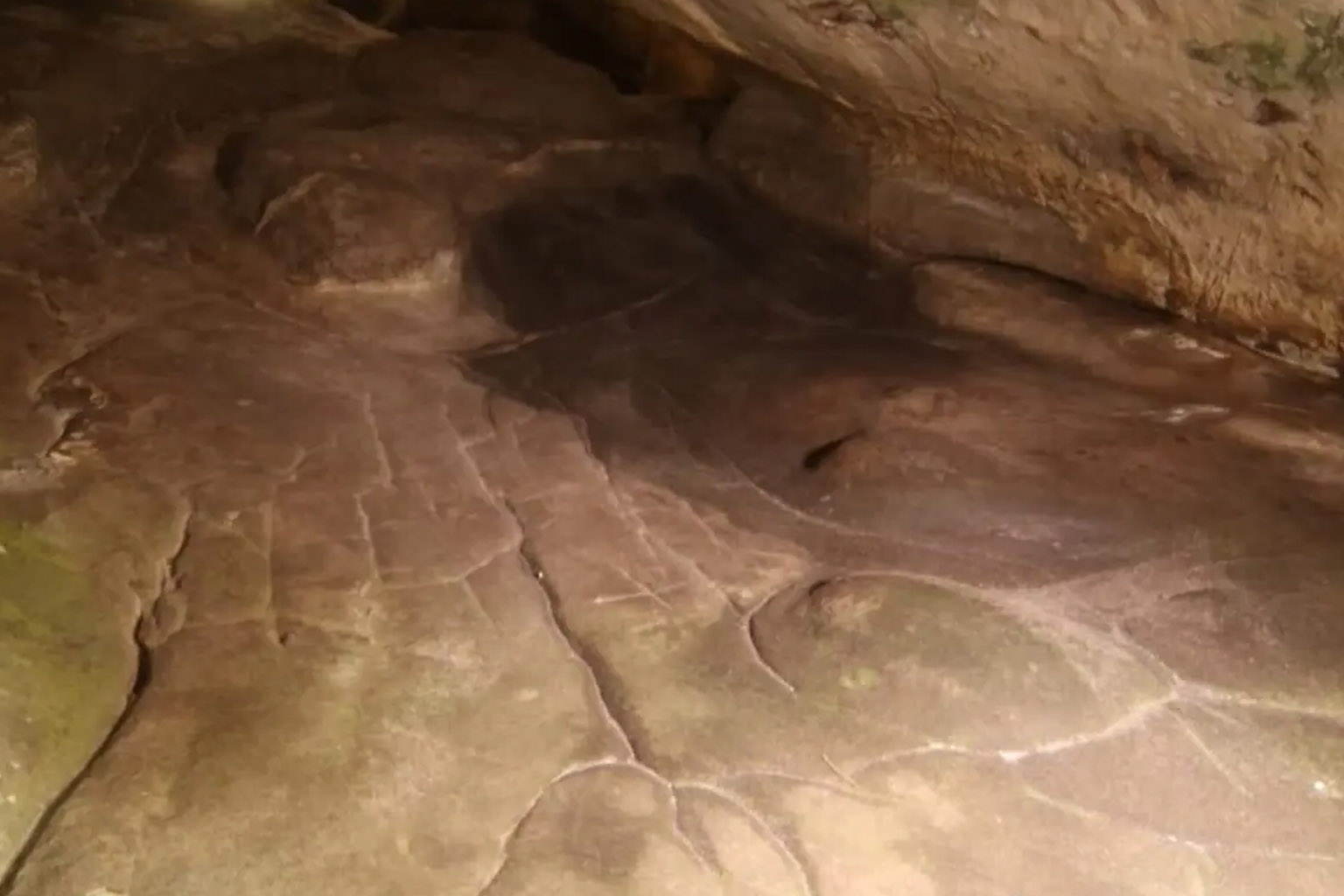
Carved deep within the rock floors of Ségognole 3 cave near Paris, France, lies something truly breathtaking—a set of engravings dating back 20,000 years. These engravings, discovered in all their ancient splendor, are believed to be the world’s oldest 3D map. But here’s the twist: they might not just be a map. Imagine this: lines etched meticulously into sandstone form the contours of rivers, hills, and perhaps… symbols of a greater cultural narrative.
A Cave Map Like No Other
The tale begins with scientists Médard Thiry and Anthony Milnes. They zeroed in on a section of the cave’s rocky underbelly, uncovering patterns that mirror the local landscape—mind you, a prehistoric topographical map in all its glory. What makes this even more fascinating is a detail reported in the Archaeology World. The researchers believe that rainwater channeling through these grooves breathes life into the map, mimicking how actual streams might have flowed across the same landscape.
Yes, as rain seeps into natural grooves, it animates the carvings, turning stone into a lifelike model of nature—an ancient animation of water cascading through valleys and deltas, right under your feet. It’s a scene that feels almost too incredible to believe, isn’t it?
More Than Geography — Deep Symbolism
But here’s where it gets even more intriguing. This isn’t just any map. Within its swirls and lines rests a symbolic heart. One noteworthy feature is a vulva-like impression where water channels meet—a suggestion the researchers interpret as indicative of spiritual or cultural beliefs regarding femininity. So, we’re not just talking geography here; the map doubles as a representation of a people’s world, fused with ritual and gender symbolism.
And it’s not alone. The cave also harbors other forms of expression—depictions of animals and stylized humans, hinting that nature and femininity played critical roles in their cultural tapestry. As reported by Scienze Notizie, the carvings likely held multi-dimensional cultural significance, intertwining functional cartography with rich symbolic expressions of belief and identity. Who would have thought a humble cave could hold such layers of meaning?
A Leap in Prehistoric Cognition
Think about prehistoric maps for a moment. Now, picture Ségognole 3 standing out, not as a flat artifact, but as a fully three-dimensional experience. It’s built into the cave itself, underscoring a level of abstract thought and spatial awareness that mirrors modern human cognition. This revelation, published in the Oxford Journal of Archaeology, challenges our understanding of human development, pushing back the timeline of when humans started utilizing symbolism as a tool for planning, teaching, or, perhaps, worship.
It’s like stepping through a doorway, isn’t it? This discovery showcases that these ancient people were not simply survivors but thinkers, surrounded by stories and symbols they carved into their world. Are we looking at a breakthrough in Paleolithic archaeology? Quite possibly.
Nature, Knowledge, and Human Identity
So, what does this all mean in the grander scheme of things? This remarkable blend of function and metaphor offers a novel insight into how early humans interacted with their surroundings. It is possible these carvings served multifold purposes: perhaps as guides for tracking water flow or hunting routes; maybe as narratives passed down generation after generation. All the while, they reinforced cultural notions of earth, femininity, and identity—a heritage delicately etched into their world.
“When it rains, water flows through channels and basins, bringing the engraving to life,” the researchers note. Here, in this ancient cave, lies not merely a piece of art, but an educational tool—rich, intricate, and full of life. If confirmed, Ségognole 3 could redefine when the art of mapping began, hinting that prehistoric humans were using space, symbols, and stories in surprisingly sophisticated ways long before agriculture or even writing emerged.
The story is still being uncovered, rock by rock. Whether it be a different perspective on ancient life or a direct line to our ancestors’ thoughts and beliefs, places like Ségognole 3 urge us to rethink history.
So, what do you think? Ready to dive into this fascinating exploration of human history? Who knows what other secrets wait to be uncovered, hidden away in the echoes of the past?