


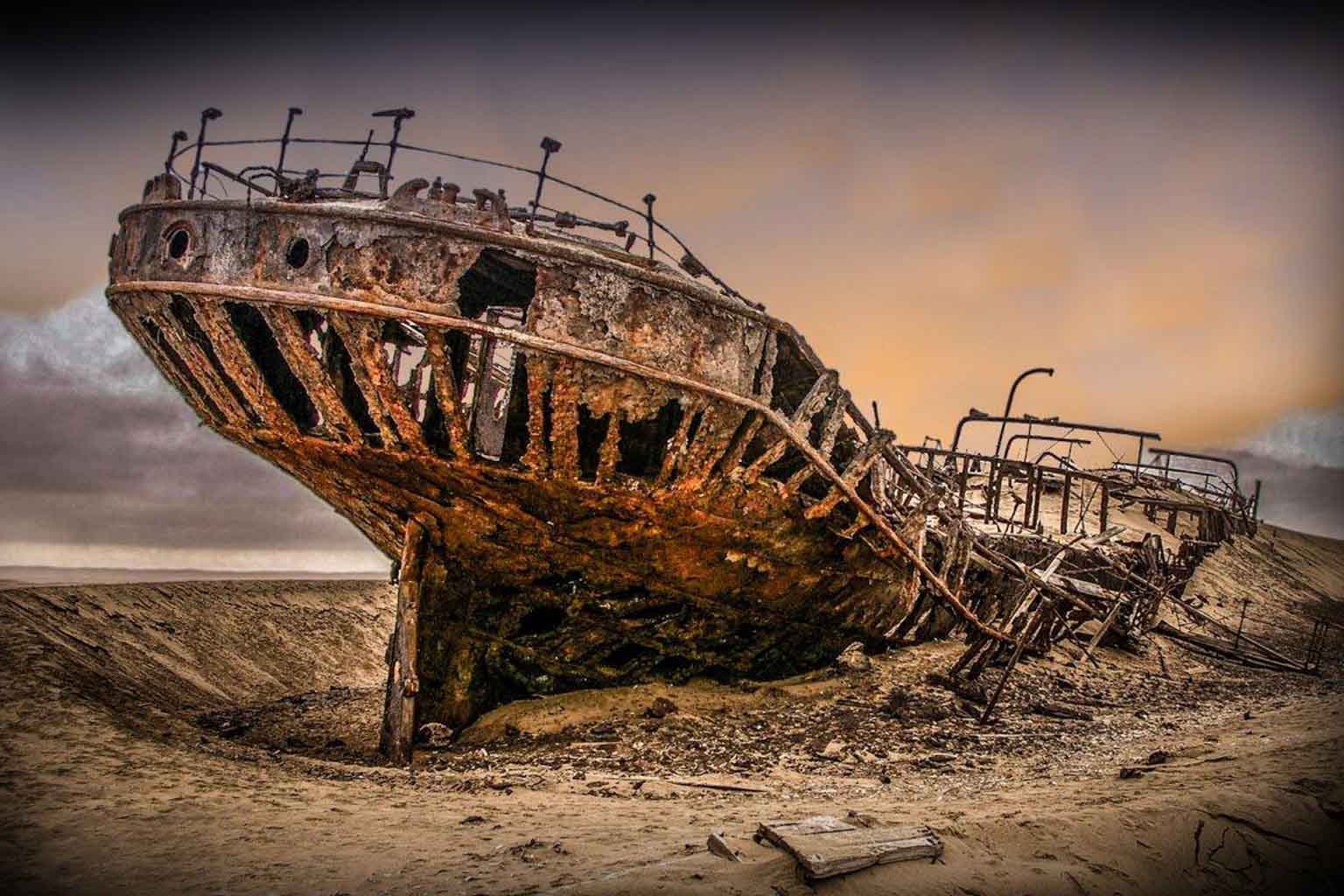
In the heart of Namibia’s desolate Skeleton Coast, a truly astonishing discovery was made back in 2008. Diamond miners, as they worked diligently in the arid desert, stumbled upon history— quite literally. They found the remnants of the Bom Jesus, a 500-year-old Portuguese shipwreck, which had somehow ended up beneath the sands, preserving a remarkable piece of the past. But how does something as large as a ship just get… lost? Let’s dive into the story behind this historic find.
Uncovering the 16th-Century Mystery
The Namibian coast, ominously dubbed the “Skeleton Coast,” lives up to its name with treacherous waters that have claimed their fair share of seafaring vessels over the centuries. The Bom Jesus, a Portuguese ship that vanished in 1533 while en route to India, became one of its victims. Its journey ended abruptly when a fierce storm dragged it ashore, and over time, the desert’s shifting sands covered its secret.
It wasn’t until **2008** that diamond miners excavating the area stumbled upon its chilling remains. Among their findings were **2,000 gold coins**, delicately preserved as if they had just been minted. According to maritime experts, the ship and its contents were fortuitously shielded by the massive wooden structure overhead. It was a costly journey turned golden jackpot.
Breaking Down the Bounty
What precisely did this sunken ship hold? For starters, a staggering treasure trove of gold coins, minted during the reign of **King João III** of Portugal. Among these precious pieces were silver artifacts, navigational tools, and even a musket that, remarkably, was still intact after half a millennium.
But that was just a peek into the ship’s manifest. The vessel also carried a hefty load of **copper ingots**, vital trade commodities of the era, which connected the Portuguese Empire’s extensive network from Africa to Asia. This haul paints a vivid picture of the **trade routes** the ship was a part of, akin to the economic bloodstream of the Age of Discovery.
Diving Deeper: The Ivory Connection
Intriguingly, the Bom Jesus wasn’t merely ferrying precious metals—its cargo of **elephant tusks** signals its involvement in the bustling ivory trade of the time. This adds a rather interesting layer, revealing connections between the **Portuguese empire** and the far reaches of the African and Asian markets. The tusks open a window into the past, showing the colonial ambitions and economic pursuits of European nations during this period of exploration.
From an archaeological standpoint, every artifact uncovered provides a critical link to understanding the expansive maritime **trade routes** of the 16th century. Dr. Dieter Noli, chief at the Southern Africa Institute of Maritime Archaeological Research, views this discovery as a “tangible record” of early transatlantic commerce and exploration—those very routes that later shaped global trade systems.
Witnessing History Through a Treasure Chest
While the gold coins significantly contributed to identifying the ship as the elusive Bom Jesus, they also serve as glittering reminders of the dangers and ambitions of the explorers who braved uncharted waters. Dr. Noli mentioned that it was the condition of these coins, sparkling as if untouched by time, that solidified their historical value. Encased beneath the ship’s robust structure, they remained untouched by the corrosive desert elements.
For enthusiasts and historians alike, the Bom Jesus represents more than just an archaeological jackpot—it’s a living gallery of **the Age of Discovery**, now unearthed for the world to appreciate. Its amalgamation of gold, ivory, and trade artifacts weaves an intricate story—a tapestry of ambition, trade, and unexpected loss.
The Bom Jesus may have met a tragic end centuries ago, but its discovery today underlines the resilience and unpredictability of history. And honestly, its preservation is as astonishing as it is enlightening—a testament to the relentless spirit of discovery.
Curious to explore more historical discoveries like the Bom Jesus? Dive into the ever-intriguing world of archaeology and see what **hidden treasures** lie waiting in the sands of time. Start your journey now and uncover tales of exploration and empire.
Feel inspired? Discover the curiosity that drives us, and who knows—perhaps you’ll be the next to unearth an unexpected treasure.