


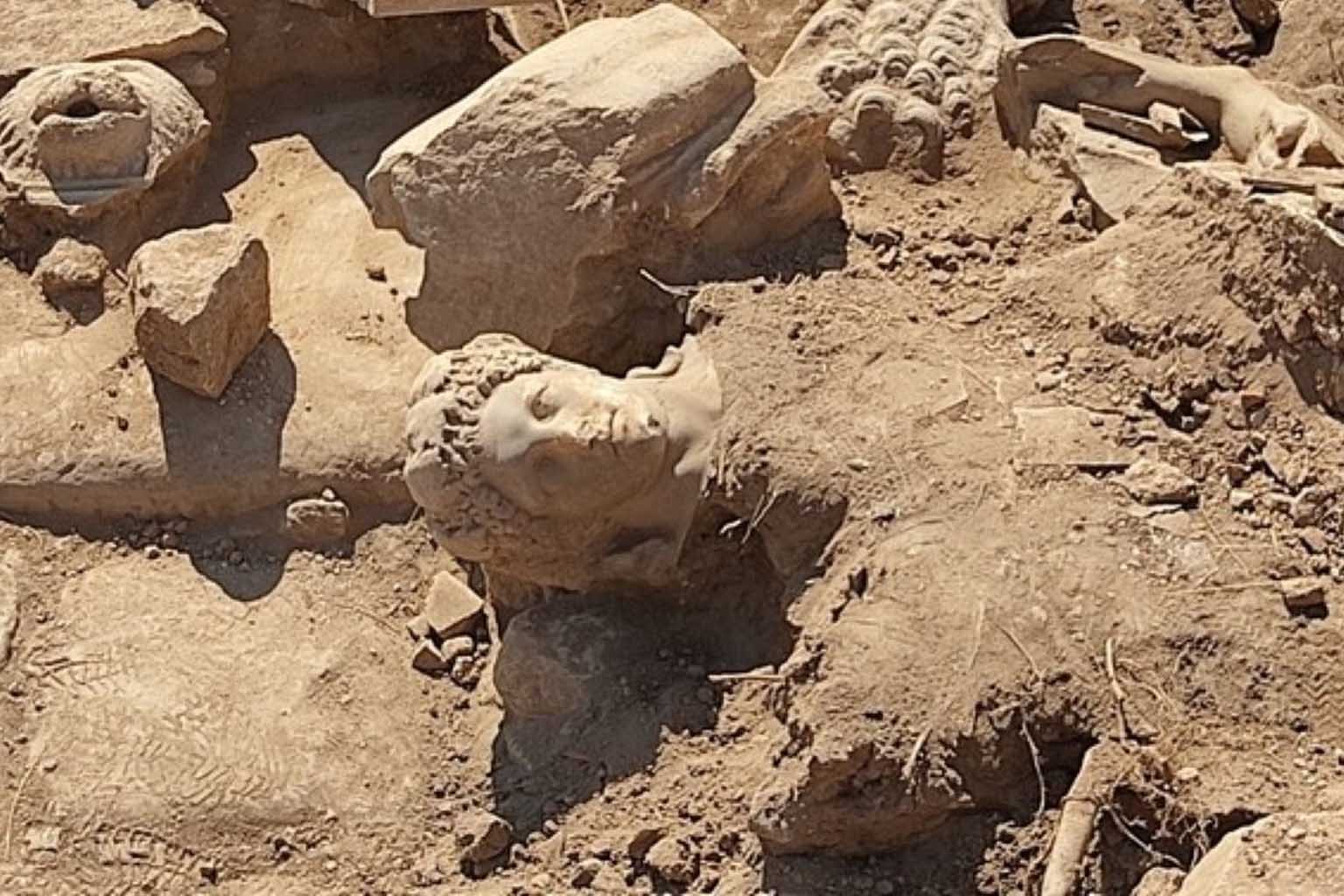
If you can imagine standing under the sweltering Tuscan sun, a student archaeologist, dust clinging to every pore, makes an astonishing discovery: a 1,700-year-old statue of Hercules. However, this find comes with a twist. The statue, though nearly complete, is missing its head—the kind of dramatic twist that sets history buffs and archaeologists abuzz with curiosity. Let’s delve into this fascinating discovery and uncover some of the mysteries it holds.
An Unexpected Discovery in Tuscany
Amidst the serene landscape of Castiglione del Lago, Italy, archaeologists unearthed this remarkable artifact from the depths of an ancient Roman site. Once a thriving villa complex, the landscape is rich with remnants of ancient times. This time, their find was a statue believed to depict Hercules, the legendary hero of Roman mythology. But there was something curious about this statue. Its original head was missing, and the body was discovered in three interlocking pieces, making this find even more intriguing.
This discovery, detailed in a statement provided by Cornell University, has been part of a joint excavation project between the University of Siena and the Archaeology, Fine Arts, and Landscape office for the Metropolitan City of Florence. For both students and seasoned researchers, it feels like stepping into a textbook page—only much more tactile and inspiring.
The Lucky Escape
The hero of our story, Elise Cooper-Bohler, a dedicated Cornell undergraduate student, was the one who stumbled upon the statue during routine digs. Can you picture her there, under the heat, her pick struck what seemed an ordinary stone? It turned out to be anything but ordinary. “Thankfully, I noticed the strange shape of the statue’s abdomen before my pick could cleave it in half,” Cooper-Bohler explained.
This *close call* kept a significant piece of ancient history intact, allowing careful extraction using delicate dental tools. The statue was pulled from the earth with minimal harm, preserving its unique character and offering a window into antiquity that hasn’t been seen in over a decade of digs at the site. Honestly, it’s surprising—really surprising—how a keen eye can make all the difference in archaeology.
A Reimagined Portrait of Hercules
This statue of Hercules—complete with the trademark lion skin draped over its arm and a sturdy club clutched in hand—posed another mystery. Its head did not match its body. Experts, analyzing this peculiarity, suggest that in ancient times, the head was deliberately replaced. Why, you ask? It might have been part of a ritual repurposing or restoration during the late Roman era. It’s known that during those times, pagan statues were often altered to align with the changing religious and cultural tides.
“The statuette is nearly complete, made of three fitting pieces,” noted Antonella Ranaldi, the Superintendent of Archaeology, Fine Arts, and Landscape for the region. A curious highlight? The bull at Hercules’ feet—an uncommon companion for the hero—hints at a possible regional twist on the myth, or perhaps a reflection of local cult influences from the 4th century CE. It’s exactly the kind of detail people shrug at… until they don’t.
The Thrill of Unearthing History
For Elise and her colleagues at the site, this discovery was a poignant reminder of why they ever picked up the trowel in the first place. “Uncovering this statue reminded me of one of the things that drew me to archaeology in the first place,” Cooper-Bohler shared, “which is the thrill of discovery and the excitement of never knowing what you’ll find.” For the team working amidst the remains of a Roman villa, the Hercules statue adds a significant chapter to a site already brimming with historical treasures like ceramics and mosaics.
As Antonella Ranaldi expressed, “It’s a discovery that excites us and reminds us how archaeology constantly surprises us with new objects and insights.” Exciting, isn’t it? The story of Hercules in this statue captures a snapshot of history, yet offers endless room for interpretation and wonder.
Let’s not miss the opportunity to celebrate alongside the archaeological community. These finds connect us to our past in tangible, sometimes surprising ways. For more insights into this dig, you might find this fascinating.
And if you’re someone enthralled by history, archaeology, and tales of ancient heroes reimagined, why not share this journey with others?