


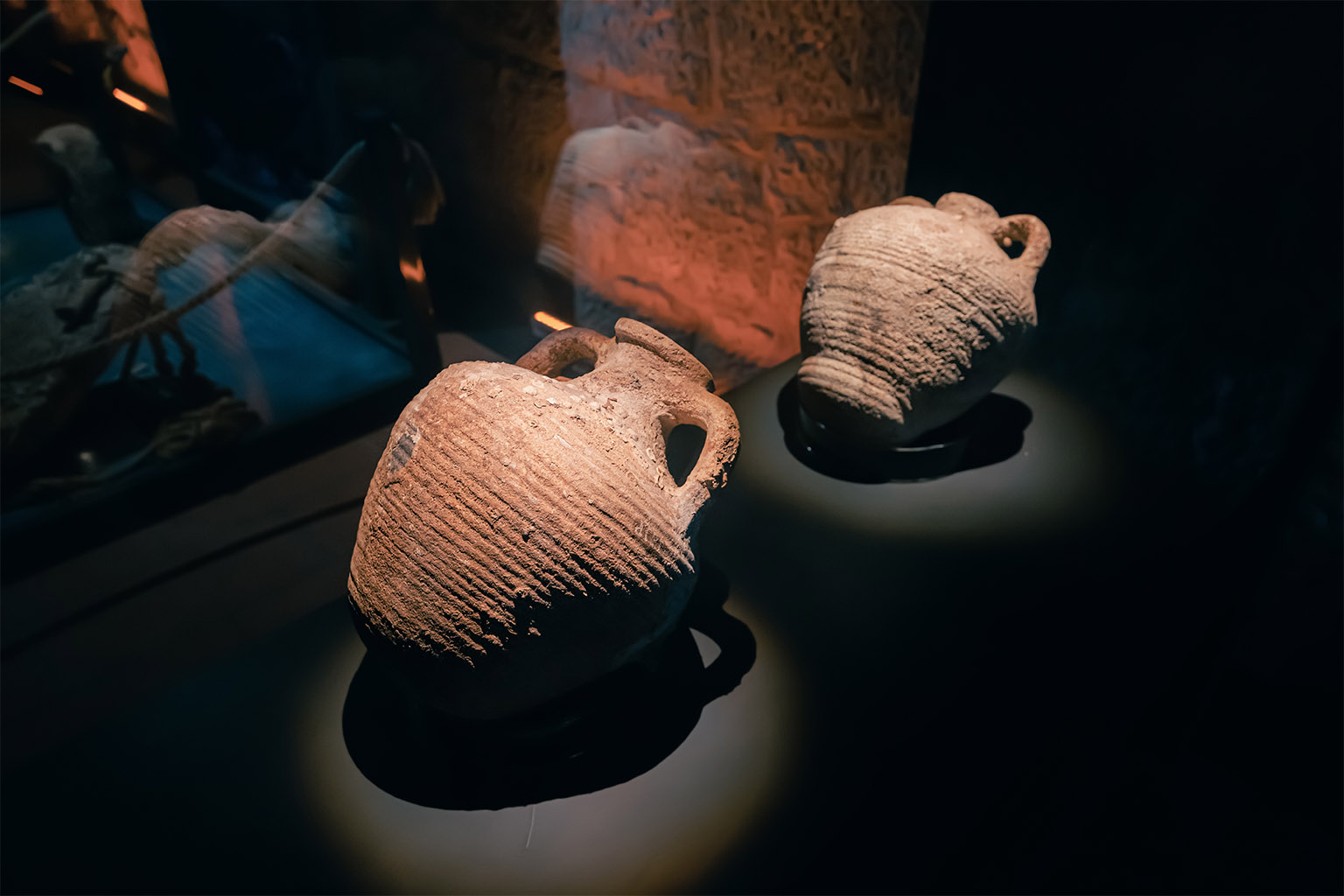
Archaeologists have made a breathtaking discovery that takes us back 5,000 years into the heart of ancient Egypt. Hidden in the tomb of Queen Meret-Neith, hundreds of sealed wine jars with their stoppers intact have emerged, offering an incredible glimpse into early winemaking and the royal rituals of one of history’s first powerful women.
Unearthing Ancient Egyptian Wine Jars
In the ancient city of Abydos, a team of archaeologists led by Christiana Köhler from the University of Vienna uncovered a trove of perfectly preserved wine jars. Some of these vessels remain sealed, a rare find that has stunned experts worldwide. The jars, dating back to approximately 3000 B.C.E., contain grape seeds and residues that promise to unlock invaluable secrets about the origins of viniculture in the Mediterranean and North African regions.
Köhler expressed amazement at the site’s detailed preservation: “Considering that these are the remains of people’s lives and actions from 5,000 years ago, we are stunned every day at the amazing detail we encounter during our investigations.” These discoveries include not only jars and seeds but also craftwork and footprints, painting an intimate portrait of daily life and ritual practices in that distant era.
Insights Into Early Winemaking and Trade
The presence of intact stoppers suggests that wine held considerable significance, possibly ceremonial, in Egyptian royal burials. Wine, it appears, was far more than a simple beverage; it was a marker of social status and spiritual importance.
Experts like Emlyn Dodd from England’s Institute of Classical Studies highlight the importance of the find: “The discovery of sealed, intact wine jars at Abydos, along with well-preserved grape pips, has the potential to significantly build our understanding of some of the earliest wine production, use, and trade in the ancient Mediterranean and North Africa.” By analyzing chemical residues inside the jars, researchers hope to decode ancient recipes and identify flavoring additives, tracing back to some of the earliest known food technology on record.
Queen Meret-Neith: Egypt’s Possible First Female Pharaoh
The tomb’s inscriptions and artifacts also shed light on Queen Meret-Neith’s extraordinary status. Archaeologists believe she may have been the first female pharaoh—a groundbreaking role in Egypt’s history. While some scholars debate the extent of her rulership, most agree she wielded significant political authority at a time when female rulers were rare.
The complex surrounding her tomb contains the burial sites of 41 servants and courtiers, underscoring the social hierarchy of early dynastic Egypt and the customs surrounding royal burials. According to the University of Vienna’s research team, Meret-Neith stands out as “probably the most powerful woman of her time,” a fact that highlights the gender dynamics within ancient Egyptian royalty.
Rethinking Egyptian Burial Practices
This discovery is prompting a fresh look at traditional assumptions about Egyptian funerary rites. Previously, scholars believed that servants were sacrificed simultaneously to accompany the deceased monarchs into the afterlife. However, the servants’ tombs appear to span different time periods, suggesting these deaths were not part of a single ritual event.
This new interpretation indicates a more complex social and funerary structure than earlier thought, marking a shift in how researchers understand royal death and burial customs during the early dynastic period.
According to a Science Daily report published in 2024 on the excavation, this layered approach to burial practices reflects evolving cultural, political, and religious priorities in ancient Egypt.
Unlocking the Secrets of Ancient Culture
Each artifact unearthed in Queen Meret-Neith’s tomb enriches our understanding of early Egyptian civilization. From the intricacies of ancient winemaking techniques to the nuances of royal power and burial customs, the site continues to rewrite what we know about one of history’s oldest societies.
These finds also emphasize the lasting cultural significance of wine, predating even many classical Mediterranean traditions. They serve as a powerful reminder of how deeply intertwined food, drink, and status have been across human history.
If you’re fascinated by ancient mysteries or intrigued by the dawn of civilization’s most enduring customs, this discovery offers a genuinely captivating window into the past.
We’d love to hear your thoughts—what do you find most surprising about the ancient world’s relationship with wine and power? Share your reactions and join the conversation below!