


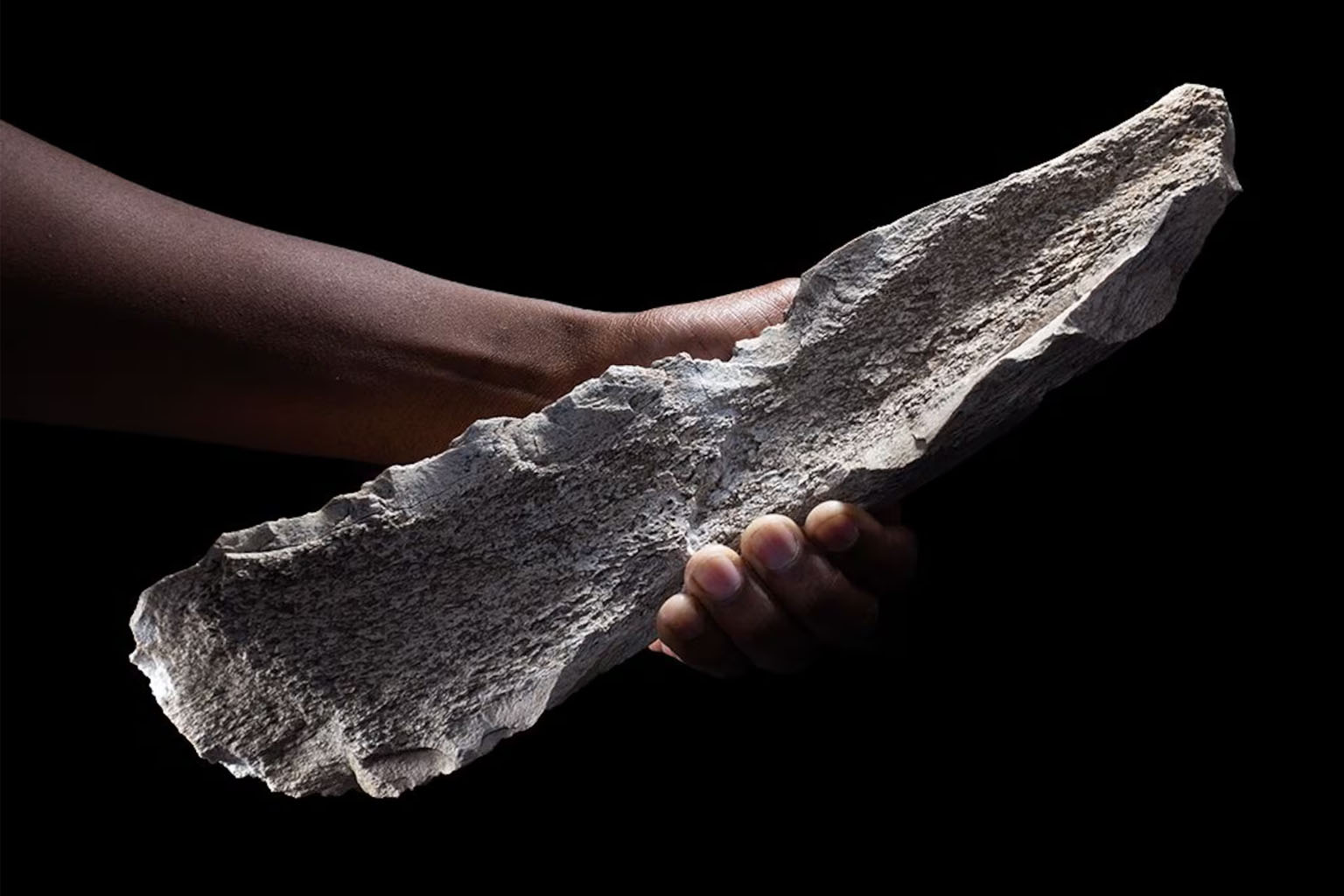
Archaeologists have unveiled a stunning treasure trove of ancient tools dating back 1.5 million years, buried deep within what is now a barren desert. This discovery offers a rare window into the daily lives, ingenuity, and survival strategies of early humans, forever transforming our understanding of human evolution in the region.
More than 850 Paleolithic artifacts, including primitive hand axes, were uncovered by a dedicated international team led by Dr. Ella Egberts from Vrije Universiteit Brussel (VUB), alongside Iraqi and independent researchers. This breakthrough reveals a story of how early humans adapted to a dramatically changing landscape that once teemed with life.
Unearthing the Legacy of Ancient Waterways
The site of these remarkable finds lies in an area that, millennia ago, sustained a vast Pleistocene lake. What is now a stark desert was once laced with river channels and freshwater sources — vital hubs for early human communities. These ancient water bodies were crucial for survival, serving as oases in a harsh environment and guiding early humans’ migration and settlement patterns.
Dr. Egberts’ pilot project zeroed in on surface materials scattered across a vast 6 by 12-mile area in Iraq. The team’s work uncovered seven distinct Paleolithic sites rich with stone tools, showcasing the intricate relationship between humans and their environment during prehistoric times. This context is key to piecing together how early populations thrived in what might otherwise seem inhospitable terrain.
The Dawn of Toolmaking: Hand Axes and Beyond
At the heart of the discovery are the hand axes, some crafted nearly 1.5 million years ago. These multipurpose implements were likely essential for early humans in hunting, food preparation, and protection. This evidence of ancient toolmaking marks one of the earliest known chapters in human technological development, illustrating that our ancestors were actively shaping their world with purpose.
“The targeted fieldwork yielded enormous success, identifying seven Paleolithic locations within a 6 by 12-mile zone,” says Dr. Egberts. “The detailed study of these artifacts gives us unprecedented insight into the evolution of early human behavior and cognitive skills.”
These findings push back the timeline of early human tool use in the region, highlighting their adaptability and resourcefulness. But the story extends further with discoveries of more sophisticated stone tools emerging tens of thousands of years later.
From Primitive Tools to Masterful Craftsmanship
Between about 300,000 and 50,000 years ago, the ingenuity of early humans took a remarkable leap forward with the advent of the Levallois technique. This method, involving the precise shaping of stone cores to produce uniformly shaped flakes, showcases a new level of planning and technical skill. It represents an evolutionary leap in cognitive abilities and social organization.
Levallois flakes discovered alongside the older hand axes provide a fascinating glimpse into how early humans began to innovate systematically. Dr. Egberts emphasizes, “These findings hint at complex landscape use and technological progress. Future work aims to expand our understanding by surveying a broader region and conducting in-depth artifact analyses.”
The transition from basic flaked tools to refined Levallois methods underscores how early humans responded to environmental challenges with evolving technology, enabling more efficient hunting and processing strategies that shaped the course of human development.
Empowering Future Archaeologists Through Field Training
Beyond the artifacts themselves, the project emphasizes the importance of capacity building and knowledge transfer. Dr. Egberts led hands-on workshops and archaeological training for students from Al-Qadisiyah University in Iraq. These field experiences are vital in cultivating local expertise, ensuring that future generations carry forward the skills necessary to explore and safeguard the region’s rich heritage.
Jaafar Jotheri, a local researcher, noted, “Students gained invaluable practical experience analyzing Paleolithic artifacts and understanding geological contexts. This collaboration strengthens the community’s connection to its ancient past.”
Such educational initiatives underscore how archaeological research is not just about uncovering the past but also about nurturing skilled professionals who will continue advancing the field.
According to a 2023 report by the Society for American Archaeology, community engagement and training in archaeological fieldwork significantly enhance cultural heritage preservation efforts and promote sustainable research practices (source). This global perspective aligns well with the approach taken by Dr. Egberts’ team.
This exceptional discovery in Iraq, stemming from interdisciplinary collaboration and cutting-edge fieldwork, reshapes our understanding of early human technology, adaptation, and resilience. It provides a deep narrative about our ancestors’ interactions with a shifting environment and details the remarkable evolution of toolmaking over millions of years.
If you’re fascinated by the unfolding story of human origins and technological innovation, share your thoughts below or join the conversation. How do you think these ancient discoveries change our view of early human life?