


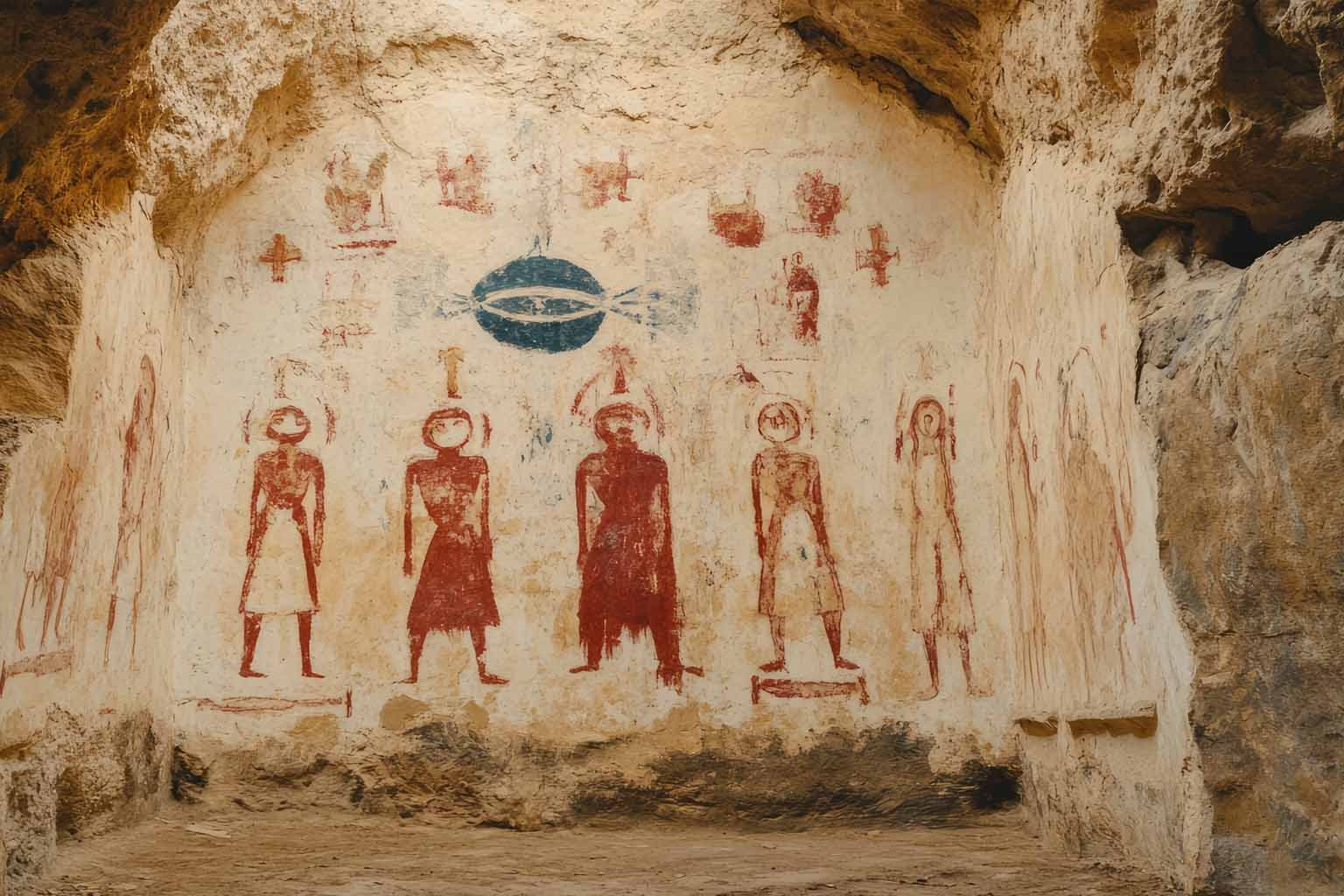
Archaeologists in Egypt have unveiled a remarkable find: three ancient tombs dating back approximately 3,500 years, nestled in Luxor’s sacred necropolis of Dra Abu el-Naga. This discovery opens a fascinating window into the lives of prominent officials from Egypt’s New Kingdom period, revealing mysterious inscriptions and rare treasures that enrich our understanding of ancient Egyptian society and its rich cultural heritage.
Unearthing Luxor’s Hidden Tombs
Nestled near the famed city of Luxor, the Dra Abu el-Naga necropolis has long been a treasure trove for Egyptologists, but this recent find stands out for its exceptional state of preservation and historical significance. The tombs, believed to date back to around 1550 BCE during the New Kingdom era, were uncovered by local Egyptian archaeologists engaged in ongoing excavations aimed at exploring and preserving Egypt’s vast funerary legacy.
The Egyptian Ministry of Tourism and Antiquities reported that these newly excavated burial sites contained intricate wall inscriptions and artifacts that trace the lives and statuses of ancient officials buried there. According to Sherif Fathir, Egypt’s Minister of Tourism and Antiquities, the find is “a significant scientific and archaeological achievement” that adds vital chapters to the story of ancient Egypt’s political and religious landscape.
Who Were the Officials Behind the Tombs?
The inscriptions have revealed the identities of the tomb occupants, shedding light on their roles within ancient Egyptian society. Two tombs belong to figures named Baki and S from the 18th Dynasty. Baki was a grain silo supervisor, a critical position ensuring food stability in a civilization that depended heavily on agriculture and the Nile’s rhythms. His responsibilities would have made him integral to managing Egypt’s complex food storage and distribution systems.
S, on the other hand, held an extraordinary array of titles, including Temple of Amun supervisor, scribe, and mayor of the northern oases. These positions underscore S’s notable influence, combining religious leadership with civic administration — a testament to the interconnected nature of governance and spirituality in ancient Egypt.
The third tomb, though largely damaged, has been linked to Amum-em-Ipet, an official from the later Ramesside period. This connection was made through surviving inscriptions identifying him and his status. Experts believe that the combined roles and titles found within these tombs highlight a previously underappreciated political and ceremonial importance of this necropolis area.
Artifacts Offer Windows Into Daily and Ceremonial Life
The excavation also uncovered a trove of artifacts, including statues, ceramic vessels, amulets, and offering tables, many remarkably intact after millennia. These items provide fascinating insights into religious rituals, funerary practices, and daily life during the New Kingdom. For instance, the presence of funerary amulets and offering tables emphasize the Egyptians’ complex beliefs concerning the afterlife and the journey of the deceased.
“The style and craftsmanship of these artifacts align closely with other known 18th Dynasty works,” notes an Egyptologist involved in the excavation. Such material culture drives a deeper understanding of social hierarchy and interregional trade patterns, confirming textual evidence found elsewhere while adding fresh data for scholars.
According to a 2023 report by the British Museum, New Kingdom funerary artifacts like these are invaluable for mapping Egypt’s religious and political structures. This discovery thus not only enriches Egypt’s archaeological record but also offers a unique lens into the intertwined nature of authority and devotion in ancient times.
The Impact on Egypt’s Cultural Tourism
Luxor remains one of Egypt’s most vital archaeological hubs, attracting millions of travelers annually seeking to witness the marvels of ancient civilization. Officials are hopeful that these newly discovered tombs will boost cultural tourism in the region, especially at a time when the global travel industry is recovering from significant disruptions.
Plans are underway to preserve the tombs’ contents carefully, with prospects for some artifacts to be displayed in local museums or integrated into guided tours at the site. As Sherif Fathir remarked, “Archaeology is one of the areas expected to greatly boost cultural tourism in the country.” This newfound heritage treasure is positioned to play a key role in revitalizing Egypt’s tourism sector, which remains critical to the nation’s economy.
Below is an expert perspective reinforcing the find’s importance:
“Discoveries such as these allow us to connect with the multifaceted roles of officials who governed and guided ancient Egyptian society, enriching our interpretation of their culture.” — Dr. Lisa Nguyen, Egyptologist
For a closer look at the excavation process and the site, watch this video :
This immersive find invites all history enthusiasts and cultural travelers to appreciate Egypt’s extraordinary past, inspiring deeper exploration and understanding.
Have you ever imagined unearthing treasures etched with stories of ancient officials? How does this discovery reshape your view of Egypt’s history? Share your thoughts, reactions, or questions in the comments below — and don’t forget to share this story with fellow history buffs and travelers eager to discover the wonders of Luxor!