


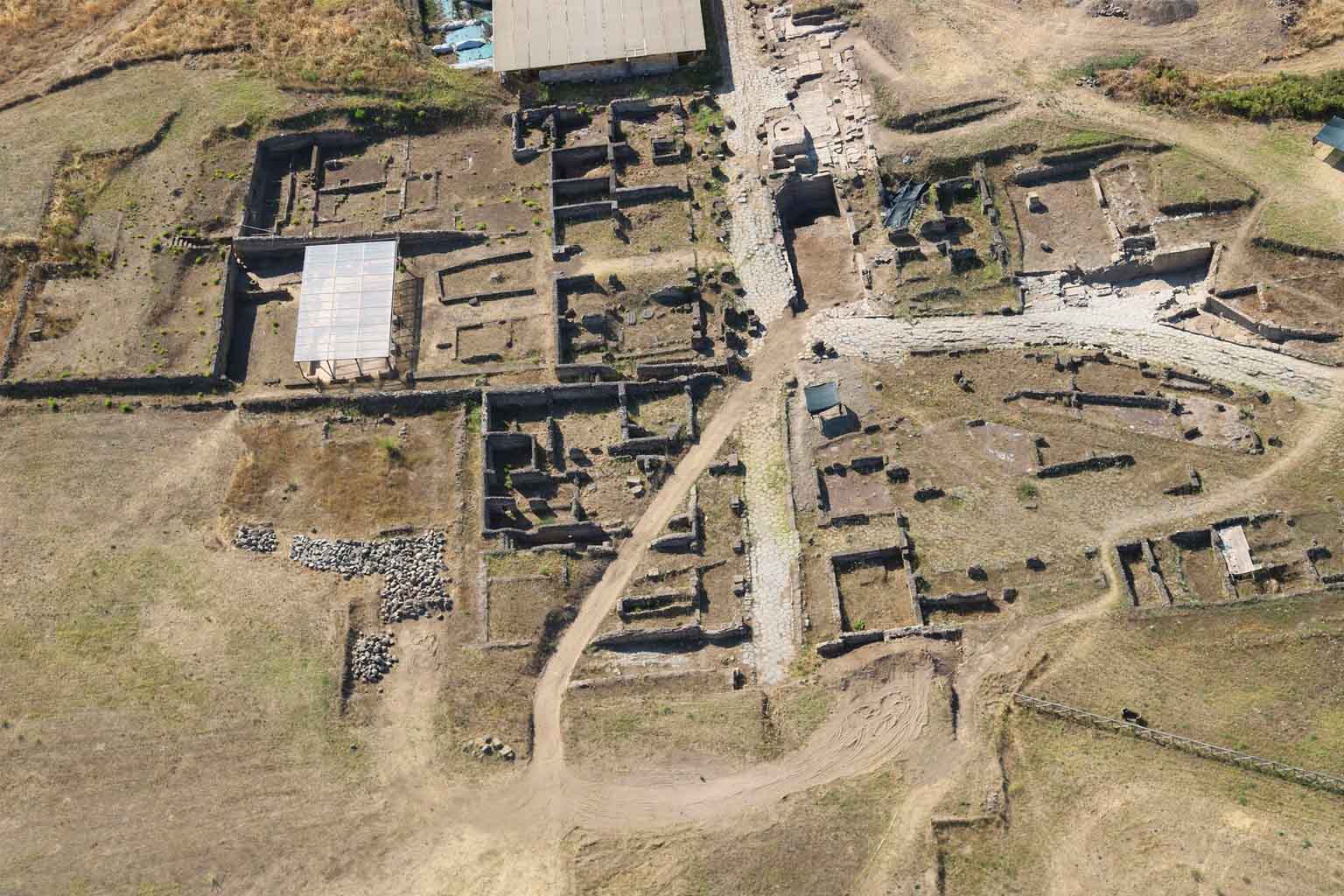
In the heart of Bulgaria’s Pazardzhik region, archaeological whispers of a bygone era have resurfaced, revealing a Roman village long lost to time. Unearthed with charred remains and dusty echoes, this village tells a tale of daily life abruptly interrupted over 1,600 years ago—a narrative frozen in the ashes of sudden destruction. Imagine stepping right into the shoes of history, with artifacts and structures perfectly preserved as if the inhabitants stepped out just yesterday.
A Haunting Discovery
As the relentless march of modernity dug its trenches for a new gas pipeline, an ancient world inadvertently emerged. Rescue excavations near Borimechkovo brought forth this forgotten settlement, uncovering structures, coins, and pottery untouched beneath layers of neglect. It’s the kind of discovery that makes you pause—what stories do these ruins hold? According to the Bulgarian Journal of Archaeology, this glimpse into Roman life dates back to the mid-4th century A.D., when a destructive fire swept through, leaving devastation in its wake.
The Blaze that Froze Time
Picture this: a cozy residential set-up, with stone foundations and mudbrick walls, now reduced to remnants. The fire that consumed the village was no ordinary event; it was a cataclysm, preserving everything in its path. Coins from the reign of Constantius II (347–355 A.D.) provide concrete proof of the fire’s timeline. These small metallic historians whisper tales of a community that thrived amidst chaos, until one fateful day, flames turned vibrancy into a somber tableau.
Archaeologists have marveled at the pristine condition of various elements. “Buildings were abandoned and never reconstructed,” the authors noted, creating a perfect time capsule of Roman existence. This gives us something to reflect upon—how many more stories lie beneath our feet, hidden until circumstance demands they be unearthed?
Echoes of Thracian Life
Beneath its Roman veneer, the village retained its Thracian soul. It’s intriguing how, even under Roman rule, the community clung to its ethnic roots. Unearthed ceramics—a mix of Roman tableware and hand-crafted Thracian vessels—suggest a society proud of its heritage. “The inhabitants likely belonged to the Thracian ethnic group,” say researchers, highlighting the enduring interplay between Roman administration and local cultural resilience.
This site wasn’t just another outpost; it was economically significant, perched strategically near a stream and copper deposits. A symbol, perhaps, of the wider instability shaking the Roman Empire, caught in the turbulence of invasions and systemic decline.
Glimpses into Daily Life
Imagine household artifacts that offer a view into a world long since extinguished. Arrowheads, needles, buckles—tools not just of utility, but of survival. The silver coins and jewelry uncovered at the site speak volumes—a cache perhaps hidden in a panic-stricken moment, or a ritual deposit before the end.
The lively bustle of food storage and textile production suggested by ceramic remains paints a picture of a self-sustaining rural community. Wooing historians with every shuffled foot and hastily hidden possession, these artifacts whisper of lives lived in vivid color even as shadows crept close.
This archaeological discovery, a jarring reminder of life’s fragility and resilience, is more than just an academic triumph—it is a bridge connecting our present to a textured past. So, next time you tread familiar paths, remember, history might be just a step below the surface, waiting for its story to be told anew.
And now, perhaps, you might share this fascinating narrative with someone who, like you, cherishes glimpses into ages gone by. Let’s continue unearthing the lessons of the past. Who knows what tomorrow’s earth will whisper into the ears of the curious?