


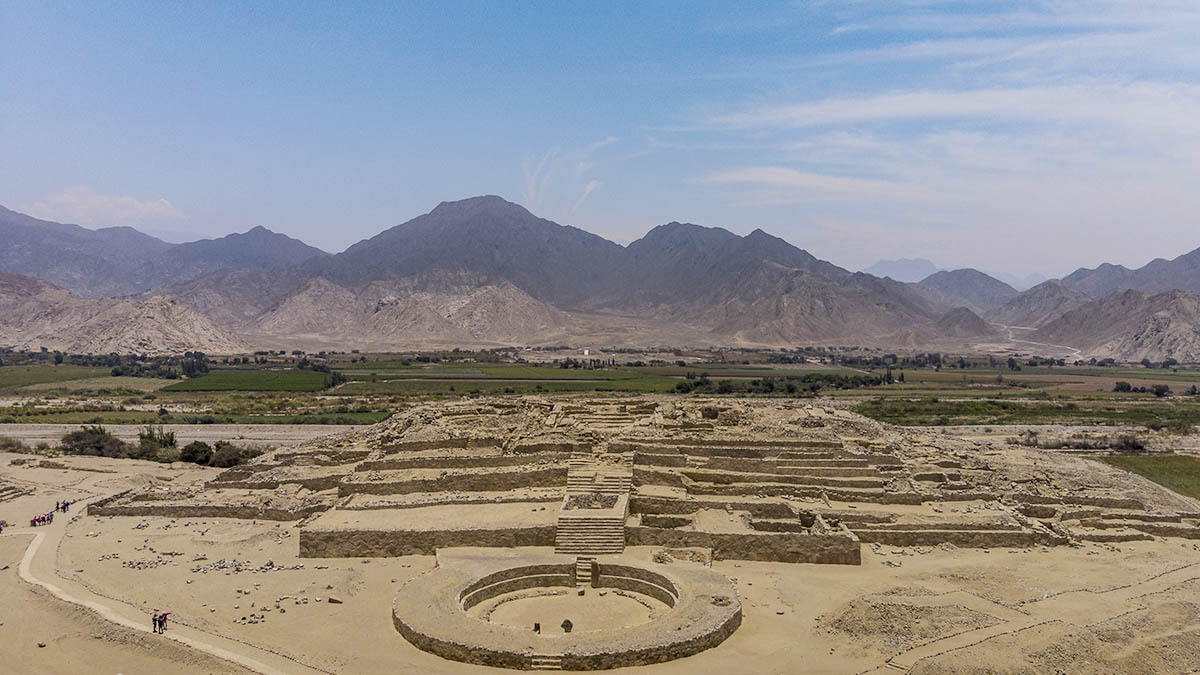
Archaeologists have unearthed a remarkable 5,000-year-old fire altar in Peru’s Supe Valley, challenging our understanding of ancient American civilizations and pushing back the timeline of organized religious practices in the Western Hemisphere. This extraordinary discovery, part of the early Caral–Supe civilization, reveals an advanced ceremonial center that predates the grandeur of Egypt’s pyramids and predates other known ancient cultures in the Americas.
A Monumental Find in Peru’s Supe Valley
Deep in the Caral Archaeological Zone—a site already hailed for its monumental ancient structures—researchers uncovered a circular fire altar that measures roughly 23 feet in diameter. The altar was found within a large pyramidal complex called Building C1 at the Era de Pando site, positioned on the structure’s west side. Access to this sacred spot was gained by descending a staircase that leads from a ceremonial hall, suggesting a thoughtfully designed religious space central to the community’s spiritual life.
Surrounding the altar is a rectangular courtyard about 52 by 26 feet, reinforcing the theory that this was not just a functional element but part of a larger ceremonial setting. Such complex architectural planning hints at a society with sophisticated urban and religious design—one that likely wielded a powerful social hierarchy centered on these sacred practices. The Peruvian Ministry of Culture officially announced this breakthrough, signifying its importance to cultural heritage and archaeology.
Caral–Supe Civilization: Older Than Egypt’s Pyramids and the Olmecs
The Caral–Supe civilization, flourishing around 3500 BCE, is now recognized as one of the oldest organized societies in the Americas—preceding the Olmec civilization by nearly 2,000 years. This new finding itself pushes the boundaries of what we know about early urban centers and religious life in the New World. Scholars estimate that the Caral–Supe culture comprised some 30 major urban sites, with Era de Pando being one of its most important hubs.
At Era de Pando, excavations have revealed 48 significant structures, a mix of temples, residences, and monumental buildings, clustered around a civic-ceremonial core. The fire altar points to a deep-rooted practice of ritual fire ceremonies, which experts believe were critical to the society’s spiritual and political organization. According to Dr. Mariana Silva, lead archaeologist on the project, “This discovery suggests an elaborate belief system where fire symbolized divine power and social order.”
Elitism and Ritual: Fire as a Sacred Symbol
Interestingly, the fire altar was part of an exclusive space likely designated for the religious and political elite, rather than the public. The artefacts found surrounding the altar—beads, quartz fragments, fish remains, mollusk shells, and agricultural produce—indicate ritual offerings that reinforced the sacredness of the site.
This exclusivity suggests a clear social stratification within the Caral–Supe civilization, where controlling fire rituals served as a political and spiritual tool to legitimize elite authority. The findings align with anthropological theories positing that fire played a central role in ancient ceremonies—acting as a medium between humans and cosmic forces. These fires could have signified purification, transformation, and communication with deities, according to the archeological interpretations provided by the Ministry of Culture.
Historical Significance and Broader Impact
The discovery of the fire altar not only redefines the chronology of ancient American civilizations but also offers a window into the complex ritual life and governance of early societies in the Americas. A 2023 study published by the Smithsonian National Museum of Natural History underscores the importance of such finds: they “reveal intricate social hierarchies and belief systems that laid the groundwork for future civilizations.”
This new evidence expands our appreciation for the cultural and technological advancements of pre-Columbian societies in the Andes region—a narrative too often overshadowed by better-known ancient civilizations elsewhere. The Caral–Supe civilization’s achievements in urban planning, ceremonial architecture, and sacred rituals open fresh avenues for research and public education.
As an experienced senior editor specialized in archaeology and ancient civilizations, I find this discovery a testament to the ongoing need to delve deeper into our past. Understanding these complex societies not only enriches our history but also fosters respect for indigenous cultures whose legacies have endured millennia.
What do you think about this groundbreaking find? Have you visited any ancient sites that reshaped your view of history? Share your thoughts and experiences below, and let’s explore together how the past continually shapes our understanding of the present.