


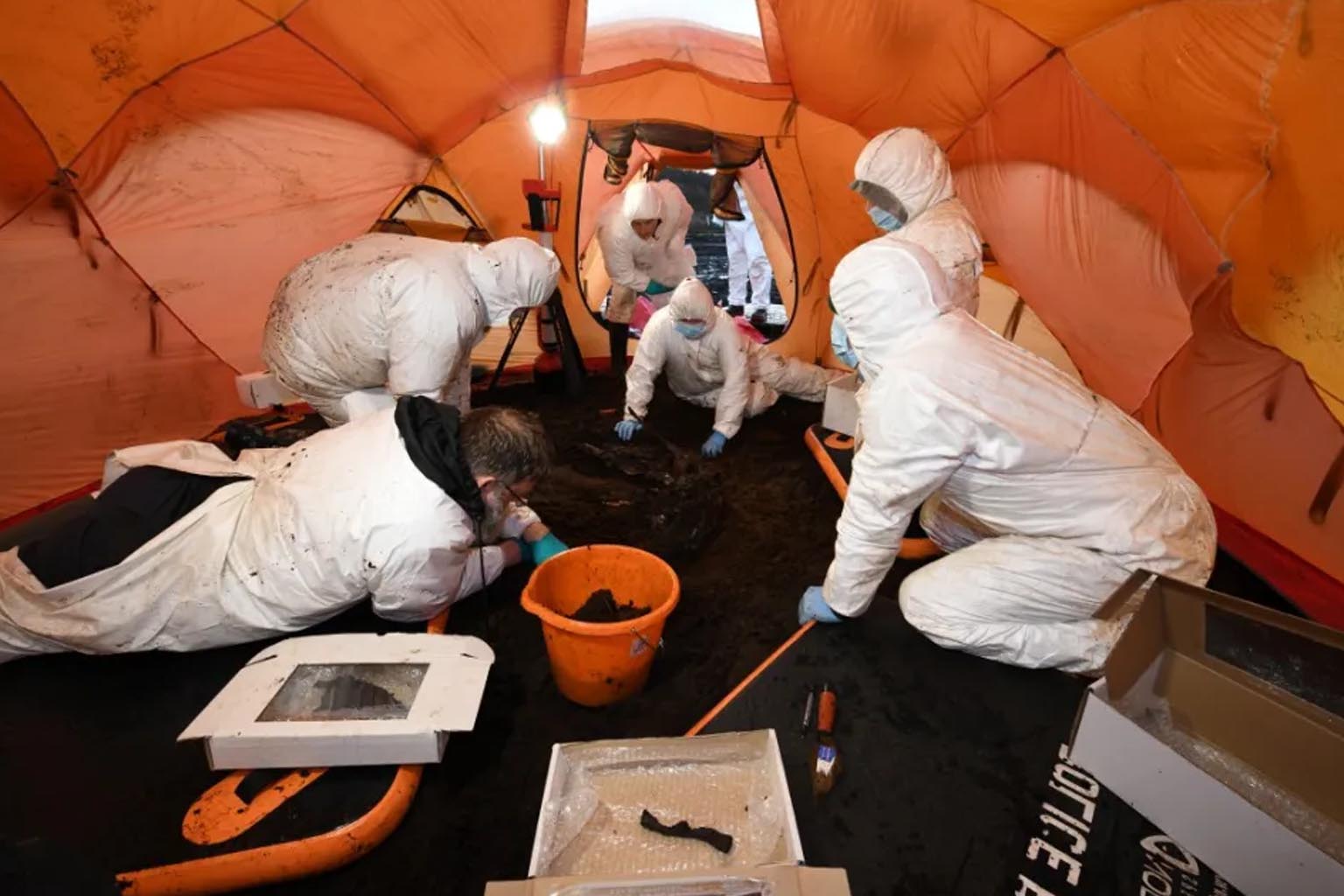
The discovery of human remains typically triggers a predictable response from law enforcement: secure the scene, gather evidence, identify the victim. But when machine operators in Northern Ireland unearthed skeletal remains in a peat bog in late 2023, the investigation took an extraordinary turn. What police initially treated as a potential crime scene transformed into something far more complex and historically significant.
The Ballymacombs More Woman, as archaeologists now call her, represents more than just another ancient find. Her 2,000-year-old remains tell a story of violence that bridges our modern understanding of forensic investigation with the brutal realities of Iron Age society. The most disturbing detail? Her head had been deliberately severed and removed, leaving behind evidence of what appears to be a ritual execution.
This case forces us to confront uncomfortable questions about how ancient societies dealt with conflict, punishment, and spiritual beliefs. The meticulous preservation of her remains in the acidic bog environment has given modern investigators an unprecedented window into practices that were once common across Celtic Britain and Ireland. Similar discoveries of ritual violence have emerged from other archaeological sites, including the ancient Mesoamerican practices revealed at Tikal, where evidence of ceremonial sacrifice reflects the universal nature of ritualized violence across ancient civilizations.
When Ancient Crime Meets Modern Investigation
The initial police response reflects how seriously authorities take any discovery of human remains. Officers from the Police Service of Northern Ireland cordoned off the bog site, applying standard forensic protocols before realizing they were dealing with a case that predated their jurisdiction by millennia.
Radiocarbon dating placed the woman’s death between 343 BC and 1 BC, making her the oldest known bog body ever discovered in Northern Ireland. This dating process, applied for the first time to a bog body in the region, revealed that she lived during the height of Celtic Iron Age culture, when druids held significant power and human sacrifice remained part of religious practice.
The forensic analysis initially misidentified the remains as male, but DNA sequencing corrected this assumption. According to research published in forensic science journals, burial in peat bog environments can actually be beneficial to DNA preservation, allowing for detailed genetic analysis even after millennia. The woman stood approximately 5 feet 6 inches tall, unusually tall for her era, and died between the ages of 17 and 22. The bog’s unique chemical composition preserved fragments of her skin and fingernails, creating an almost impossibly intimate connection across two thousand years.
“The acidic, anaerobic conditions in peat bogs create an exceptional preservation environment that can maintain DNA integrity for thousands of years” – Forensic science research
The Forensic Evidence of Deliberate Violence
Professor Eileen Murphy from Queen’s University Belfast led the osteological analysis that revealed the true nature of the woman’s death. The examination uncovered cut marks on neck bones, providing clear evidence that decapitation was intentional rather than the result of natural decomposition or accidental damage during discovery.
The forensic evidence paints a disturbing picture. Deep wounds to the throat suggest the woman experienced significant blood loss before her decapitation. This pattern matches other bog bodies found across Britain and Ireland, where victims often suffered multiple forms of violence including stabbing, strangulation, and blunt force trauma.
What makes this case particularly compelling is the deliberate removal and absence of the head. Unlike other forms of violence that might result from interpersonal conflict, decapitation followed by the removal of the head suggests a premeditated ritual purpose. The head held special significance in Celtic culture, often viewed as the seat of the soul and a powerful trophy in both warfare and religious ceremonies.
Understanding Iron Age Ritual Violence
The practice of human sacrifice during the Iron Age was far more systematic than many people realize. Archaeological evidence from across Celtic Europe reveals that ritual killing served multiple social functions: appeasing deities, marking seasonal transitions, punishing criminals, and maintaining social order through intimidation.
Research into Iron Age bog bodies has identified common patterns that suggest these weren’t random acts of violence but carefully orchestrated ceremonies. Studies published in the Journal of Archaeological Science have shown that bog environments preserve skeletal remains in ways that allow researchers to distinguish between different preservation conditions and their effects on human remains. Victims were often young adults, sometimes showing signs of high social status through well-maintained bodies and evidence of good nutrition. This contradicts simple assumptions about sacrifice victims being society’s outcasts.
The missing head in this case raises specific questions about Celtic beliefs regarding the afterlife and the power of human remains. Historical accounts from Roman writers describe Celtic practices of preserving heads as trophies, but also as objects of religious veneration. The head might have been displayed publicly, buried separately in a sacred location, or incorporated into religious artifacts. This pattern of ritualized violence appears across various ancient European societies, similar to discoveries at the 3,000-year-old village unearthed beneath France, where evidence of organized community practices reveals the complex social structures of prehistoric European societies.
“Archaeological evidence suggests that ritual violence in Iron Age societies followed specific patterns that indicate organized ceremonial practices rather than random acts of brutality” – Archaeological research findings
The Unspoken Psychological Dimensions of Ancient Violence
Beyond the archaeological significance lies a more complex psychological reality that rarely enters mainstream discussions of ancient societies. The individuals who performed these ritual executions were not necessarily sadistic or primitive, but participants in a worldview that normalized extreme violence as necessary for social and spiritual survival.
Consider the psychological impact on communities that regularly witnessed such ceremonies. The normalization of ritualized killing would have created social dynamics fundamentally different from our modern understanding of violence and justice. Children growing up in these societies would have viewed decapitation and sacrifice as natural responses to certain social or spiritual crises.
The woman’s age suggests she was at the threshold of full adulthood in her society. Her death might have been triggered by accusations of wrongdoing, selection for religious purposes, or involvement in political conflicts that remain invisible to us. The psychological trauma experienced by her family and community represents an aspect of ancient life that we can only imagine through the preserved evidence of violence. Ancient societies developed sophisticated defensive and social strategies, as evidenced by discoveries like the 5,000-year-old fortification revealed by LiDAR technology, which demonstrates the complex military and social planning capabilities of prehistoric communities.
Preservation and the Weight of Historical Evidence
The Ballymacombs More Woman now resides at National Museums Northern Ireland, where ongoing analysis continues to reveal details about her life and death. As the only surviving bog body in Northern Ireland, she carries the burden of representing thousands of similar cases that have been lost to time, development, and inadequate preservation techniques.
Detective Inspector Nikki Deehan emphasized the unique nature of this discovery, noting how modern forensic techniques have been applied to understand ancient violence. This intersection of contemporary investigative methods and archaeological research creates opportunities for insights that previous generations of researchers couldn’t achieve. The sophistication of ancient peoples in recording and preserving information is exemplified by discoveries such as the 20,000-year-old 3D cave etchings in France, which reveal that our ancestors possessed complex understanding of spatial representation and cultural narrative preservation.
Further DNA analysis may reveal information about her geographic origins, diet, health, and possible family relationships. These details could illuminate patterns of Iron Age life that extend far beyond the circumstances of her death, potentially reshaping our understanding of how these ancient communities functioned and whom they chose for sacrifice.
Her preservation forces us to confront the reality that violence has always been woven into human society, expressed through cultural frameworks that made it meaningful and acceptable to participants. The missing head continues to haunt this case, representing not just an absent body part but an entire worldview that we struggle to comprehend from our modern perspective.