


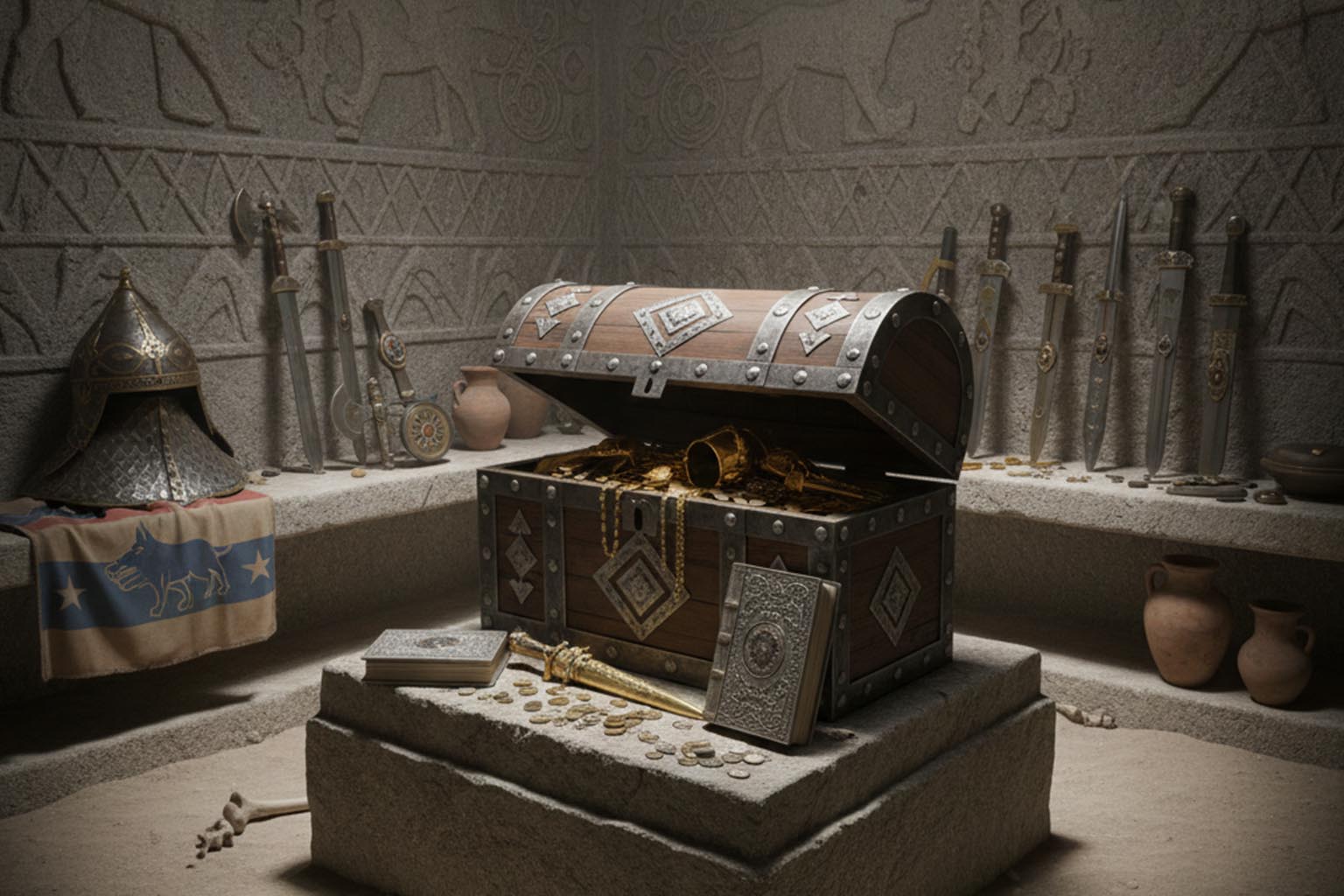
Imagine stumbling upon a time capsule perfectly preserved for two millennia—filled with artifacts that whisper stories of an ancient nomadic civilization. That’s exactly what happened recently in Chechnya, where archaeologists uncovered a remarkable 2,000-year-old Alanian tomb. This discovery isn’t just a peek into the past—it’s a vivid revelation of a thriving society whose influence stretched across Eurasia.
Led by Azamat Akhmarov from the Academy of Sciences of the Chechen Republic, this excavation near Grozny unearthed treasures that shine new light on the Alanians’ craftsmanship, culture, and social structure. Let’s dive into what this find means for understanding ancient nomads and how it might reshape Eurasian history.
The Stunning Alanian Tomb Unearthed in Chechnya
The tomb, located within the Alkhan-Kala necropolis, is a rare gem in the world of archaeology. Unlike many Alanian sites that suffered looting through the centuries, this burial remained intact, preserving a wealth of priceless artifacts. The tomb belonged to a high-status individual, as evidenced by the lavish grave goods found inside.
Among the items discovered were decorative horse harnesses, intricately designed bridles, bladed weapons, and containers of imported metal—each showcasing the exquisite skill of Alanian artisans. These items don’t just represent wealth; they speak volumes about the social ranking and military prowess of the tomb’s occupant.
What This Treasure Trove Tells Us About Alanian Society
The variety and quality of the artifacts reveal that the Alanians were more than just wandering nomads—they developed a sophisticated material culture. Their metalworking expertise and ornamental designs speak to a society deeply engaged in both trade and craftsmanship. As the lead archaeologist notes, the rarity and preservation of this tomb offer an unprecedented opportunity to study Alanian ceremonial practices that are usually lost to history.
Experts believe that such discoveries challenge the common perception of nomadic cultures as simple or isolated. In reality, the Alanians maintained extensive networks of trade and cultural exchange that connected the Caucasus with Central Asia and beyond.
The Alanians’ Legacy in Eurasian History
The Alanians were no small players in ancient Eurasia. Their influence covered a vast territory, and their elites played critical roles in both warfare and commerce. This tomb’s treasures offer fresh insights into the social hierarchy of these nomads, giving historians clues about how power was organized and displayed.
According to a Britannica article on the Alans, these tribes were instrumental in shaping migration patterns and cultural interactions across a broad swath of territories. The new findings emphasize their importance not just as warriors but as skilled craftsmen and traders who fostered dynamic connections across empires.
Rewriting the Story of Nomadic Civilizations
This discovery is more than a historical footnote—it’s a crucial piece of the puzzle in understanding ancient Eurasian civilizations. The well-preserved Alanian tomb allows researchers to rethink long-held assumptions about nomadic peoples’ social complexity and cultural richness.
As the artifacts surface, they tell stories of luxury, power, and sophisticated networks. Such evidence pushes scholars to view nomadic societies as active participants in cultural exchange rather than marginal or isolated groups.
For those curious about the intricate craftsmanship, this short documentary video beautifully showcases the elaborate metalworks and burial customs typical of nomadic Eurasians—a fascinating visual complement to the textual findings.
The work of Azamat Akhmarov and his team brings fresh momentum to the study of the Caucasus and Central Asia’s rich cultural heritage. Every artifact is a window into the lives of people who shaped regional history in subtle but profound ways.
Discoveries like this Alanian tomb remind us that history is never set in stone. It’s a living story, waiting to be retold through the treasures left behind.
So, what do you think? Have you ever imagined what it would be like to uncover such ancient treasures? Share your thoughts or any questions in the comments below. And if this fascinating glimpse into the past caught your eye, don’t hesitate to pass it along to someone who loves history as much as you do!