


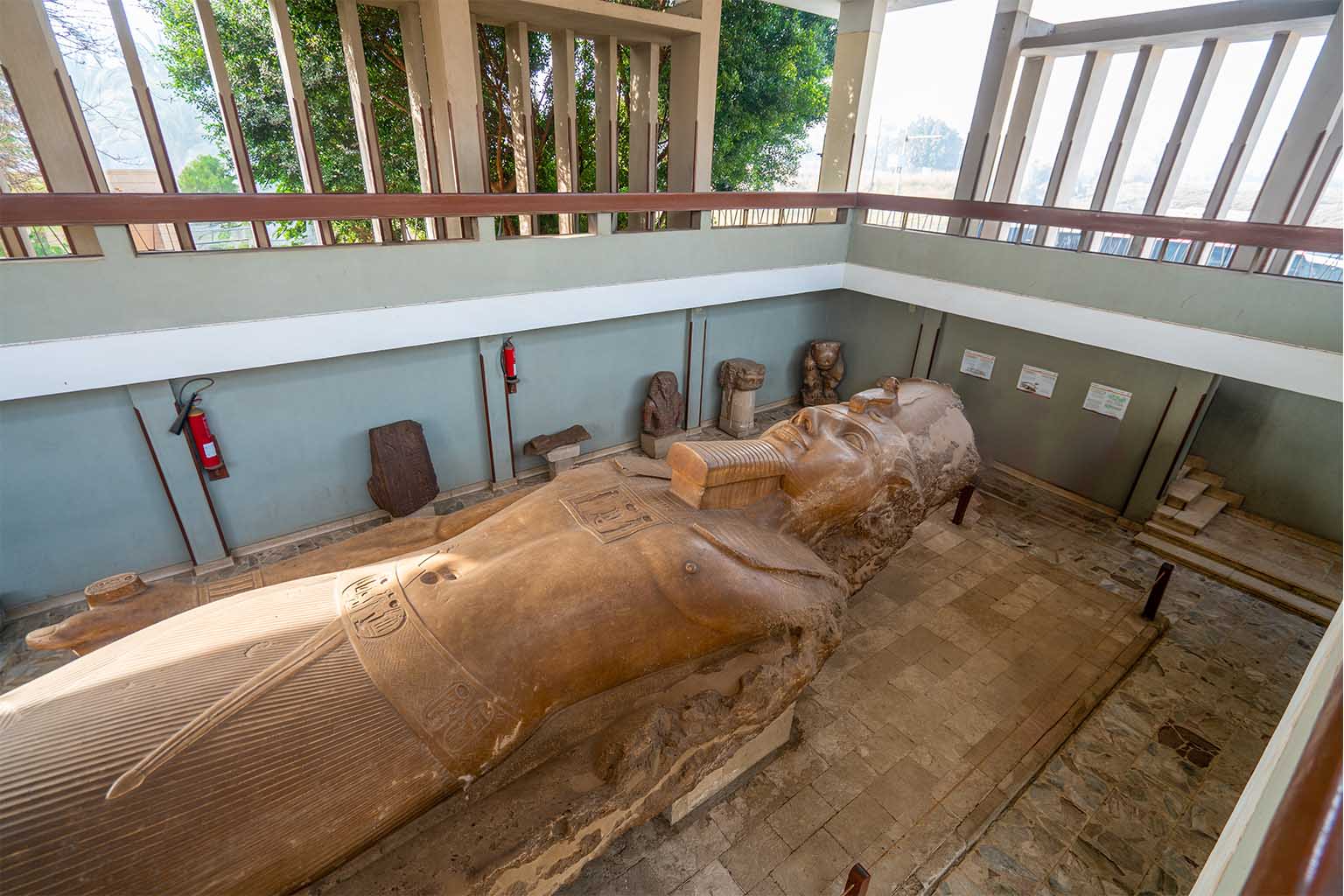
The world never ceases to amaze, doesn’t it? Imagine the sheer thrill when archaeologists discovered the long-lost top half of a colossal statue of Ramesses II. It’s been nearly a century since the base was first uncovered, yet here it stands, almost like the final piece to an ancient puzzle. such an incredibly pristine condition, it’s hard not to be in awe of this discovery.
The Surprise of a Lifetime
For nearly 100 years, the statue’s lower half had been quietly displayed, waiting for its counterpart. Then, just earlier this year, the archaeologists struck gold—or limestone, to be more accurate. It was during an excavation at the ancient city of Hermopolis that the missing fragment, face down and buried, revealed itself. It was an avalanche of emotions for the excavating team; they weren’t even looking for it at the time. “We knew it might be there,” said Yvona Trnka-Amrhein, an assistant professor of classics at CU Boulder and a co-leader of the excavation. But the discovery came as a total surprise. According to a University of Colorado Boulder report, the discovery is monumental in more ways than one.
Piecing Together the Pharaoh’s Legacy
From the moment the colossal piece was unearthed, one could almost picture Ramesses standing tall, gazing out over his domain. This statue, once complete, would reassign him among the tallest figures in ancient Egypt—over 23 feet! The upper portion, now restored, includes the pharaoh’s regal face, crown, and headdress. These pieces of limestone, intricately carved over 3,300 years ago, still convey the strength and divinity Ramesses II was famous for. Known fondly as “Ramesses the Great,” he ruled Egypt for more than 60 years in the 13th century BCE, leaving behind an indelible mark.
Ramesses not only commanded armies but also constructed cities, branding himself as a god who walked among men. The statue’s details, moreover, assert this dominance vividly, depicting him in his ceremonial attire. For centuries, rumors and theories swirled around what had become of the missing top half. Finding it, intact, felt like contacting the past directly.
The Beauty of Ancient Paint
But the revelations didn’t stop there. Those working carefully away at the statue unearthed something almost as incredible—the traces of original paint, still clinging after more than three millennia. Under scrutiny in a thorough analysis, these remnants could reveal how ancient Egyptians approached art and even insight into the socioeconomic aspects of Ramesses’ dominion.
Excitement isn’t a strong enough word for the anticipation surrounding what scientific analysis might uncover about these pigments. They could tell us stories of the materials local artisans used to craft such vivid imagery. But it wasn’t all plain sailing. The statue had faced threats from time, water, and decay—a severe issue with Hermopolis so near to the Nile.
A Leap Beyond Archaeology
Moreover, what **caught the experts’ attention** was the emergence of **traces of ancient weathering.** You see, **the task of unearthing something like this** isn’t just a **journey into history**; it’s a race against natural deterioration. Past excavations have feared damage from groundwater seepage after the construction of the Aswan Low Dam. Luckily, this particular find withstood the test of time, with its regal features preserved as if shielded by time itself.
Beyond mere excavation, there’s a broader ambition here. Trnka-Amrhein highlighted the economic and archaeological significance of this site, which ranks as the second-most productive site for Greek papyri. They envision a future where Hermopolis might not only be **historically rich** but economically beneficial for Egypt itself.
A Connection to the Ancient World
Perhaps what makes this discovery almost poetic is how it connects us to something transcending time. In an era swarmed by digital instantaneity, unearthing and reassembling artifacts like this statue rekindles that flame of creativity and artistry inherent in our ancestors. Moreover, it is a glimpse into a world long-gone yet paradoxically present through each chiseled feature and wash of color.
So, would you like to see a piece of history with your own eyes someday? Archaeological explorations like this bring us one step closer to understanding our roots, and each discovery invites us to look back more keenly, bridging yesterday with tomorrow. Join this conversation—who knows where it’ll take us next?