


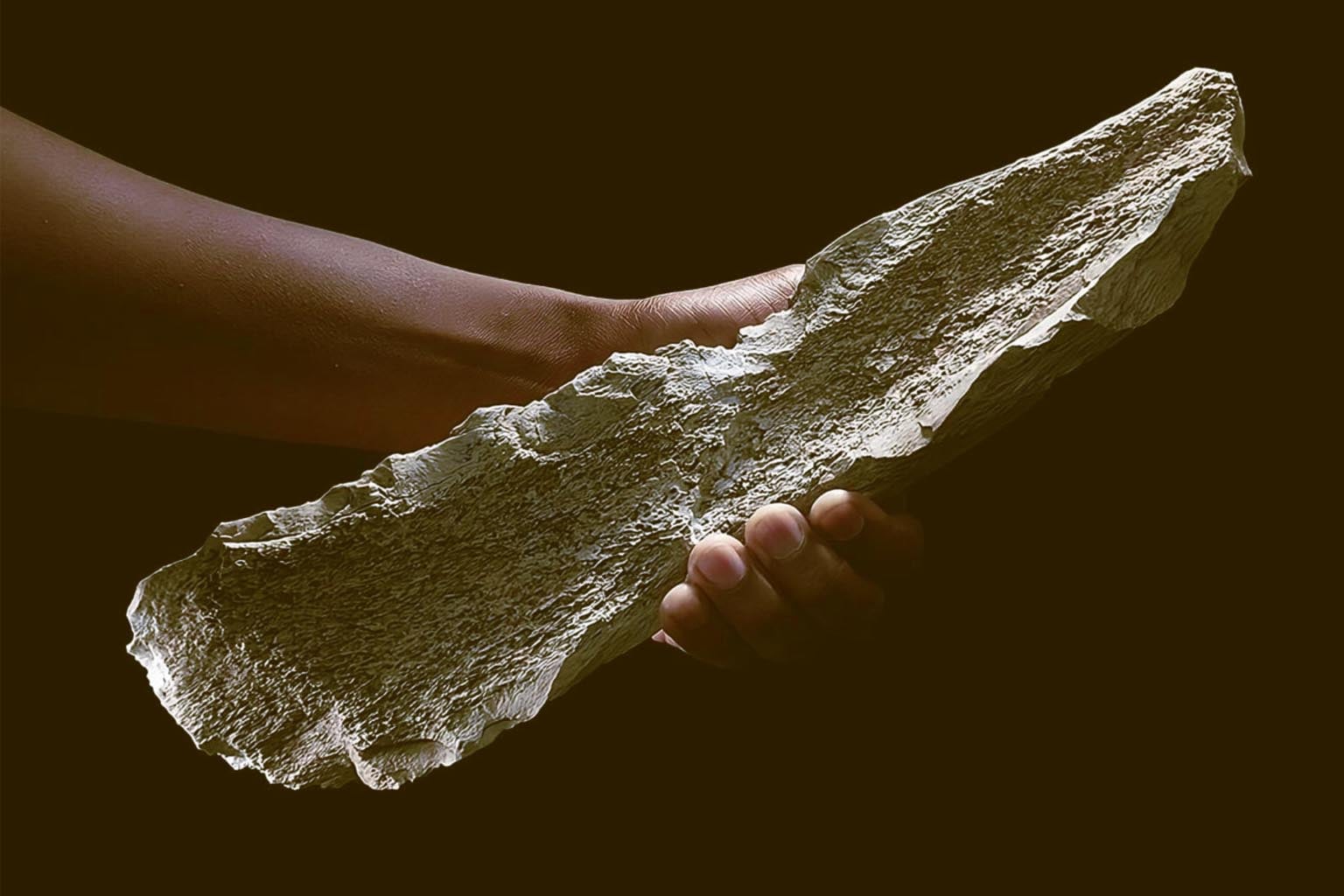
The dusty landscapes of Tanzania’s Olduvai Gorge have yielded countless treasures over the decades, but few discoveries have challenged our understanding of early human intelligence quite like this one. Deep within sediment layers that formed 1.5 million years ago, archaeologists have uncovered bone tools that fundamentally alter our perception of early hominin capabilities. Similar to how LiDAR technology revealed complex strategies in ancient Romanian defenses, modern archaeological techniques continue to unveil sophisticated capabilities of our ancestors.
These aren’t crude implements shaped by accident or natural forces. The 27 bone fragments discovered show deliberate craftsmanship, bearing the unmistakable marks of intentional shaping through knapping techniques previously associated only with stone tool production. The implications reach far beyond archaeology—they suggest that our ancestors possessed cognitive flexibility and technical innovation capabilities nearly a million years earlier than we had evidence for.
What makes this find particularly striking is not just its age, but what it reveals about the mental processes of early hominins. The ability to transfer knowledge from one material to another, adapting familiar techniques to work with entirely different substances, represents a level of abstract thinking that researchers had not documented from this period.
The Technical Sophistication Behind Ancient Craftsmanship
The bone tools discovered in Olduvai Gorge demonstrate remarkable technical knowledge. Crafted from hippo and elephant leg bones, these implements weren’t random selections. The choice of materials reveals strategic thinking—these particular bones offered the length, density, and structural integrity needed for demanding tasks.
Lead researcher Ignacio de la Torre from the Spanish National Research Council identified clear evidence of knapping techniques applied to bone. According to research published in Nature, this represents a significant cognitive leap, as working with bone requires understanding different material properties than stone. Bone responds differently to pressure, splits along different planes, and demands adjusted techniques to achieve sharp, functional edges.
“The systematic production of bone tools demonstrates cognitive flexibility and technical innovation capabilities that fundamentally reshape our understanding of early hominin intelligence” – Nature research study
Some tools measured up to 15 inches in length, suggesting they were designed for processing large animal carcasses. The size and construction indicate these weren’t opportunistic modifications but purposeful creations designed for specific tasks. This level of planning and execution pushes back our understanding of when hominins developed sophisticated tool-making strategies.
Multiple Species, Shared Intelligence
The timeline of these tools coincides with a period when multiple hominin species inhabited the region. Both Homo erectus and Paranthropus boisei were present in Olduvai Gorge 1.5 million years ago, raising fascinating questions about which species created these implements—or whether both did. Just as archaeological discoveries in sacred rituals reveal complex cultural practices, these bone tools suggest sophisticated cognitive abilities across multiple hominin lineages.
This possibility challenges long-held assumptions about cognitive evolution. Traditional models suggested that complex tool use was primarily associated with early Homo species, but the evidence increasingly points toward broader cognitive capabilities across different hominin lineages. Research from CENIEH indicates that multiple species may have independently developed similar technical innovations.
The implications extend beyond individual species capabilities. If both lineages were creating sophisticated tools, it suggests that advanced problem-solving abilities and technical innovation emerged earlier and more widely than previously believed. This paints a picture of early human evolution as more cognitively rich and diverse than conventional narratives suggested.
Why Bone Tools Represent an Evolutionary Milestone
While stone tools have dominated discussions of early human technology, bone tools offer unique advantages that early hominins clearly recognized. Bone’s flexibility and lighter weight made it suitable for tasks where stone tools proved inadequate. The material could be shaped into forms impossible with stone, creating specialized implements for cutting meat, scraping hides, or extracting marrow. This sophisticated understanding of material properties mirrors the complexity seen in other archaeological discoveries revealing advanced cultural practices.
The discovery also illuminates food processing strategies that were likely more sophisticated than previously assumed. Large bone tools suggest systematic butchering of massive animals, indicating coordinated hunting or scavenging efforts that required both planning and specialized equipment.
Co-author Renata Peters from University College London emphasizes that these tools represent evidence of complex cognition not seen elsewhere for another million years. The ability to visualize how stone-working techniques could be adapted for bone demonstrates abstract thinking and technical creativity that fundamentally reshapes our timeline of cognitive evolution.
The preservation paradox few researchers discuss
One aspect that deserves deeper consideration is why bone tools from this period are so extraordinarily rare. The survival of these particular specimens required exceptional preservation conditions—rapid burial that protected organic material from decay over 1.5 million years. This raises important questions about the actual prevalence of bone tool use among early hominins.
The archaeological record likely represents only a tiny fraction of actual bone tool production. Unlike stone, which preserves readily across geological time, bone degrades rapidly under most conditions. This preservation bias means we may be dramatically underestimating the role of organic materials in early human technology. Similar preservation challenges affect other archaeological sites, though some discoveries like the circular structure on Crete benefit from more favorable conditions.
“The rarity of preserved bone tools in the archaeological record suggests we may be seeing only a fraction of early hominin technological capabilities” – Archaeological preservation research
The implications are profound. If bone tool use was actually common among early hominins, our understanding of their technological capabilities needs fundamental revision. These tools may not represent rare innovations but rather glimpses of a much broader technological tradition that has largely vanished from the archaeological record due to preservation challenges.
As researchers continue analyzing these remarkable artifacts, they’re not just uncovering ancient tools—they’re revealing cognitive capabilities that bridge the gap between our earliest ancestors and modern human innovation. The question that remains is not whether early hominins were capable of sophisticated thinking, but rather how much of their technological ingenuity has been lost to time, leaving us to piece together fragments of a far more complex story than we previously imagined.