


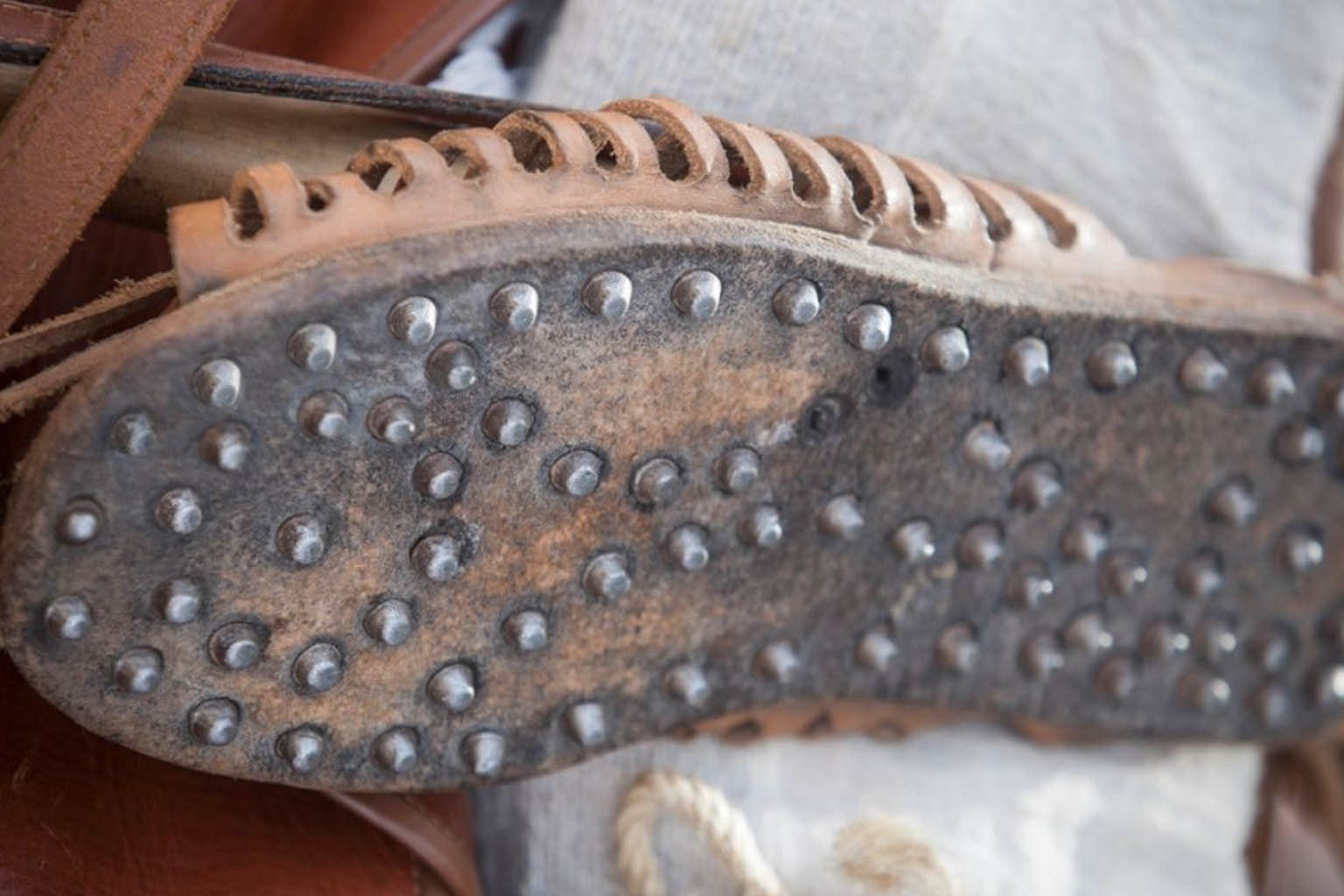
A remarkable discovery in Germany is giving us a rare peek into the world of ancient Roman soldiers—an almost perfectly preserved 2,000-year-old Roman military sandal. Found near a longstanding Roman fort in Bavaria, this artifact isn’t just a dusty old shoe; it’s a silent witness to the lives of legionaries who once marched across the rugged landscapes of Europe with endurance and grit.
The extraordinary find: More than just an old sandal
Excavations in Oberstimm, a civilian settlement near the Roman military stronghold, uncovered this ancient caliga, a sturdy type of sandal famously worn by Roman legionaries during long campaigns. Unlike ordinary footwear, these caligae were rugged and practical, built for wide-ranging terrains. What’s especially fascinating is the preservation of traction nails embedded in the sole. These hobnails were essential—they helped soldiers keep firm footing on rocky or muddy paths and prevented wear.
The Bavarian State Office for Monument Preservation (BLfD) used X-ray technology to peer inside the sandal without damaging it, confirming its military origin and design. According to expert analyses, the footwear’s construction reflected a keen understanding of the need for durability and comfort in a soldier’s gear.
The caliga’s role in Roman military might
As explained by Amira Adaileh, a BLfD consultant, the caliga was a “mainstay of the Roman soldier’s attire,” crafted with thick leather and studded to increase grip. Such design wasn’t just for show; it was vital for the efficiency of the Roman legions, whose power partly rested on their ability to rapidly and reliably move troops across vast territories. The hobnails protected soldiers’ feet from blisters and other ailments that could derail long marches, including trench foot, showing an early form of military foot care.
This footwear underpinned the famous Roman strategy: mobility. Marching fast and far was key to their success, and the caliga was arguably as important as any weapon or armor piece in the legionary arsenal.
What this sandal reveals about Roman and local life
Discovered in a civilian outpost dating from A.D. 60 to 130, the sandal offers clues about cultural interaction. Mathias Pfeil, curator general at the BLfD, points out that finds like this illuminate how Roman lifestyles, including clothing and military equipment, influenced the local Bavarian population. It’s a snapshot of how the empire didn’t just conquer with swords but also fused cultures, technologies, and daily practices.
The integration is more than theoretical—it’s tangible evidence of goods, materials, and knowledge flowing between the conquering Romans and local communities. This caliga thus connects the dots not only in military history but also in the broader story of Roman assimilation and cultural exchange.
Insight from archaeology and modern technology
The use of X-ray imaging to analyze the sandal highlights how modern science is breathing new life into ancient artifacts. These advanced techniques allow archaeologists to uncover details invisible to the naked eye without damaging delicate finds. Studies like these underpin the excavation process, enriching our understanding far beyond mere conjecture.
A 2023 report by the European Archaeological Council emphasizes that applying such technologies provides “critical insights into craftsmanship, wear, and usage patterns,” helping scholars reconstruct ancient daily lives with precision. This approach encourages a more nuanced, evidence-based narrative of ancient history.
Findings like the Oberstimm sandal remind us that history isn’t just about grand events but also the everyday objects that shape human experience. It’s a testament to the soldiers’ tenacity and the subtle ways Roman influence shaped European history long before modern borders existed.
What do you think about this incredible find? Could these ancient sandals walk us through history in ways textbooks can’t? Share your thoughts and join the conversation!