


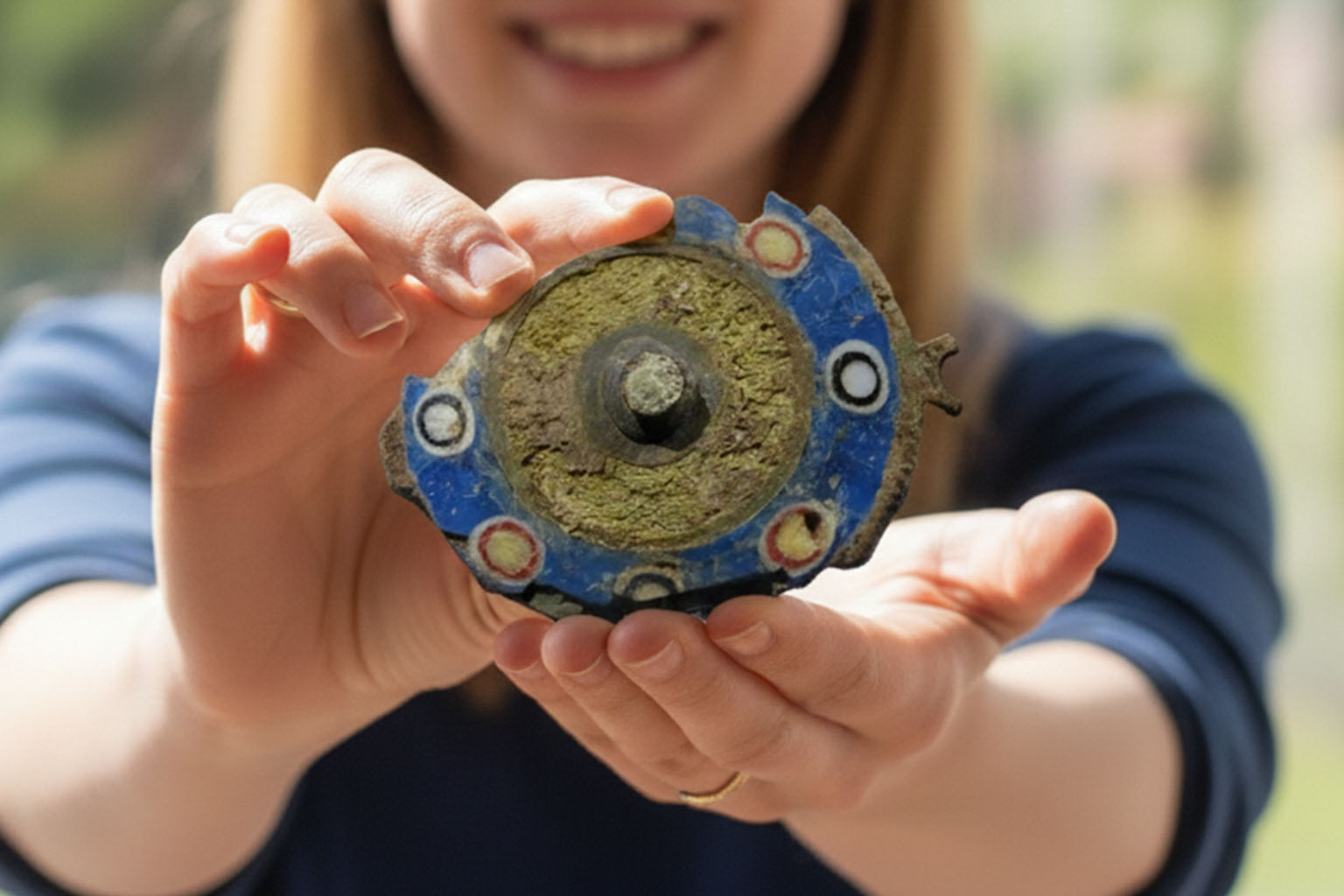
A small bronze brooch, no larger than a modern pendant, has emerged from Scottish soil after two millennia to challenge our understanding of ancient Roman-British relations. Found beneath a distillery in Ayrshire, this enamelled artifact represents far more than a decorative object—it’s a tangible piece of evidence revealing the complex interactions that occurred beyond Rome’s official frontier.
The brooch’s discovery at the William Grant & Sons Girvan Distillery site raises profound questions about how Roman military equipment reached native settlements hundreds of miles from established trade routes. Unlike typical archaeological finds that support existing historical narratives, this artifact forces us to reconsider the fluid nature of cultural and material exchange in second century AD Scotland. Similar discoveries of ancient fortifications, such as the 3,000-year-old fortress uncovered beneath Jerusalem’s streets, demonstrate how defensive structures across different civilizations reveal complex patterns of conflict and cultural interaction.
What makes this discovery particularly intriguing is its isolation. In a settlement that yielded numerous Iron Age artifacts, this single Roman piece stands alone, suggesting its presence was neither routine nor accidental.
The Strategic Context of Ancient Ayrshire
The fortified roundhouse where archaeologists discovered the brooch occupied a commanding position on a rocky plateau, with steep natural defenses and additional wooden palisades. This wasn’t a peaceful farming community but a defensive settlement designed to withstand raids and military incursions.
During this period, Roman influence in Scotland was in decline. The Antonine Wall had been abandoned, and Roman forces were consolidating their position further south. Yet evidence of a Roman marching camp near the excavation site indicates that military patrols continued to operate in the region, creating opportunities for both conflict and exchange. Research from the Scottish Archaeological Research Framework provides detailed insights into life along Rome’s northern frontier and the complex social dynamics that developed in these contested territories.
“The frontier zones of Roman Scotland were characterized by fluid boundaries where military, economic, and cultural exchanges occurred despite official imperial policies” – Scottish Archaeological Research
The inhabitants of this settlement would have been acutely aware of Roman presence. Recent studies of Iron Age defensive structures suggest that communities like this one developed increasingly sophisticated fortifications specifically in response to Roman military tactics.
From Soldier’s Cloak to Sacred Offering
The brooch’s design matches those commonly worn by Roman military personnel stationed along the empire’s northern frontiers. These functional items secured cloaks and marked military rank, making them both practical equipment and status symbols. Archaeological evidence from similar brooches found across Central Europe and the Rhineland confirms their widespread use among Roman forces, much like the Roman war horses discovered in Germany that reveal the extensive military presence across the empire’s frontiers.
Jordan Barbour from Guard Archaeology emphasizes the brooch’s military connection, noting that such items typically traveled north “on the cloak of a Roman soldier tasked with garrisoning the empire’s northernmost frontier.” The absence of other Roman artifacts at the site suggests this wasn’t acquired through regular trade but through more dramatic circumstances.
The intentional burial of the brooch within the roundhouse’s foundations points to ritualistic behavior. Foundation sacrifices were common across ancient cultures, with valuable or symbolically significant objects placed in buildings to ensure divine protection for inhabitants. This practice mirrors discoveries of ancient artifacts on Somló Hill in Hungary, where ritual deposits reveal the spiritual significance attributed to valuable objects in prehistoric European societies.
War Trophy or Diplomatic Gift
The circumstances of how this Roman military brooch reached a native Scottish settlement remain contested among archaeologists. One compelling theory suggests it was taken as a battle trophy during skirmishes between local warriors and Roman patrols. Such conflicts were documented throughout the frontier regions, with both sides capturing equipment and prisoners.
Alternatively, the brooch might represent a diplomatic exchange. Roman commanders sometimes distributed gifts to local chieftains to secure temporary alliances or safe passage through contested territories. However, the brooch’s subsequent ritual burial suggests it held special significance beyond its material value.
Expert analysis of weapon deposits and defensive modifications at similar Iron Age sites indicates that violent encounters with Roman forces were frequent enough to influence local military strategies and settlement patterns.
The Psychological Dimensions of Frontier Warfare
Beyond its archaeological significance, this brooch represents the psychological complexity of life on the Roman frontier. For the native inhabitants who possessed it, this object embodied their relationship with an expansionist empire that threatened their independence while simultaneously offering new technologies and luxury goods.
The decision to bury the brooch as a foundation offering reveals sophisticated spiritual thinking. Rather than simply keeping or discarding a valuable item, these people transformed it into a protective talisman for their home. This suggests they understood both the material and symbolic power of Roman artifacts. Such defensive strategies echo those found in other ancient fortifications, including the 5,000-year-old fortification revealed by LiDAR in Romania, which demonstrates how ancient communities developed complex strategies to protect their settlements from external threats.
Modern psychological research on conflict societies shows how communities under external threat often develop complex relationships with enemy cultures, simultaneously rejecting and appropriating elements that serve their survival needs. The Ayrshire brooch exemplifies this phenomenon in ancient Scotland.
This single artifact ultimately illuminates the human dimensions of imperial expansion, revealing how ordinary people navigated the dangerous spaces between empires. Whether seized in battle, received as tribute, or acquired through clandestine trade, the brooch’s journey from Roman fort to Scottish foundation reflects the resilience and adaptability of communities living beyond the reach of formal political control.