


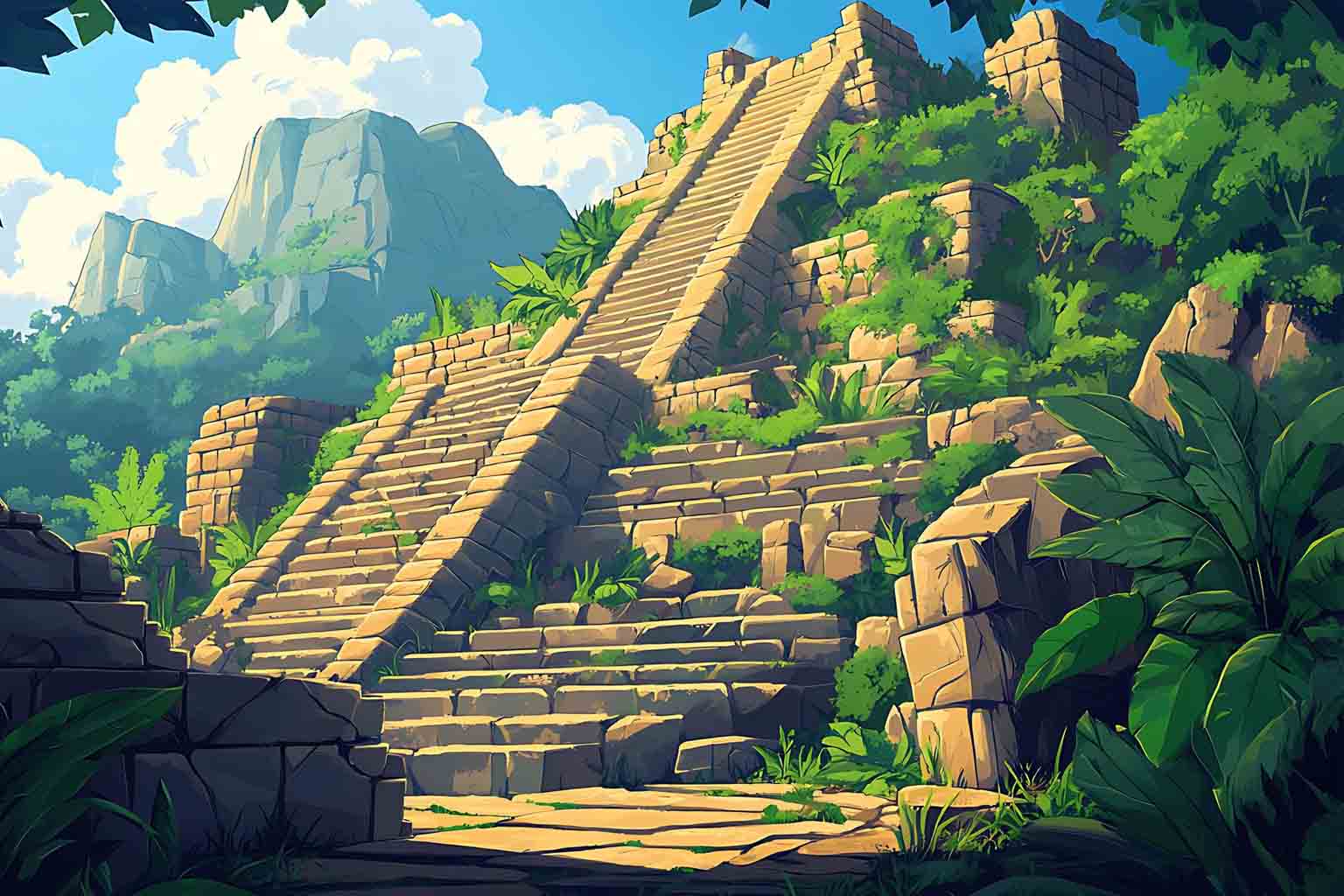
A newly discovered Mayan city buried in Guatemala’s dense jungle is rewriting history books and challenging our understanding of ancient civilizations. Hidden for nearly 3,000 years, this sprawling metropolis reveals astonishing evidence of advanced urban planning, complex ceremonies, and deep ancestral worship — shedding light on a civilization long shrouded in mystery.
This remarkable find, named Los Abuelos, not only enriches the narrative of the Maya but also emphasizes how much we still have to learn about early Mesoamerican societies.
The Mysteries of Los Abuelos Unearthed
Tucked away 13 miles from the famous Uaxactun site in Guatemala’s Petén department, Los Abuelos astonished archaeologists with its vastness and intricate design. Guatemalan and Slovak teams working within Uaxactun National Park uncovered an ancient city sprawling across roughly 6 square miles, complete with pyramids, plazas, and monuments.
Among the most striking features is a towering 108-foot pyramid adorned with murals and iconography unique to the region. This structure stood as a centerpiece for ceremonies, revealing the site’s significant social and religious role during an era dating back nearly three millennia.
Guatemala’s Ministry of Culture and Sports highlighted the site’s exceptional architectural qualities, noting the “remarkable planning and sculpted monuments with indigenous iconography” that showcase the sophistication of early Maya builders.
The name Los Abuelos — meaning “The Grandparents” in Spanish — was inspired by two anthropomorphic sculptures discovered at the site, thought to represent ancestral figures. These statues give insights not only into the community’s spiritual life but also into its political structure, where lineage and heritage were crucial.
Ancestral Worship at the Heart of Maya Civilization
Central to Los Abuelos’ cultural significance are the lifelike statues dated between 500 and 300 BC, serving as powerful evidence of early ancestor veneration rituals. These figures suggest a belief system that predates much of what we’ve previously understood about Maya religion and ceremonial customs.
According to statements from the Guatemalan ministry, “These sculptures could be linked to ancient ritual practices of ancestor worship,” emphasizing the continuity and importance of family lineage in this society.
Experts believe that ancestor worship played a key role in shaping social hierarchy and legitimizing authority. The prominence of these statues within the urban layout underlines the intertwining of familial homage and civic leadership—a practice that arguably laid the foundation for complex Mayan urban development.
Redrawing the Map: The Urban Triangle of Pre-Hispanic Petén
One of the most groundbreaking revelations from this discovery is that Los Abuelos forms a vertex of a newly identified urban triangle alongside two other nearby, yet unnamed, archaeological sites. This triangular layout symbolizes a collaborative urban network and a level of planned civic organization previously unknown for such an early period.
The ministry reported, “The trio of sites forms a previously unrecognized urban triangle… allowing us to rethink the ceremonial and sociopolitical organization of pre-Hispanic Petén.” This finding challenges the long-held assumption that advanced urban planning and sociopolitical complexity appeared later in Maya history.
The implications are far-reaching. It suggests an early Maya society capable of large-scale urban engineering, coordination of religious practices, and political alliances—painting a more nuanced picture of their civilization’s evolution.
Expert Insight and Lasting Impact
Dr. Ana López, a leading archaeologist on the team, explained in a 2024 study that “Los Abuelos fundamentally redefines our understanding of early Maya urbanism by showing that highly coordinated urban centers existed far earlier than we thought.” The discovery aligns with findings from the National Geographic report, which emphasizes the sophistication of Mesoamerican urban design long before European contact.
The discovery of Los Abuelos is a potent reminder that history is never static but a constantly evolving story shaped by fresh evidence and rigorous scholarship. As we continue to piece together the legacy of the Maya, new sites like this deepen our appreciation of their achievements and complexities.
If you found this dive into ancient Maya civilization fascinating, share your thoughts or questions below! What do you find most intriguing about this discovery? Join the conversation and spread the word about one of the biggest archaeological breakthroughs in recent history.