


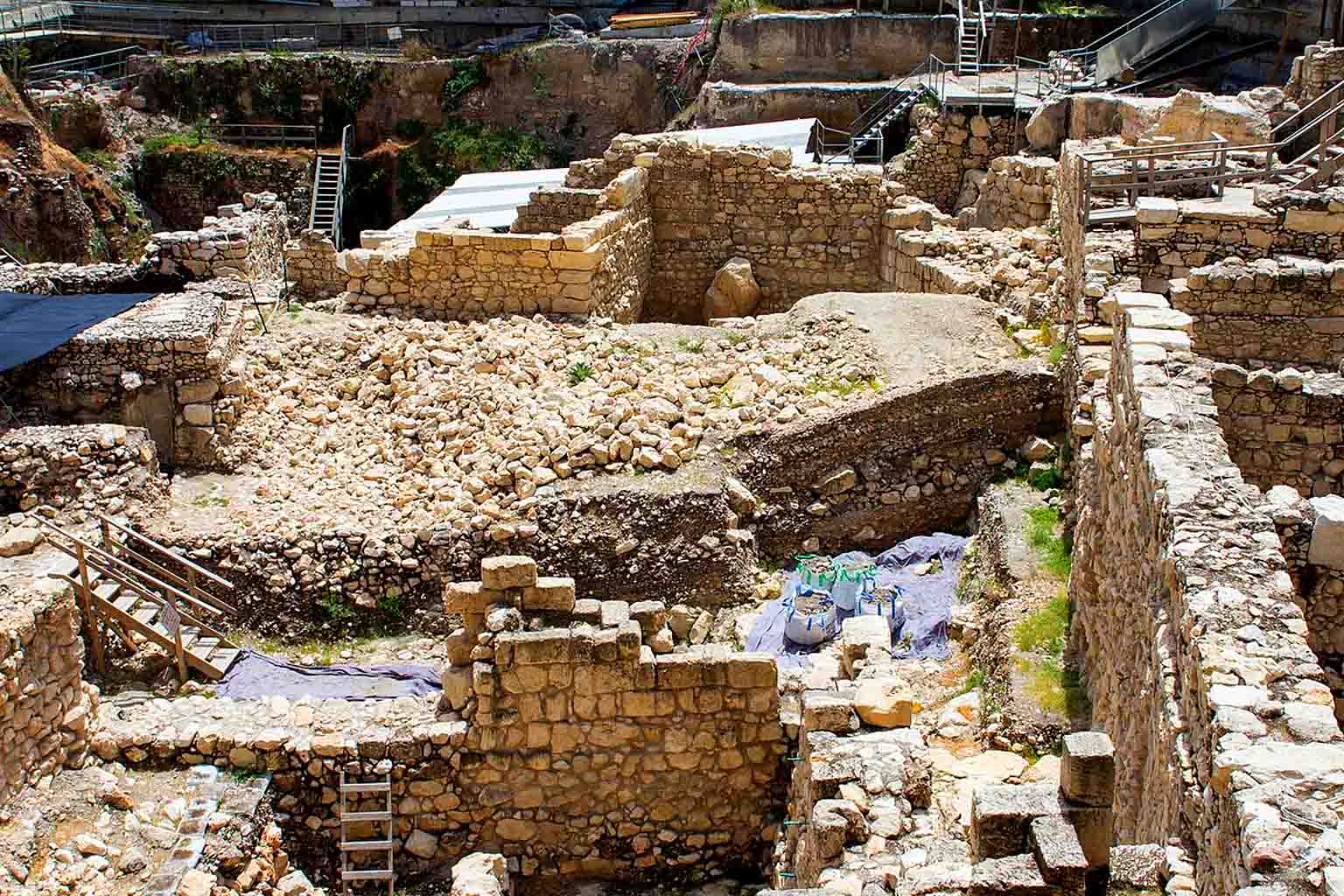
Ever imagine stumbling upon an ancient secret right beneath the busy streets of a modern city? Picture Jerusalem, a place with layers of history piled one atop the other. Well, something truly remarkable was recently unearthed there—a 3,000-year-old fortress, shrouded in biblical stories, has been uncovered, bringing to light a colossal moat thought to be lost to time.
An Epic Discovery in Jerusalem
Archaeologists have long been fascinated with Jerusalem’s rich tapestry of stories. But this latest excavation adds a chapter straight from the pages of an epic. According to the findings shared by the Israel Antiquities Authority (IAA), they’ve uncovered a monumental defensive structure. They believe it’s the biblical moat referenced in the Books of Kings and Samuel. And here’s the twist—it’s now open for public view for the very first time. Almost like walking through history itself.
The trench-like fortress, which dates back nearly 3,000 years, confirms a long-debated scriptural account of Jerusalem’s jagged topography, featuring a city divided. People have debated its existence for, well, forever and a day, and now all those old tales are proving to be far more tangible than skeptics might have imagined… or dared to dream.
The Monumental Barrier Carved Into Stone
This moat, and you’re not likely to just skip over this detail, isn’t just a shallow ditch. Can you believe it stretches nearly 100 feet wide and dives a dizzying 30 feet deep? Flanked by cliffs, it asserts itself as an immovable divider between two ancient zones: Ophel and Millo, each steeped in its own mystery.
The excavation team emphasizes that this moat wasn’t just a physical defense. Imagine standing before something so impenetrable, it also served as a bold symbol of authority. Why? Because crossing it would mean leaving yourself utterly exposed. It’s like an ancient security system on steroids.
In the researchers’ words: “This is a dramatic discovery that opens up a renewed discussion about the terms from biblical literature that refer to the topography of Jerusalem.” And you can almost see why.
Connecting the Dots to Biblical Kings
Picture the Iron Age, around the ninth century BCE. Kings like Josiah ruled, and Jerusalem wasn’t just a city—it was a kingdom’s heart. The moat, as explained by the excavation director Dr. Yiftah Shalev, was used when Jerusalem was the capital of the Kingdom of Judah.
While it’s unclear when the moat originally came to life, evidence suggests its existence was prominent during the age of the First Temple. Remember the verse from 1 Kings 11:27? “Solomon built up the Millo and closed up the breach in the wall of the City of David his father.” Those words now echo through time, illuminating this newly uncovered part of the cityscape. Suddenly, the tales told are not merely spiritual allegories—they are based on actual physical structures.
Archaeological Assumptions Shattered
You’d be forgiven to think this discovery suddenly sprang out of nowhere. But really, its first hint came in the 1960s when famed British archaeologist Kathleen Kenyon stumbled upon a portion of the moat. Back then, she thought it was just a natural valley. Who could have foreseen the story about to unfold?
Fast forward to today, modern analysis proves this was no mere geological curiosity. The trench shows clear signs of human engineering, knowingly crafted with a defensive purpose. It’s a story of how modern tools, and a shared passion for unraveling history, can redefine our understanding—turning old, dusty assumptions entirely on their heads.
A Site That Inspires Awe and Reflection
Should you find yourself wandering the City of David archaeological site, prepare to be awestruck. The scene around you will be nothing short of inspiring. Massive stone walls, constructed ages ago with meticulous care, rise majestically beside the moat—laying bare what once served as the bastion of Jerusalem’s spiritual and political life. And all you can do is stare.
As Eli Escusido, Director of the Israel Antiquities Authority, described the experience, “Once again, discoveries are being revealed that shed new and vivid light on the biblical literature.” His words hold weight here. “When you stand at the bottom of this giant excavation, surrounded by enormous hewn walls,” Escusido elaborates, “it becomes impossible not to be filled with wonder for those ancient people who, nearly 3,800 years ago, quite literally moved mountains and hills.”
But it’s not just about what they guarded. It’s about the engineering brilliance of those ancient Jerusalemites, a remarkable testament to our shared cultural history that links artful planning and biblical text in a profound way.
Perhaps the best way to bring this full circle? Plan a visit. Feel history seep into your skin, marvel at ancient innovation, and let those stories of past and present mingle under the same bright sky. Go ahead, and lose yourself in the tale this ancient city still whispers—for there, it’s closer than you might think.