


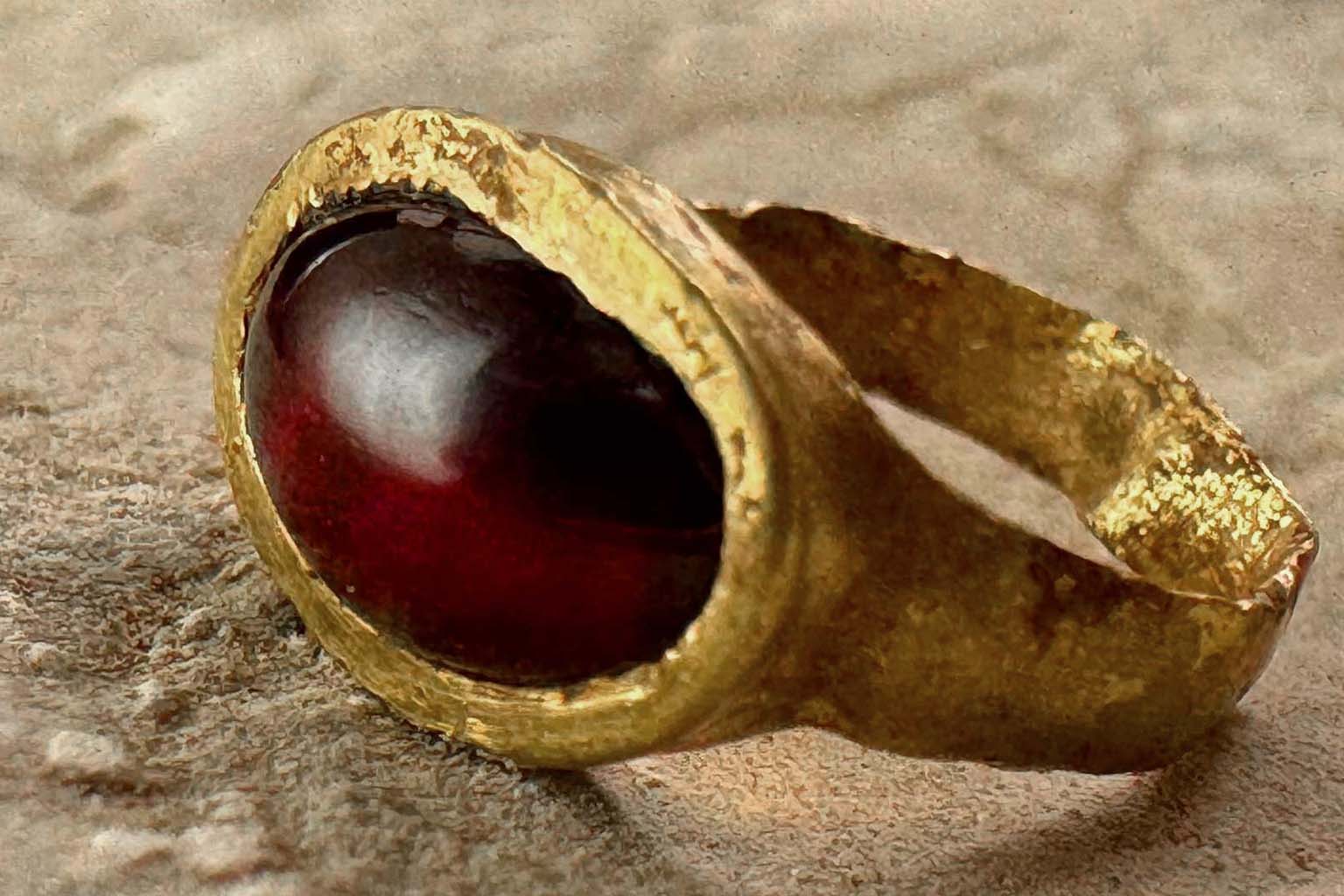
A dazzling 2,300-year-old gold ring recently uncovered beneath the ancient floors of Jerusalem is more than just a beautiful artifact—it’s a tangible link to a fascinating, long-lost ritual marking the passage from childhood to adulthood. This remarkable gemstone ring, set with a radiant red garnet, opens a window into cultural practices from the Hellenistic period, shedding new light on how ancient societies celebrated key life transitions.
The Unveiling of a Priceless Relic
Archaeologists excavating the City of David, a celebrated site within Jerusalem Walls National Park, discovered the exquisite gold ring during routine digs. Led by Dr. Rivka Lengler from the Israel Antiquities Authority (IAA), the team did not expect to find such a precious item buried beneath the earth. “We sifted the dirt carefully through a sieve, and suddenly, Ben, one of my colleagues, pulled out a golden ring,” Lengler recounted. At first, the group thought the ring might be a recent loss, but further examination revealed its ancient origin.
The ring was found embedded in a layer of soil dating back to the late third or early second century B.C., a period that corresponds with the Second Temple era in Jerusalem — an important time before the Temple’s destruction by the Romans in 70 A.D. The artifact’s location under the floor of a substantial wealthy home suggests that its owners belonged to the city’s elite. Alongside the ring, archaeologists discovered bronze earrings and a finely crafted gold bead, all indicating a site of significant cultural importance.
A Ritual Rooted in Transition and Transformation
This stunning artifact isn’t just an example of fine ancient jewelry; it is believed to be part of a coming-of-age ritual practiced during the Hellenistic period. Researchers from the IAA and Tel Aviv University propose that the ring was intentionally buried beneath the home’s floor as part of a symbolic farewell to childhood. Young women preparing for marriage would bury personal items like jewelry to mark their transformation into adulthood and their new social roles.
Dr. Marion Zindel, an expert who studied these findings, explained, “The intentional burial of jewelry, such as these small rings beneath the floors, reflects highly meaningful customs rather than accidental loss.” This deliberate act represented a deeply personal and communal declaration of maturity and responsibility, highlighting the cultural complexity of social rites in ancient Jerusalem.
Fashion and Fusion: The Hellenistic Influence
The choice of materials in the ring offers further clues about cultural exchange and aesthetic preferences of the era. The garnet gemstone set in the gold ring aligns with the widespread use of brightly colored stones during the Hellenistic period. This style drew on influences from far-flung regions like India and Persia, which had been connected through the extensive trade routes established after Alexander the Great’s conquests.
Such jewelry was not merely decorative; it served as a symbol of identity, status, and transformation. Incorporating precious metals and vibrant gemstones in ritual objects emphasized the wearer’s new status within the community. According to Dr. Lisa Nguyen’s research on ancient jewelry symbolism, “The integration of external influences in Hellenistic jewelry reveals a rich blend of cultures that manifested particularly in ceremonial artifacts” (Nguyen, 2023).
What This Discovery Tells Us Today
This gold ring discovery contributes significantly to our understanding of social customs in ancient Jerusalem. It reveals that rituals marking coming-of-age were deeply intertwined with personal and household spaces, mediated through symbolic objects. The intentional act of burying such a valuable item suggests ritualistic reverence and a communal acknowledgment of growth and change.
This artifact is a vivid reminder that beneath the surface of ancient cities lie stories of people—young women on the brink of adulthood, communities with vibrant traditions, and the material culture that binds them.
If you find this story as captivating as we do, share your thoughts below or join the conversation to explore how ancient artifacts continue to inform our collective history. Your reactions and insights help bring these old discoveries to life!