


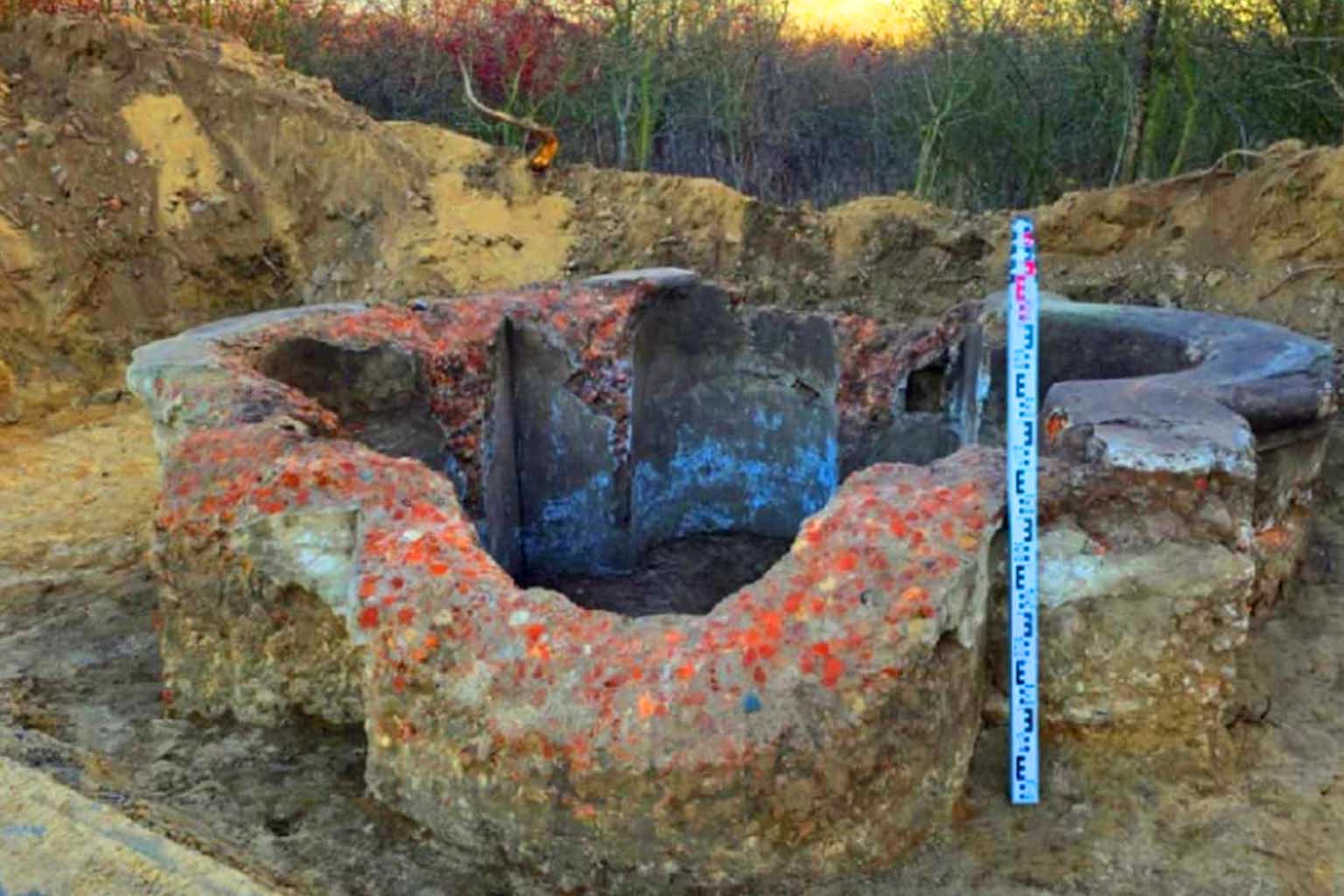
Construction workers digging along Poland’s National Road No. 7 near Zakroczym weren’t expecting to uncover a piece of architectural history. Yet there it was—a clover-shaped fountain emerging from the earth, its intricate brickwork and unusual design immediately catching the attention of archaeologists. The discovery has opened a window into Poland’s complex 19th-century past, raising questions about military life, architectural influences, and the practical realities of fortress construction during a turbulent period in European history.
What makes this find particularly intriguing isn’t just the fountain’s elaborate Neo-Moorish design, but its unexpected location on an escarpment overlooking the Vistula River. The site bears no historical records of such a structure, leaving experts to wonder whether this was its original home or if the fountain was relocated during the numerous military and infrastructural changes that swept through the region in the late 1800s. Like the unexpected discovery at Tikal archaeological site, this fountain challenges our assumptions about historical construction and cultural influences.
The timing couldn’t be more significant. This period marked intense military modernization across Central Europe, with fortifications being constantly updated to meet changing warfare demands. The fountain’s discovery offers a rare glimpse into how these grand military projects affected daily life and resource allocation in ways that rarely make it into official historical records.
The Architectural Mystery of Neo-Moorish Poland
The fountain’s Neo-Moorish architectural style tells a fascinating story about cultural exchange in 19th-century Europe. This revivalist movement, inspired by Romanticist fascination with Oriental aesthetics, found expression across Poland in synagogues, public buildings, and apparently, military infrastructure. The style’s presence in such an unexpected context suggests that architectural trends transcended simple civilian applications, infiltrating even utilitarian military projects.
Built from brick debris bound with white lime mortar, the fountain demonstrates the construction techniques typical of the late 1800s. The presence of a central metal pipe confirms its functional purpose as a water source rather than mere decoration. This practical element raises important questions about water access and sanitation in military installations of the era, aspects of fortress life that historians often overlook in favor of strategic and political narratives.
The use of repurposed materials suggests either resourceful construction practices or the systematic recycling of building components from larger architectural projects. Such practices were common during periods of intensive military construction, when materials were both expensive and sometimes difficult to transport to remote fortress locations.
Fortress Modernization and Material Reuse
The connection to nearby Modlin Fortress provides the most compelling context for understanding this discovery. Originally constructed on Napoleon’s orders as a French military outpost, the fortress changed hands after Napoleon’s defeat, falling under Russian control. Between 1894 and 1900, Russian military engineers undertook massive modernization efforts, replacing traditional brick elements with more durable concrete structures.
This transformation generated substantial quantities of discarded brick materials, creating opportunities for secondary construction projects. Military installations of this period often featured auxiliary structures—water sources, temporary barracks, administrative buildings—that supported the main fortress operations but rarely received mention in official military records. According to archaeological research from Alexandria, mid-19th-century military artifacts consistently point to organized encampments and infrastructure around major fortifications.
“Military encampments of the mid-19th century required sophisticated water supply systems to maintain operational effectiveness and prevent disease outbreaks” – Archaeological research
The fountain’s sophisticated design suggests it wasn’t hastily constructed from leftover materials but represented a deliberate architectural project. This indicates that even utilitarian structures received aesthetic consideration, reflecting the military culture’s attention to both function and form during this period of fortress modernization. Much like the attention to detail required for maintaining clean, bright curtains, military installations demanded meticulous care in both functional and aesthetic elements.
The Daily Realities Behind Military Architecture
Beyond the architectural significance lies a more human story about daily life in 19th-century military installations. Fortress communities required reliable water access not just for drinking but for cooking, cleaning, and maintaining hygiene standards crucial for preventing disease outbreaks that could devastate enclosed military populations.
The fountain’s placement on the escarpment suggests careful consideration of both practical access and defensive positioning. Military engineers of this era understood that water sources needed protection while remaining accessible during both routine operations and potential siege conditions. The location offers natural defensive advantages while providing gravity-fed water distribution to lower areas of the installation. Research by water supply historians indicates that sophisticated water systems rivaling those of ancient Rome weren’t constructed until the nineteenth century.
Archaeological evidence indicates these installations supported not just soldiers but civilian contractors, support staff, and sometimes family members. The fountain’s elaborate design suggests it served a community large enough to justify such architectural investment, pointing to a more complex social structure around Modlin Fortress than typical military narratives acknowledge. This complexity mirrors discoveries like the unexpected Danish connection to the Sutton Hoo helmet, where archaeological findings reveal surprising cultural exchanges.
The Engineering Challenges Rarely Discussed
The fountain’s discovery illuminates the technical challenges that military engineers faced when adapting civilian architectural styles to fortress requirements. Neo-Moorish design elements required specific construction techniques and materials that didn’t always align with military building standards focused on durability and defensibility rather than aesthetic appeal.
Creating a functional water distribution system in the challenging terrain around Modlin required sophisticated understanding of hydraulic engineering. The metal pipe system had to withstand both regular use and potential combat conditions while maintaining consistent water flow. These technical requirements often conflicted with decorative design elements, forcing engineers to develop innovative solutions that balanced form with function.
The choice to incorporate artistic elements into utilitarian military infrastructure reflects broader changes in military culture during this period. As warfare evolved and fortress life became more permanent, military commanders increasingly recognized that aesthetic considerations affected morale and operational effectiveness in ways that pure functionalism couldn’t address. This understanding of military life’s complexity is echoed in discoveries like the Roman war horses burial site, which reveals the profound relationships between military personnel and their essential resources.
“Modern water supply systems rivaling those of ancient Rome were not constructed until the nineteenth century, marking a crucial period in military infrastructure development” – Water supply research
This unexpected discovery continues to challenge our understanding of how military and civilian life intersected in 19th-century Poland. As archaeologists prepare for expanded excavations, the fountain stands as a reminder that history often preserves its most interesting stories in the most unlikely places, waiting for modern construction projects to bring them back into the light.