


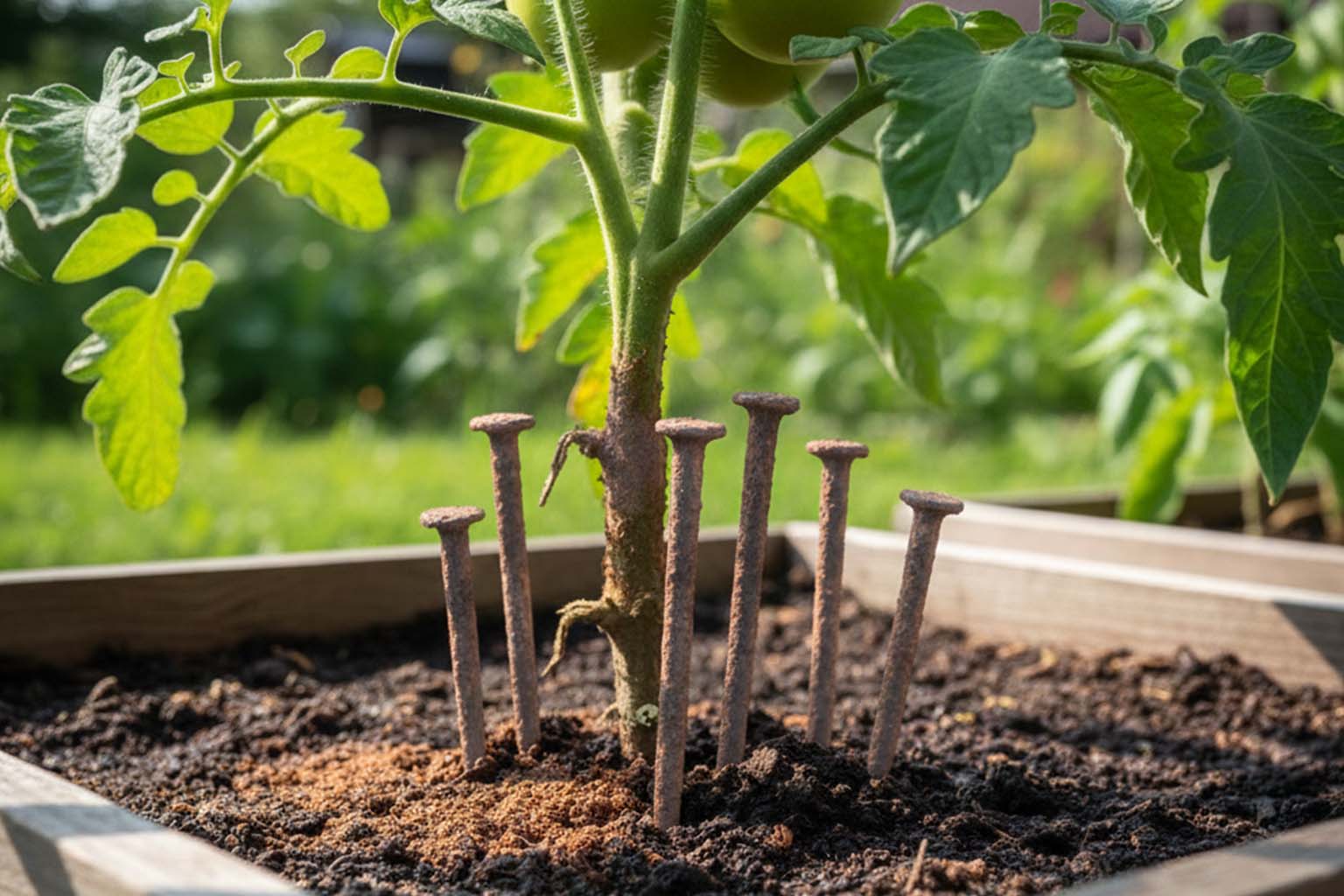
Rusty nails in the garden? It sounds strange, but this old-school trick could be the key to reviving your plants and bringing life back to tired soil. For generations, gardeners noticed that burying rusty nails near their veggies made a real difference—and now, science is catching up to explain why that happens. If your greens are looking a little pale or your harvest has dwindled, it might be time to dig up an ancient secret.
Understanding the yellowing leaves mystery
Every gardener has faced it: those strange yellow leaves that creep in, especially in spring or fall. This common issue, known as iron chlorosis, happens when plants don’t get enough iron. The leaves turn a pale, almost lemon-yellow while the veins stubbornly stay green. It’s like the plant is signaling distress. Popular garden crops such as tomatoes, beans, and lettuce are especially prone to this problem.
Iron is essential because it’s a key player in producing chlorophyll, the pigment that gives plants their lush green color and helps with photosynthesis. Without enough iron, photosynthesis slows down, plants weaken, and growth stalls. The result? Weak plants, compromised harvests, and vegetables that lack flavor. Experts from the National Institutes of Health explain how iron deficiency can ripple through plant health and crop yield, underscoring just how crucial this mineral is.
Why soils lose their vital iron
You might be unknowingly stripping your soil of nutrients. Frequent heavy digging, too much tap water, immature compost, and chemical fertilizers can leach essential trace elements out of your garden bed. Another sneaky culprit is excess lime—when soils are too alkaline, iron becomes locked away, unavailable to plants. Suddenly, your soil turns against you: drained, lifeless, and unproductive.
It wasn’t always this way. Our ancestors noticed when their plants looked off, they tinkered with the soil diet. Before fancy soil tests, the color of leaves and the vigor of plants were their diagnostic tools. That’s where rusted nails made their entrance—not just as folklore, but a practical way to enrich soil naturally.
The forgotten power of rusty nails in gardening
Burying rusty nails right by the plant roots might seem old-fashioned or simple superstition. But here’s the thing: these rusty steel nails slowly release iron into the ground, replenishing what the soil lacks. It’s a straightforward and eco-friendly technique to bring back vitality to your garden, one that predates chemical fertilizers by centuries.
To try this yourself, gather some ordinary steel nails—no zinc or alloys—preferably from old repairs or salvaged woodwork. Let them rust naturally by leaving them outside for a few weeks; the orange-brown rust actually helps release usable iron. Then, in late fall or early winter, bury one or two nails close to the roots—about 4 inches deep and a few inches from the plant base—to avoid harming young roots.
Simple gardening tips to boost iron uptake
Rusty nails are just part of the picture. Keeping soil slightly moist, using rainwater when possible, and adding mature compost or mulch help the iron dissolve and become available to plants. Avoiding too much lime fertilizer keeps the soil’s pH in check, preventing iron lock-up.
You may start noticing results by late spring: plants regain that vibrant green hue, leaves grow fuller, and fruit production picks up. Gardens that once struggled can flourish again, reminding us why traditional wisdom deserves another look.
Some of the most responsive plants to this iron boost include tomatoes, peppers, eggplants, beans, raspberry bushes, and even roses. These plants clearly benefit from having iron available, showing richer colors and better yields.
Going back to basics with rusty nails offers a sustainable way to nurture your garden naturally. It helps prevent nutrient deficiencies and breathes new life into the ground without chemical inputs. This low-cost, time-tested trick is a reminder that sometimes the simplest methods are the most effective.
Curious about how old garden secrets could transform your vegetables? Dust off that box of rusty nails this winter and give your garden the natural boost it’s been craving. Your plants—and your harvest—will thank you.
What’s your experience with natural gardening remedies? Have you tried rusty nails in your soil before? Share your thoughts and stories—let’s bring old wisdom back to life in our gardens!